Unit 2 - Ergonomics (e-book)

2.5 Oral care
2.5.1 Oral care and its implication in dysphagia
Maintaining optimum oral health is pivotal to reaching good general health and well-being. Deterioration in oral health affects general health by causing considerable pain and suffering and by changing what people eat, their speech and their quality of life. Besides, oral diseases are associated with a number of other non-communicable diseases, such as diabetes, cardiovascular disease, respiratory disease, and gastrointestinal and pancreatic cancers.
In patients suffering from dysphagia, poor oral health can make their condition even worse.
The most important reason for maintaining a healthy mouth in patients with dysphagia is because of its association with aspiration pneumonia.
So, several risk factors related to oral health such as the presence of caries, number of functional dental pieces, periodontal disease, dental plaque (deposit on natural teeth or on dentures), and tongue coating have been associated with the appearance, severity and mortality of aspiration pneumonia.
Therefore, it is very important to make regular visits to the dentist to treat existing oral and dental problems, to have dentures and prostheses in good condition and to perform more thorough cleanings.
-
Effective oral hygiene
It should include the removal of food debris, the control of the dental plaque and the cleaning of the gums, palate and tongue. The correct technique for proper oral hygiene requires practice and, above all, routine. To do so, it is necessary to follow these steps:
Before
toothbrushing:
Due to poor chewing and swallow function, there is likely to be food stagnation in the oral cavity. So, it is very important starting the oral hygiene looking inside the mouth and removing any debris.
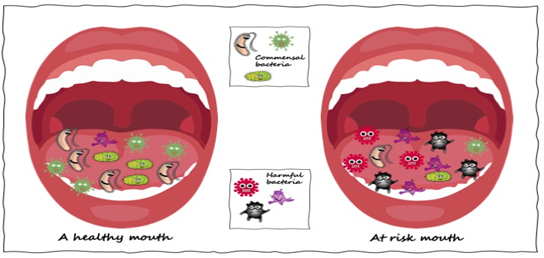
Figure 22. Most common places where residues of food left in the mouth
due to dysphagia
(Source: Prepared by the authors based
on photo from pixabay.com)
Toothbrushing
Ideally, brushing should be done after main meals. The duration of brushing should not be less than 2-3 minutes in order to ensure that all areas of the mouth are cleaned.
The most recommended is the modified Bass technique. Briefly, this technique consists on:
-
Place your toothbrush at a 45-degree angle to your gum line
-
Brush each tooth (or two to three at a time) using a gentle circular movement.
-
Brush each tooth well and when finished, flick the toothbrush down the tooth, away from the gum line.
-
Don’t forget to brush all of your teeth and all surfaces in this way – including the outer, inner and top surfaces of the teeth.
-
It is important to control the brushing intensity as vigorous brushing can lead to gingival erosion, gingival recession and enamel wear.
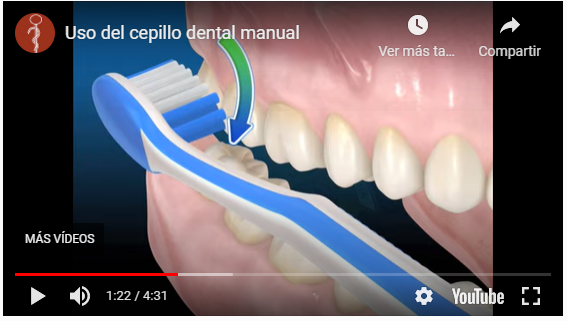
Go video. Use of the manual toothbrush
(Source: Consejo General de Dentistas de España)

Figure 23.Tootbbrush (Source: pixabay.com)
Other oral cleaning tools include:
Electric toothbrush
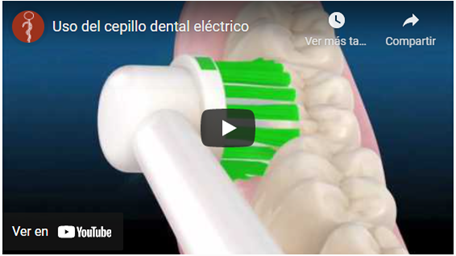
Go video. Use of the electric toothbrush
(Source: Consejo General de Dentistas de España)
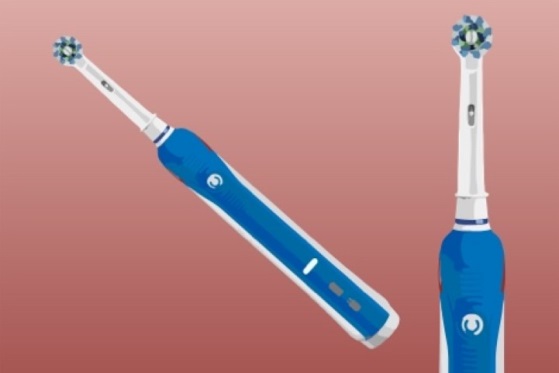
Figure 24. Electric toothbrush
(Source: pixabay.com)
Flossing
Go video. Correct flossing (00:05’ 2:05’)
(Source: Consejo General de Dentistas de España)
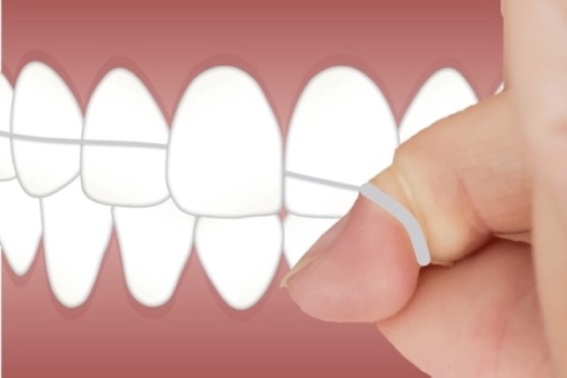
Figure 25. Floss (Source: pixabay.com)
Interdental brush
Go video. Using interdental brush (2:05’ 3:03’)
(Source: Consejo General de Dentistas de España)

Figure 26. Interdental brush
(Source: https://www.dentalgooddeal.es)
Tongue scraper
Go video. Using tongue scraper (3:03’
2:24’)
(Source: Consejo General
de Dentistas de España)
Safe oral hygiene
When brushing is done by the individual him/herself, it is always important to look for safe postural strategies.
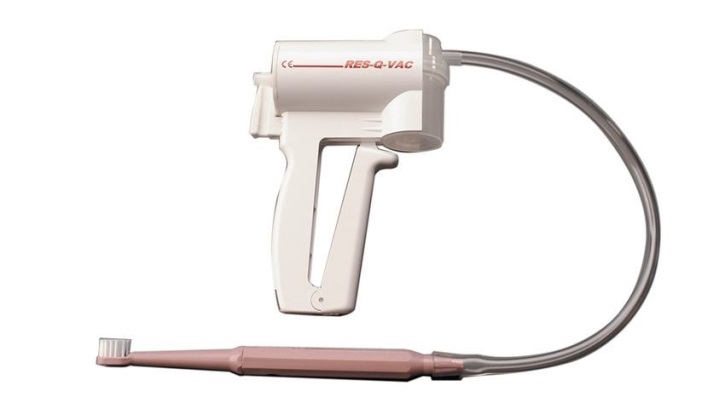
Figure 27. Example of oral hygiene toothbrush with suction instrument
(Source: https://www.alimed.com)
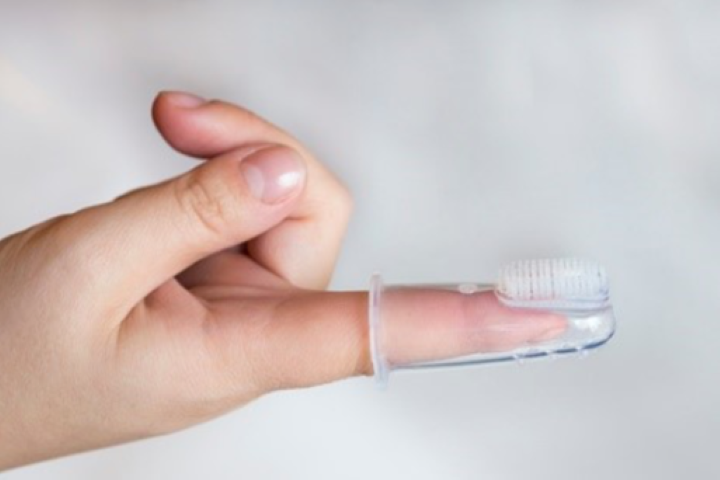
Figure 28. Example of finger toothbrush
(Sources: https://neuroekin.com)
Figure 29.
Gauze pad and depressor
(Source:
https://neuroekin.com)
Practical exercises to apply the theory.
Materials: Toothbrush and water for rinsing.
This activity consists of applying the BASS brushing method explained in one of the previous sections.
Attached is a video so that you can follow the method by imitating it and experience the sensations of the process.
Go video. The best way to BRUSH YOUR TEETH - Modified Bass Technique
(Source: Dentalk!,
2021)
Practical advice for the cleaning of dentures and storage
It is important to treat the dentures like you would treat your natural teeth. Indeed, dentures must be kept as clean as possible due to they may collect bacteria on them and can affect oral health whilst people are wearing them.
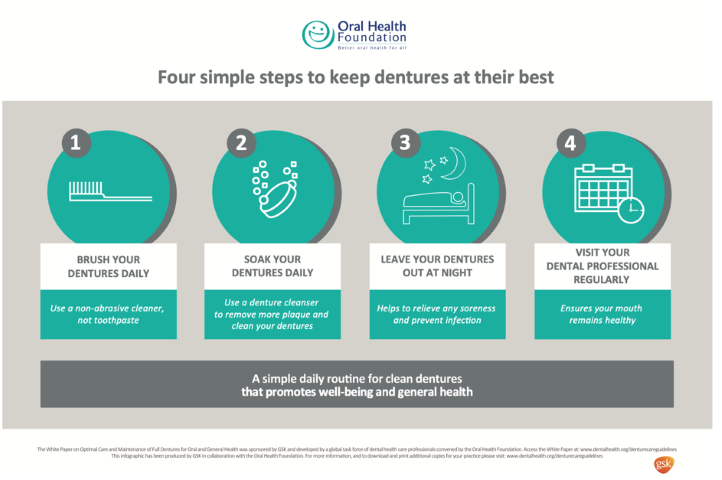
Figure 30.
Steps to keep dentures at their best
(Source:
https://www.dentalhealth.org/denturecareguidelines)
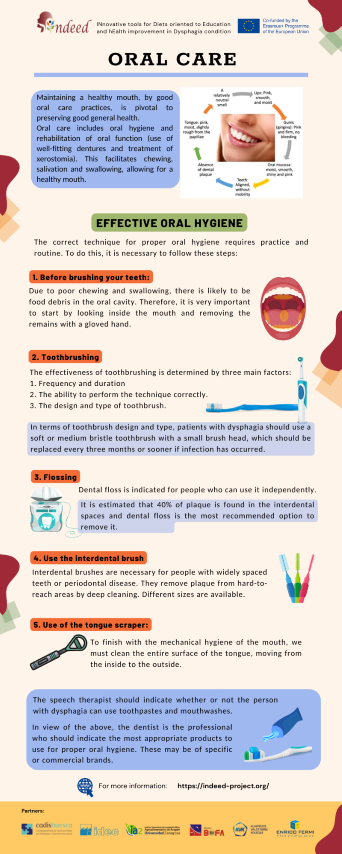
Figure 31. Infographic about oral care (Source: designed by Canva Pro).
Infographics available for download on the training platform (https://indeed-project.org/).