Unit 2 - Ergonomics (e-book)
| Site: | IDEC TrainingCentre elearning |
| Course: | MODULE 2: CAREGIVERS, FAMILIES AND PEOPLE WITH DYSPHAGIA |
| Book: | Unit 2 - Ergonomics (e-book) |
| Printed by: | Guest user |
| Date: | Saturday, 26 September 2026, 1:59 AM |
Description

2.1 Mealtime environment
2.1.1 Characteristics of the place and process
It is important to stay in a safe mealtime environment. An uninviting environment can put people off their meals and result in inadequate nutrition and hydration, while a distracting environment can reduce focus on following the strategies for safe swallowing and lead to safety concerns. The following tips can help you create an appropriate mealtime environment. Because people with swallowing problems should also enjoy a safe and nutritious environment and food.
Reduce potential distractions:
Minimize the number of people walking around the meal area.
Turn off or turn down the volume on the TV, radio, mobile or tablet.
Avoid loud noises such as microwave or oven timers going off.
Create an inviting atmosphere:
Decorating the meal area with tablecloths.
Plants.
Pictures and curtains can create a warm atmosphere that can help facilitate enjoyment at mealtimes.
Meal time and food presentation:
The smell and appealing appearance of food can help to increase appetite
Do not use feeding syringes or straws during oral feeding.
Maximum duration of the shots between 40-45 minutes.
Maintain a comfortable posture.
Practical exercises to apply the theory.
Place: Room where meals are usually taken.
In this exercise you must observe the food room and identify the elements of it that are recommended and not recommended according to the previous section. Think about the changes that should be made to make it a suitable place for feeding people with dysphagia.
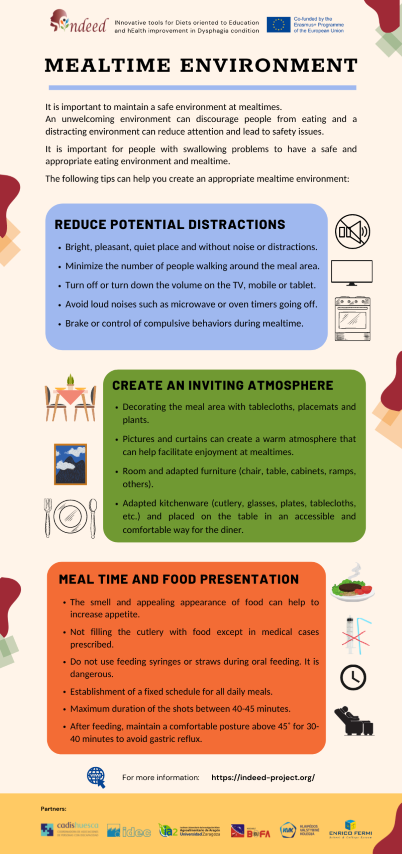
Figure 1. Infographic about mealtime environment (Source: designed by Canva Pro).
Infographics available for download on the training platform (https://indeed-project.org/).
2.2 Body position
2.2.1 Position of a person without problems to eat
Back in contact with the back of the chair in a 90˚ position.
Head and neck aligned with the back.
Chin slightly inclined towards the chest.
Feet flat on the ground or footrest.
Forearms on the table on either side of the cutlery
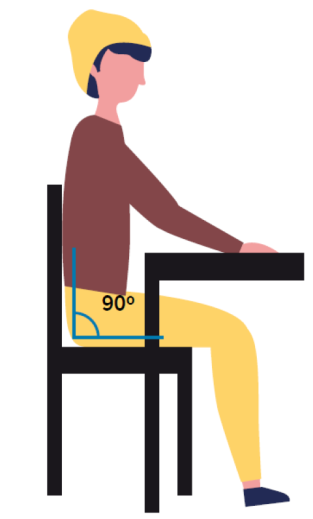
Figure 2. Position of a person without problems to eat
(Source: CADIS Huesca)
2.2.2 Position of a person with mobility problems
Always adopt a semi-upright position above 45˚ and as close to 90˚ as possible.
Head slightly tilted forward, avoiding neck hyperextension.
Chin slightly inclined towards the chest.
Trunk and feet aligned with head and neck as far as possible.
The position of the legs will depend on the situation of the person, alternating bent knees with straight knees and feet apart.
The arms can be supported on the belly or on the armrests of the chair.
Cushions, pillows or other tools will be used whenever necessary to maintain proper posture.
Correction of posture will be made whenever necessary throughout the meal.
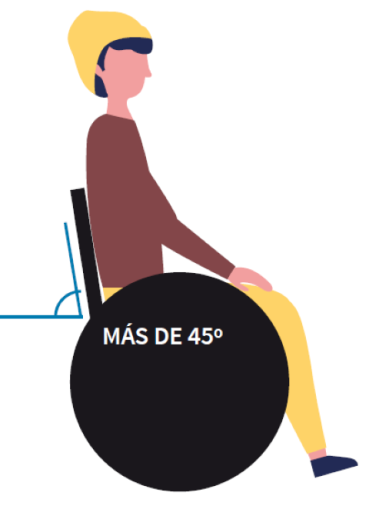
Figure
3. Position of a person with mobility problem (Source: CADIS Huesca)

Figure 4. Infographic of body position (Source: designed by Canva Pro).
Infographics available for download on the training platform (https://indeed-project.org/).
2.3 Feeding caregiver techniques
Feed meals when the person is alert and attentive.
To help feed, the caregiver must position himself at the same level as the patient.
Check the volume of the food and drink provided.
Clear and easy-to-understand indications about the feeding process may also be needed. “open your mouth”, “chew”, “swallow”
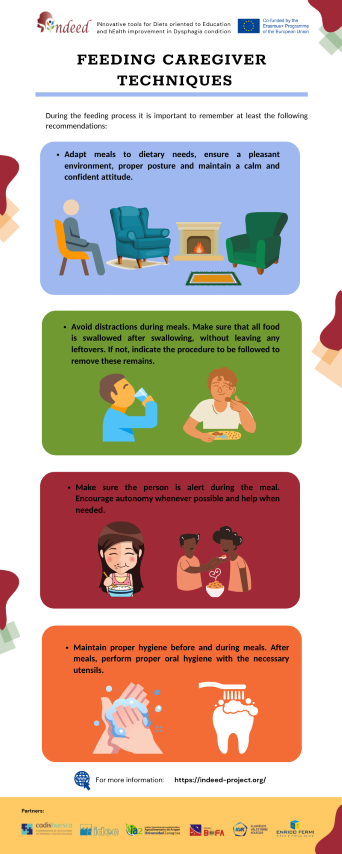
Figure 5. Infographic about feeding caregiver techniques (Source: designed by Canva Pro)
Infographics available for download on the training platform (https://indeed-project.org/).
2.4 Feeding equipment and adapted utensils
The use of support products (instruments, equipment or technical systems that facilitate the daily activity of people with some kind of difficulty or functional limitation) during feeding to prepare, serve, eat or drink, facilitates the development of these activities but also allows the normalization of the feeding process by providing the person with greater autonomy. This has a positive impact on the establishment of social relationships, increases daily activity and improves their quality of life and therefore their self-esteem.
(Sources: the following images have been obtained from CADIS Huesca)
Cutlery
G
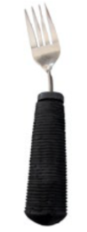 ood
Grips Utensils /Built-Up Handle Utensils.
ood
Grips Utensils /Built-Up Handle Utensils.
Figure 6. Good Grips Utensils
A
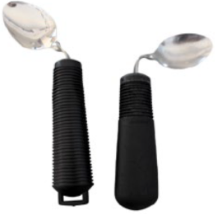 ngle
cutlery with moldable handle.
ngle
cutlery with moldable handle.
Figure 7. Angle cutlery with moldable handle
S
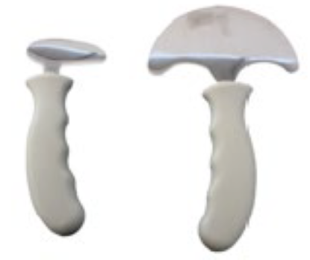 pecial
cutlery.
pecial
cutlery.
Figure 8. Rocker knife.
C
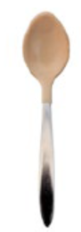 utlery
with soft PVC coating.
utlery
with soft PVC coating.
Figure 9. Cutlery with soft PVC coating
P
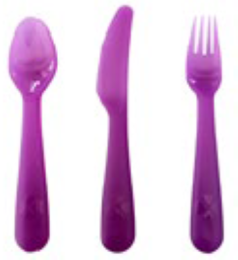 lastic
cutlery
lastic
cutlery
Figure 10. Plastic cutlery
C
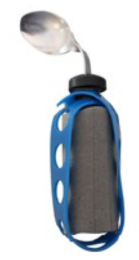 utlery
with handle and strap.
utlery
with handle and strap.
Figure 11. Cutlery with handle and strap.
Cups
N
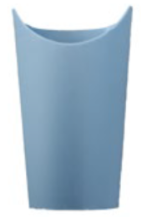 ose
Cut-Out Beaker “Nosey cup”.
ose
Cut-Out Beaker “Nosey cup”.
Figure 12. Nosey cup.
Two Handled Mug
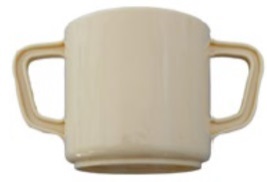
Figure 13. Two Handled Mug.
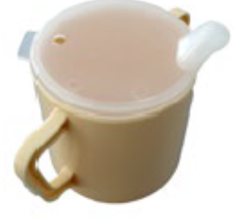
Double-handled tumbler with spout.
Figure 14. Double-handled tumbler with spout.
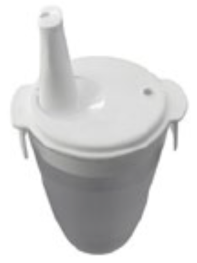
Transparent cup with nozzle lid or without lid.
Figure 15. Transparent cup with nozzle lid or without lid.

Medela cup.
Figure 16. Medela Cup.
Plates
P
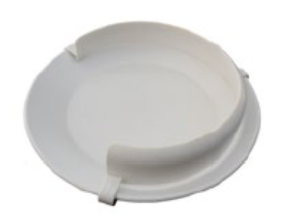 lates
made from durable polycarbonate plastic.
lates
made from durable polycarbonate plastic.
Figure 17. Polycarbonate plate.
M
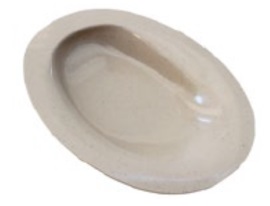 anoy
sloped plate.
anoy
sloped plate.
Figure 18. Manoy sloped plate.
P
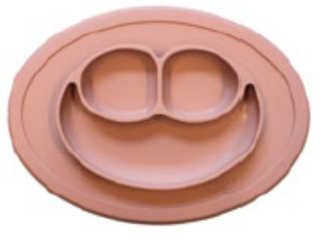 artitioned
Plate.
artitioned
Plate.
Figure 19. Partitioned Plate
Non-slip mat
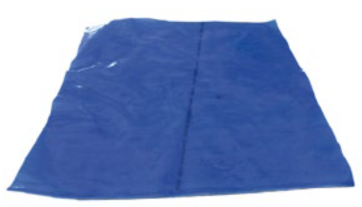 Non-slip
mat.
Non-slip
mat.
Figure 20. Non-slip mat.
There are hundreds of technical aids available on the market to facilitate any of the processes performed during feeding. Those described above are those commonly used in associations or other entities that serve people with disabilities and / or dependence.
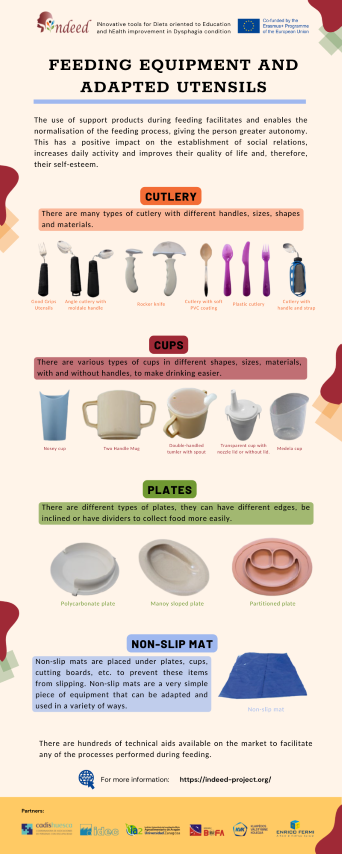
Figure 21. Infographic about feeding equipment and adapted utensils (Source: designed by Canva Pro)
Infographics available for download on the training platform (https://indeed-project.org/).
2.5 Oral care
2.5.1 Oral care and its implication in dysphagia
Maintaining optimum oral health is pivotal to reaching good general health and well-being. Deterioration in oral health affects general health by causing considerable pain and suffering and by changing what people eat, their speech and their quality of life. Besides, oral diseases are associated with a number of other non-communicable diseases, such as diabetes, cardiovascular disease, respiratory disease, and gastrointestinal and pancreatic cancers.
In patients suffering from dysphagia, poor oral health can make their condition even worse.
The most important reason for maintaining a healthy mouth in patients with dysphagia is because of its association with aspiration pneumonia.
So, several risk factors related to oral health such as the presence of caries, number of functional dental pieces, periodontal disease, dental plaque (deposit on natural teeth or on dentures), and tongue coating have been associated with the appearance, severity and mortality of aspiration pneumonia.
Therefore, it is very important to make regular visits to the dentist to treat existing oral and dental problems, to have dentures and prostheses in good condition and to perform more thorough cleanings.
-
Effective oral hygiene
It should include the removal of food debris, the control of the dental plaque and the cleaning of the gums, palate and tongue. The correct technique for proper oral hygiene requires practice and, above all, routine. To do so, it is necessary to follow these steps:
Before
toothbrushing:
Due to poor chewing and swallow function, there is likely to be food stagnation in the oral cavity. So, it is very important starting the oral hygiene looking inside the mouth and removing any debris.
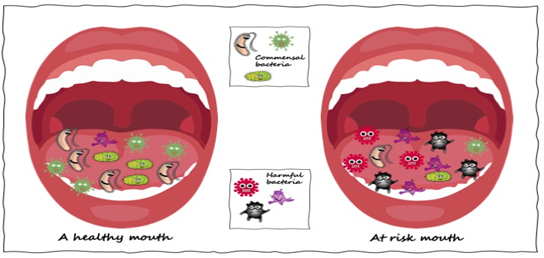
Figure 22. Most common places where residues of food left in the mouth
due to dysphagia
(Source: Prepared by the authors based
on photo from pixabay.com)
Toothbrushing
Ideally, brushing should be done after main meals. The duration of brushing should not be less than 2-3 minutes in order to ensure that all areas of the mouth are cleaned.
The most recommended is the modified Bass technique. Briefly, this technique consists on:
-
Place your toothbrush at a 45-degree angle to your gum line
-
Brush each tooth (or two to three at a time) using a gentle circular movement.
-
Brush each tooth well and when finished, flick the toothbrush down the tooth, away from the gum line.
-
Don’t forget to brush all of your teeth and all surfaces in this way – including the outer, inner and top surfaces of the teeth.
-
It is important to control the brushing intensity as vigorous brushing can lead to gingival erosion, gingival recession and enamel wear.
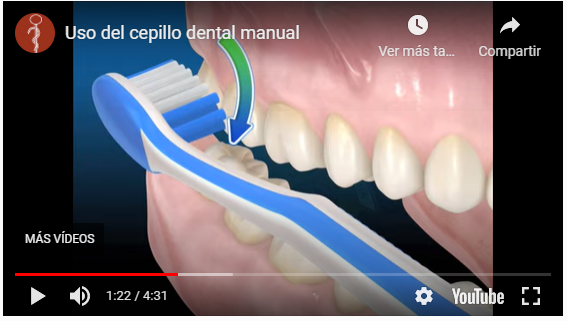
Go video. Use of the manual toothbrush
(Source: Consejo General de Dentistas de España)

Figure 23.Tootbbrush (Source: pixabay.com)
Other oral cleaning tools include:
Electric toothbrush
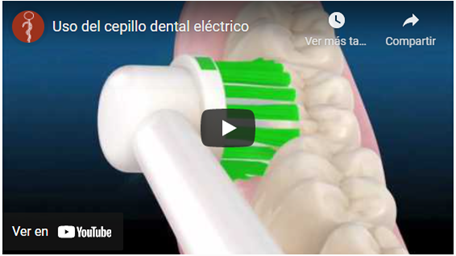
Go video. Use of the electric toothbrush
(Source: Consejo General de Dentistas de España)
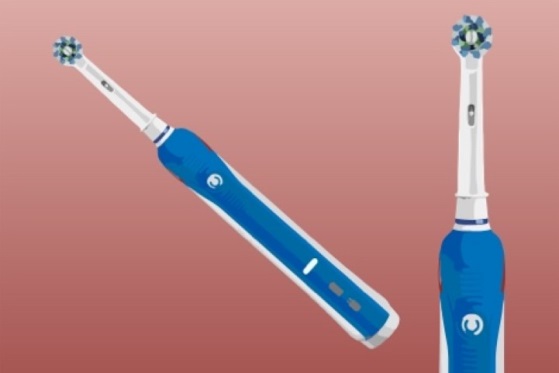
Figure 24. Electric toothbrush
(Source: pixabay.com)
Flossing
Go video. Correct flossing (00:05’ 2:05’)
(Source: Consejo General de Dentistas de España)
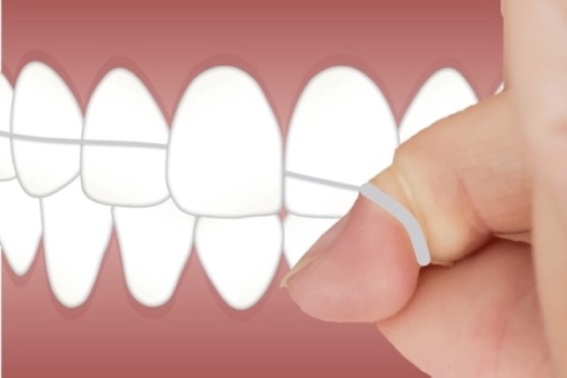
Figure 25. Floss (Source: pixabay.com)
Interdental brush
Go video. Using interdental brush (2:05’ 3:03’)
(Source: Consejo General de Dentistas de España)

Figure 26. Interdental brush
(Source: https://www.dentalgooddeal.es)
Tongue scraper
Go video. Using tongue scraper (3:03’
2:24’)
(Source: Consejo General
de Dentistas de España)
Safe oral hygiene
When brushing is done by the individual him/herself, it is always important to look for safe postural strategies.
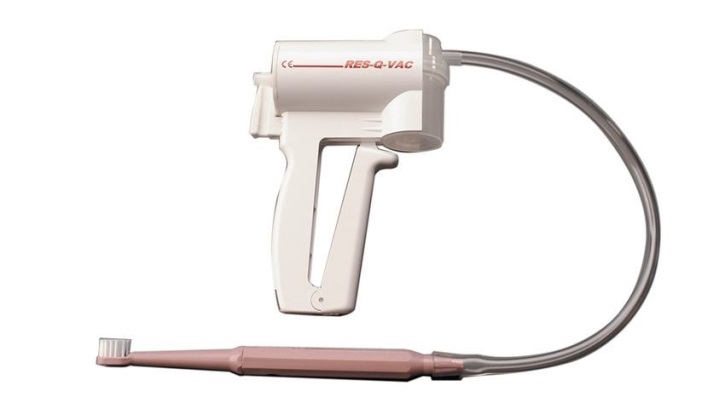
Figure 27. Example of oral hygiene toothbrush with suction instrument
(Source: https://www.alimed.com)
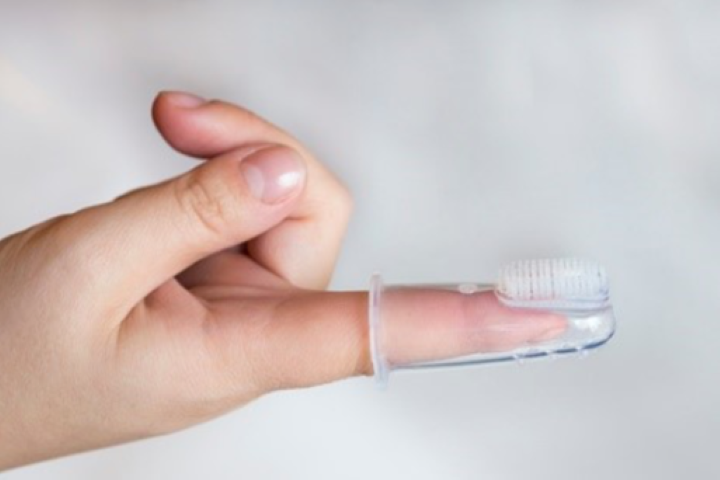
Figure 28. Example of finger toothbrush
(Sources: https://neuroekin.com)
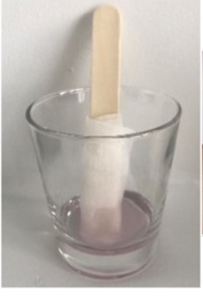
Figure 29.
Gauze pad and depressor
(Source:
https://neuroekin.com)
Practical exercises to apply the theory.
Materials: Toothbrush and water for rinsing.
This activity consists of applying the BASS brushing method explained in one of the previous sections.
Attached is a video so that you can follow the method by imitating it and experience the sensations of the process.
Go video. The best way to BRUSH YOUR TEETH - Modified Bass Technique
(Source: Dentalk!,
2021)
Practical advice for the cleaning of dentures and storage
It is important to treat the dentures like you would treat your natural teeth. Indeed, dentures must be kept as clean as possible due to they may collect bacteria on them and can affect oral health whilst people are wearing them.
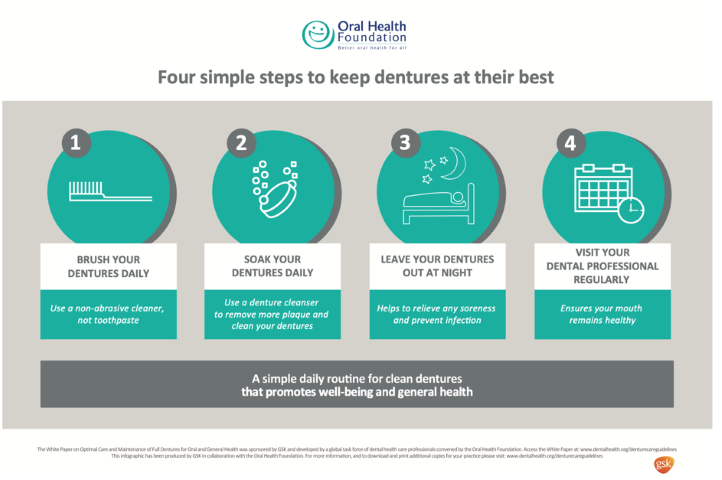
Figure 30.
Steps to keep dentures at their best
(Source:
https://www.dentalhealth.org/denturecareguidelines)
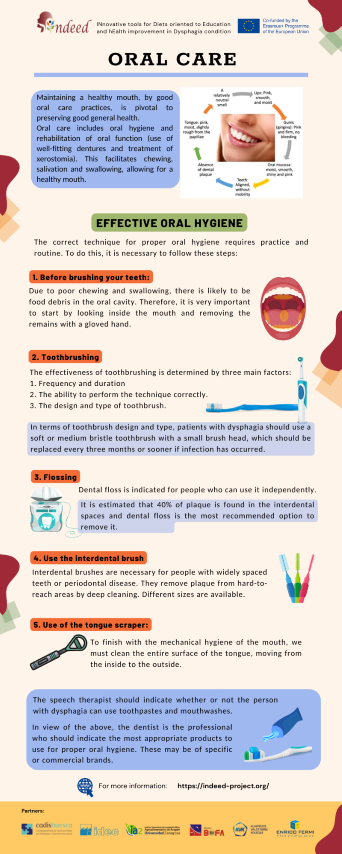
Figure 31. Infographic about oral care (Source: designed by Canva Pro).
Infographics available for download on the training platform (https://indeed-project.org/).
Resources
Use of a manual toothbrush video: General Council of Dentists of Spain (19 nov 2010). Use of a manual toothbrush [Video]. YouTube. https://www.youtube.com/watch?v=XzQg3V8ZpbE&t=1s
Use of the electric toothbrush video: General Council of Dentists of Spain (19 nov 2010). Use of the electric toothbrush [Video]. YouTube. https://www.youtube.com/watch?v=xO3ylpGBIa4
Video 67,68,69: General Council of Dentists of Spain (19 nov 2010). Correct use of dental floss [Video]. YouTube. https://www.youtube.com/watch?v=jK5imyP1VQ4
Electric Suction Toothbrush video: HIMS (7 april 2018). Oral Clean G100 - Electric Suction Toothbrush. [Video]. YouTube. https://www.youtube.com/watch?v=3gcdQkOAqXk
Rdh, H. V. (2022, 15 enero). 19 Ways to Modify Your Toothbrush If You Have Arthritis.
Tooth Be Told. https://www.mytoothbetold.com/modify-toothbrush-arthritis/
Modified toothbrush video. OraBrite Dental Products (9 feb 2018). OraBrite's GripEazy Toothbrush Aids. https://www.youtube.com/watch?v=1U470TbgM80
The best way to brush your teeth video: Dentalk! (21 apr 2021). The best way to BRUSH YOUR
TEETH - Modified Bass Technique© [Vídeo]. YouTube.
https://www.youtube.com/watch?v=VdjmGxq-X7M
Cleaning dentures video. Skills Lab (20 ago 2017). B 702 Cleaning dentures [Video]. YouTube. https://www.youtube.com/watch?v=8bsB-h108VY