Unit 4 - Food preparation
4.6. Texture‐modified foods taste and aesthetic presentation
4.6.3. Presentation tips (spacing and shaping, spacing and color, moulded puréed food, piping)
-
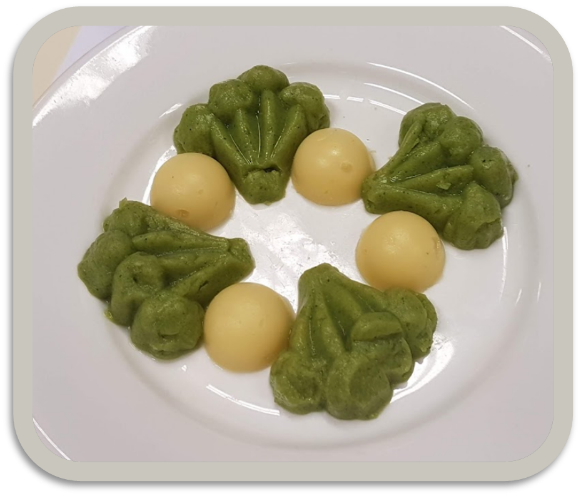
Using moulds aids meal presentation and helps to make meals recognizable to the diner. They can also reduce preparation time and wastage for kitchen staff.
-
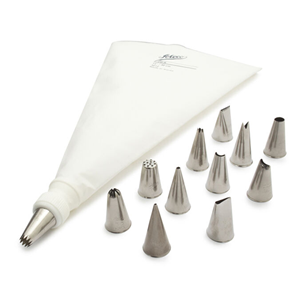
Piping bags will give you the ability to make interesting shapes and designs on the plate. Using different nozzles will allow you to vary the presentation.
-
Unless preparing a complete dish make sure that individual components are separated on the plate.
-
Make an interesting shape on the plate with a quenelle — the purée is formed into an oval shape with the use of two spoons to mould the mixture.
-
Use different shaped and coloured plates for each dish.
Spacing and shaping
-
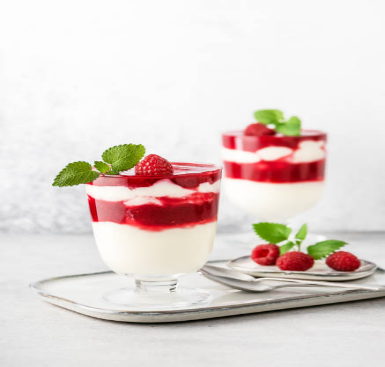
Kind of goes hand-in-hand with consistency. If you’re not working with an already divided plate, spacing food groups appropriately on the plate can affect puree how appetizing a meal looks.
-
Especially if the preparation of pureed foods does not involve molds or piping, you may just be using a scoop to put foods on the plate.
-
In which case, make sure foods are not piled one on top of the other and are neatly scooped on to the plate.
-
Adding thickener to smooth pureed food creates body and a soft scoopable mashed potato shape.
-
Thickened food allows pureed food to be served on the regular dinner plate, instead of a deep divided dish containing liquefied food. The dinner plate is a home-like normal way to serve food, thus adding to a resident's dignity and quality of life.
-
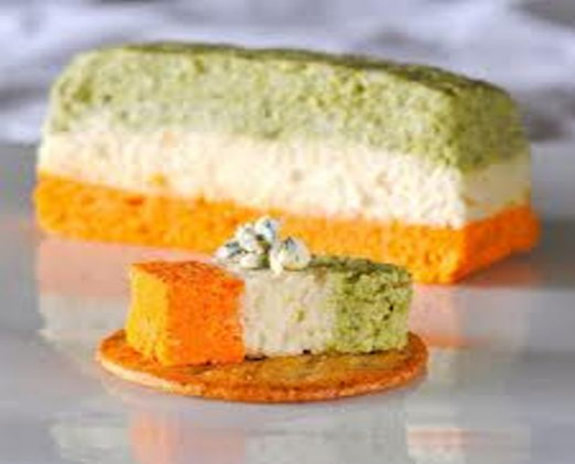
Food can be thickened and pureed separately, layered into pans and baked. This technique allows for an entree like lasagna, to be served in a most attractive rectangle of colorful layers.
Spacing and Color
-
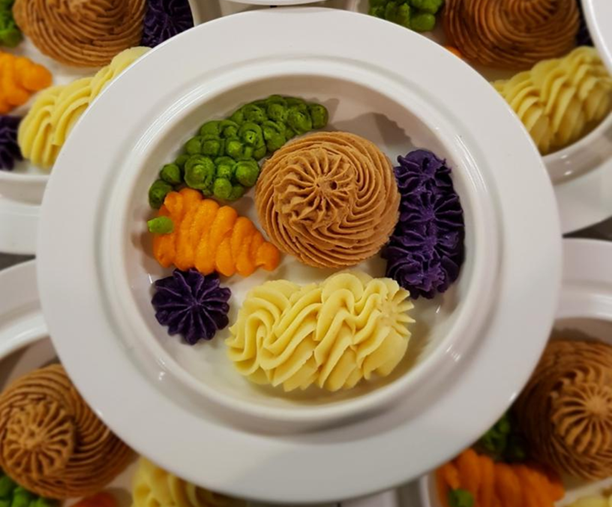
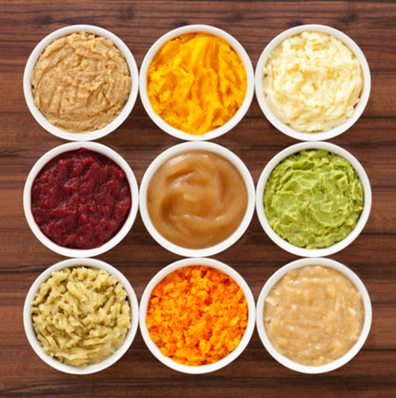
Make the color on the plate pop! For some who may have difficulty seeing, using a colored plate instead of a white one may help make foods stand out better and therefore make it easier for them to eat.
-
Create as much natural looking color contrast as possible for the pureed diet.
-
Prepare frozen vegetables over canned whenever possible.
-
Omit vegetables that make a sauce dull.
-
If mushrooms are on the menu, combine them with the pureed meat for taste, rather than pureeing them into a white sauce. Or, puree mushrooms in a rich dark brown sauce, for excellent color and taste.
-
Use amounts of kitchen bouquet to create chocolate colored brown sauce.
-
Heat smooth BB-Q sauce for a quick, tasty, colorful sauce for chicken, pork or beef.
-
Have white sauce made up in advance to serve over pureed meat and further garnish with powdered parsley. Sour cream provides excellent color contrast when served over dark green spinach or red beets.
-
Purchase jellied cranberry sauce in cans, for easy slices of a popular red garnish.
-
Have a small bowl of shredded cheddar cheese, set out at room temperature during serving, for a sprinkle of gold color over cauliflower, mashed potatoes or fish.
(Source: https://stock.adobe.com)
Molded puréed food
-
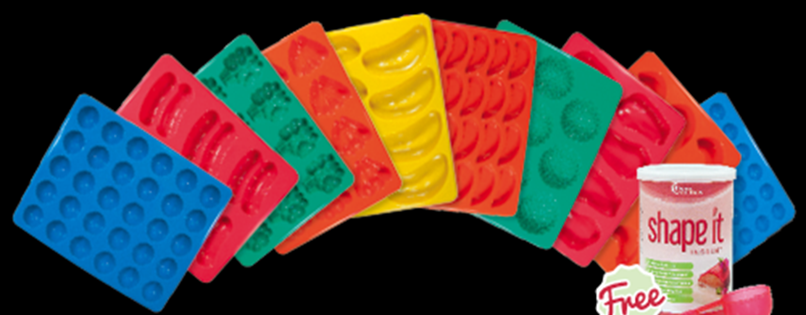
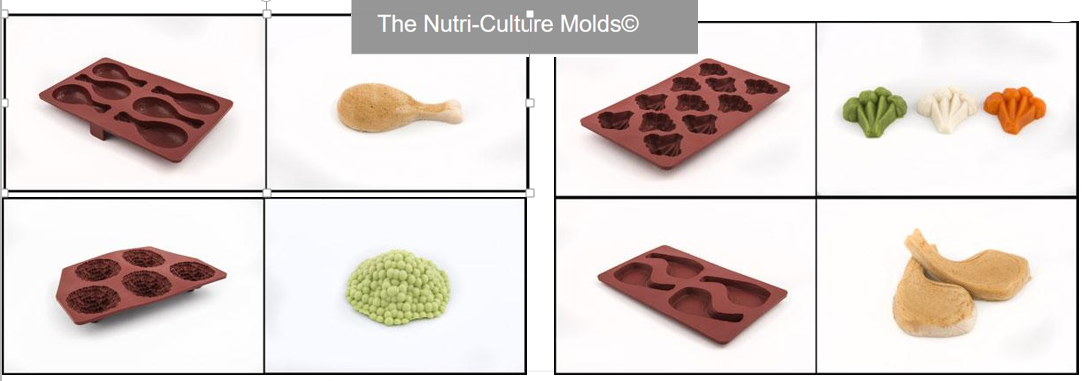
Food molds allow those on a puréed diet to enjoy a visual variety of foods on their plate.
-
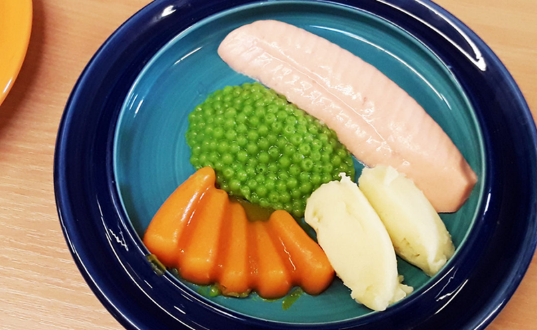
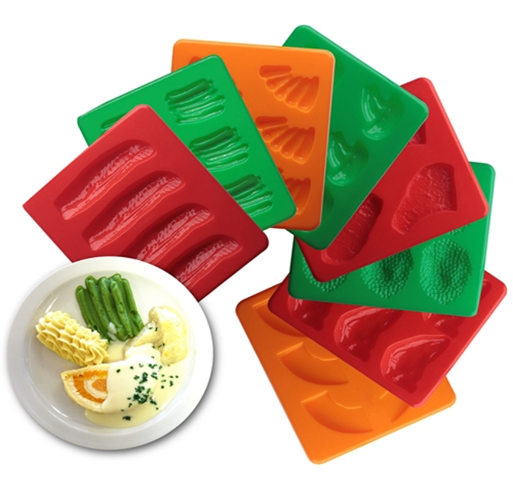
Molds are awesome ways to help make pureed foods look natural again, add interest, and really improve plate presentation!
-
Molds can be used to turn the pureed food back into its original shape.
-
For instance, roast beef can be pureed and poured into plastic molds, which are then frozen, and when ready to prepare a meal the purees can be defrosted, heated, and pressed onto the plate.
(Source: https://www.foodserviceexpress.com)
-
Food-shaped templates used to form pureed food into a natural product for a more attractive appearance
-
Molds filled with thickened pureed mixture and frozen for approx. 2 hrs
-
Food is then removed from mold and stored individually until further use
-
Most molds are shaped into portion sizes of 3-4 oz. (1/2 cup)
-
Research indicates food molds may help increase the acceptance of pureed foods
(Source: https://www.foodserviceexpress.com)
(Source : https://www.emotionfood.ch/the-molds/)
Pastry bag and tips
-
Pastry bag and tips can create attractive effects with pureed foods
-
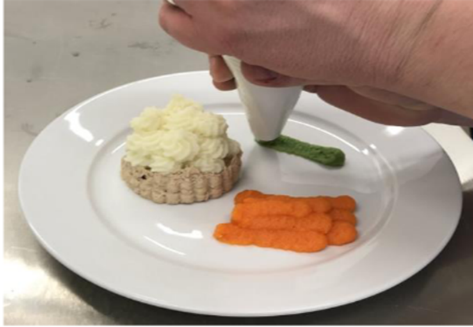
Piping can be used as well to add unique characteristics to pureed foods that would be found in certain foods naturally, such as the stems on carrots.
Examples:
-
Flat tip to make pureed roast beef slices, bacon, or turkey slices
-
Round tip to make spaghetti or other pasta shapes
Be creative!
Piping
-
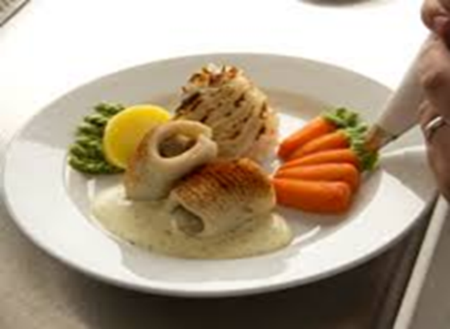
Piping is as simple as adding the pureed mixture into a plastic piping bag and adding the appropriately shaped tip to create a beautiful plate.
-
Few garnishes are as pretty as a star of whipped topping from a pastry bag.
-
Pureed food, such as green beans, can be put into large pastry bags to create a variety of shapes using a tube tip.
-
Mashed potatoes, so often served as a scoop, can be piped on the dinner plate creating an interesting wave or zigzag.
-
Peas can be pureed and piped using a leaf cake decorating tip.
-
These green leaves can be frozen and added later as garnishes to dinner meals lacking a green vegetable.
-
To make garnishing with a pastry bag easier, roll wax paper into a cone, add tip, fill cone with topping, sour cream, mayonnaise even pureed peas, etc., garnish item and toss the wax paper out for fast clean up.
(Source: https://www.webstaurantstore.com)
Pastry Tip Sizes and Shapes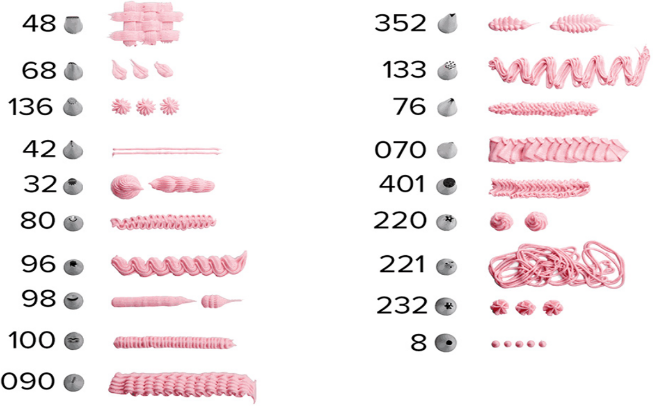
-
Decorating tips are assigned different numbers based on the shape and size of their openings.
-
There is a graphic that shows some of the most common pastry tip numbers and what the result of using them is.
(Source: https://www.webstaurantstore.com)