Unit 4 - Food preparation
| Site: | IDEC TrainingCentre elearning |
| Curs: | MODULE 1: METHODOLOGY AND TOOLS DEVELOPMENT FOR ADULT EDUCATORS |
| Carte: | Unit 4 - Food preparation |
| Tipărit de: | Utilizator vizitator |
| Dată: | luni, 28 septembrie 2026, 22:30 |
Cuprins
- 4.1. Introduction to texture‐modified foods and beverages for dysphagia diets
- 4.1.1. Food and beverages for dysphagia management
- 4.1.2. Inappropriate foodstuffs for dysphagia condition
- 4.1.3.Texture-modified food and beverages: Grades, scales and need of standardization texture modified food
- 4.1.3.1. Grades, scales and need of standardization texture modified food
- 4.1.3.2. Desired characteristics of dysphagia foods _ More than texture
- 4.1.4. Texture-modified food and beverages: Definition, requirements and implementation
- References and sources to Know More
- 4.2. Tools to modify the thickness of liquids and the texture of solid foods
- 4.3. Levels, descriptors and measurement methods in dysphagia oriented products
- 4.4. Texture‐modified foods preparation techniques and equipment
- 4.4.2. Methods of food preparation (Tips for texture‐modified foods cooking)
- 4.5. Hygiene and food safety in dysphagia
- 4.6. Texture‐modified foods taste and aesthetic presentation
4.1. Introduction to texture‐modified foods and beverages for dysphagia diets
The aim of this lesson is to understand the need for the use of texture modified diets in dysphagia management and what are the requirements of texture‐modified foods and beverages.
Learning outcomes
To understand the benefits of the texture‐modified foods for dysphagia diets
To know desired characteristics of dysphagia foods
To discuss choice of foods (recommended and inappropriate ingredients)
Contents (PPT/PDF 25 slides)
4.1.1. Food and beverages for dysphagia management
-
Dysphagia-adapted foods and beverages are commonly used to treat individuals who require long-term dysphagia management.
-
People diagnosed with dysphagia usually find safer and easier to swallow food and beverages with adapted consistency and smooth texture.
-
A speech and language therapist or any other healthcare professional should determine the severity of dysphagia and the required level of modification for each person.
-
Those professionals may also recommend the use of a special thickening agent that will help the person preparing the dish to get exactly the right consistency each time.
-
Foods should preferentially exhibit safe eating characteristics (avoid choking or aspiration), provide adequate nutrition and also give sensory enjoyment (for example, having good taste).
Food and beverages for dysphagia management (1) _ Safe eating
Adaptation of foods and beverages for dysphagia management is mainly focused on modifying their viscosity, particle size and textural characteristics in order to ensure the safety during consumption.
The foodstuffs recommended for dysphagia diets should be soft, moist, elastic, smooth, and easy to swallow.
For example, foods for head and neck cancer patients should be soft and moist; these may include such foods as soups, puddings, yogurts, jellies, apple sauces, custards, gelatins, smoothies, and soft cookies or baked goods in milk.
Sticky and adhesive textures as well as thin liquids should be avoided since these textures can cause food residue to accumulate in the oropharynx and may lead to aspiration after swallowing.
The beverages should have the right consistency and viscosity.
However, the physical nature of a foodstuff must be assessed comprehensively not only in terms of its hardness or softness but also considering matters such as cohesiveness, adhesiveness and viscosity.
Cohesiveness
Cohesive foods to compensate for difficulties in chewing or bolus formation. Foods that break up are more likely to be retained in the mouth or pharynx, resulting in aspiration.
Adhesiveness
Adhesiveness is defined as the work necessary to overcome the attractive forces between the surface of the food and that of other parts of the mouth which the food comes into contact with.
Viscosity
Fluids with the appropriate degree of viscosity rather than thin liquids should be used. Foods that are too viscous, however, are not suitable as they may be retained in the mouth or pharynx.
Note: Review Unit 4.2. for more information about rheological properties in dysphagia oriented products
4.1.2. Inappropriate foodstuffs for dysphagia condition
The following foods are especially dangerous for patients with dysphagia:
1) Foods that do not soften even when cooked
Ham, mushrooms, shellfish, etc. If cooked and finely chopped, they break up and do not hold together well in the mouth.
2) Hard foods
Nuts, sesame, dried shrimp, etc. These ingredients themselves are hard and simply break up when chewed and in consequence, are easily aspirated.
3) Thin foods
Foods that are shaped like thin sheets are prone to stick to the soft palate.
Thin foods are also difficult to perceive in the mouth.
4) Slippery
Pasta, peas, seafood, pulses
5) High-fiber foods
Bamboo shoots, root vegetables, green vegetables, fish dishes, and other foods that are high in fiber cannot easily be bitten into pieces, and are prone to remain in the mouth.
6) Dry foods
Bread, steamed potatoes, hard-boiled eggs, and other foods with a low water content become more viscous and harder when mixed with saliva.
7) Sour foods
Vinegar is inherently easy to choke on. Citrus fruits and other sour foods are also prone to cause choking.
8) Foods consisting of small pieces that do not hold together well
Minced meat cooked to dryness does not hold together in the mouth and is easily retained in the pharynx.
9) Foods that melt or release liquid in mouth
Gelatin, some fruits (watermelon, melon, orange….), icecream…
10) Foods with small seeds, skin or bones
Kiwi, strawberries, peas, fish with bones…
11) Adhesive foodstuffs
Food that adheres to the palate such as honey, condensed milk, candies…
12) Foods consisting of two phases or two different textural properties
Chunky soups, rice porridge, milk with cereals,… may cause choking
13) Thin liquids
Thin liquids may cause aspiration
4.1.3.Texture-modified food and beverages: Grades, scales and need of standardization texture modified food
As seen, food and liquid textures play important roles in the care of patients with dysphagia.
A general understanding of the parameters defining texture-modified (TM) food for dysphagia patients worldwide is mandatory to ensure safe eating.
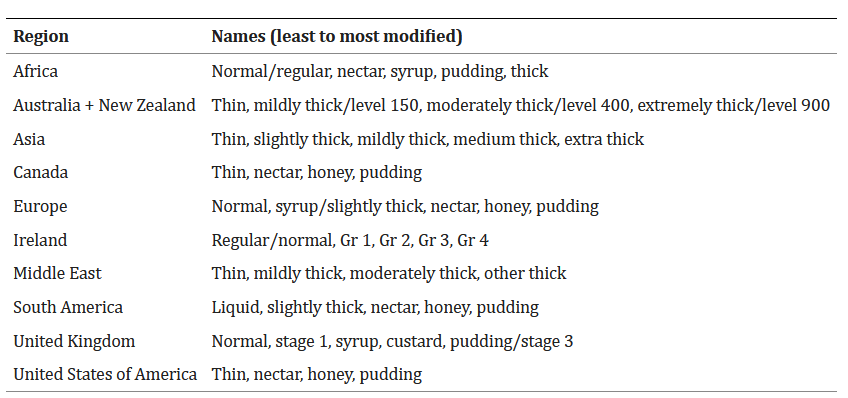
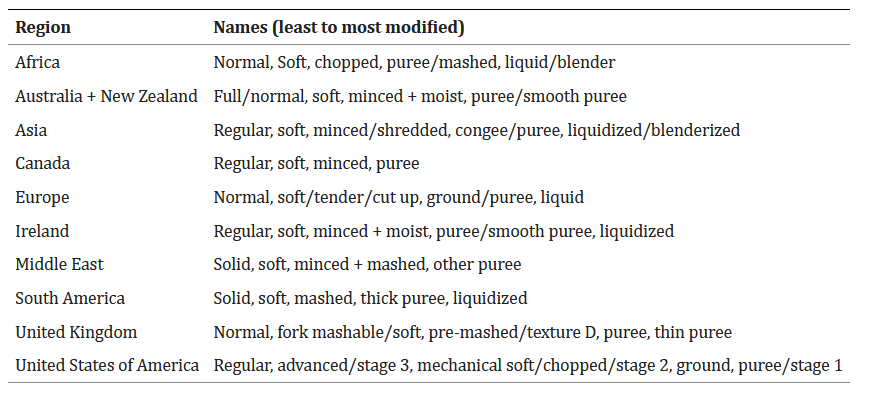
However, and as it is shown in Tables 1&2, different grades and scales were used in different countries during the last years.
Table 1. Thickened drink names and number of levels by world region.
Source: Cichero et al. (2017)
Table 2. Texture-modified food names and number of levels by world region.
Source: Cichero et al. (2017)1
In consequence, there was a gap in communicating and collaborating among experts in food services and clinical staff, and a classification system for food viscosity and texture based on sound empirical evidence to help with dysphagia management was necessary.
To bridge this gap, in 2012, the International Dysphagia Diet Standardization Initiative (IDDSI) 2 was founded to provide a globally standardized terminology and definitions for TM food and liquids that are applicable to dysphagia individuals of all ages, in all care settings, and for all cultures.
Ensuring the correct consistencies of food and drink implies the use of common levels of modification and descriptors
4.1.3.1. Grades, scales and need of standardization texture modified food
The International Dysphagia Diet Standardization Initiative (IDDSI) has been adopted by healthcare professionals all around the world.
The IDDSI Framework provides a common terminology to describe levels of food texture and drink thickness
Different levels of modification (8 levels) were established in order to meet the different needs (See Figure 1)
These 8 levels are defined by colour, number and name.
IDDSI provides a description of each level, along with instructions for easy, reliable and accessible methods to test different foods and drinks.
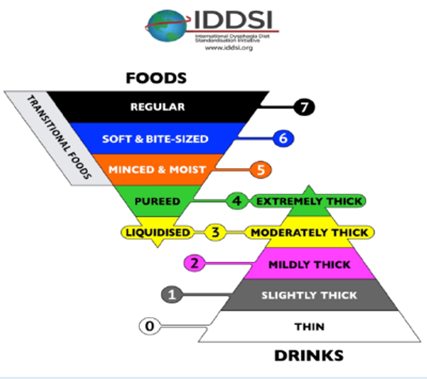
Figure 1. Levels of IDDSI. (Source: https://www.iddsi.org)
Descriptors and examples for foods classified as levels 4 to 7
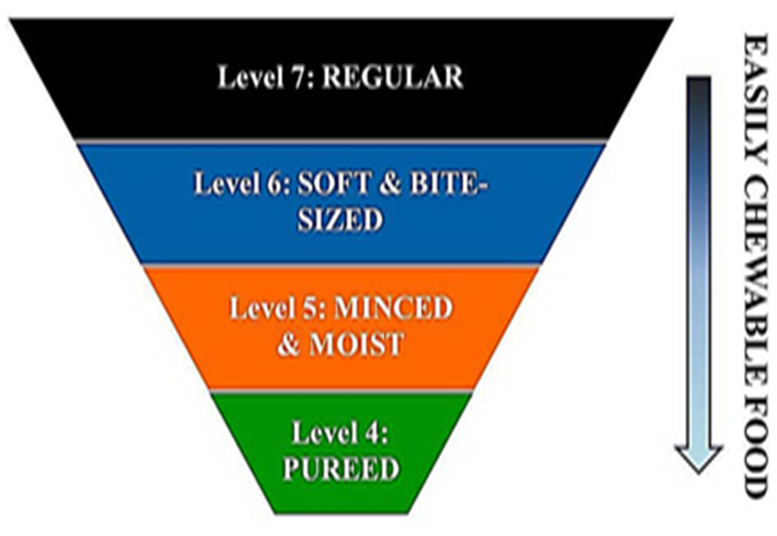
Figure 2. Foods classified as levels 4 to 7
Level 7 is regular foods with various textures (for example, hard, crunchy, and naturally soft).
Level 6 (soft and bite‐sized) foods can be mashed/broken down with pressure from fork, spoon, or chopsticks and are soft, tender, and moist throughout but with no separate thin liquid; chewing is required for this class of foods, which include cooked tender meat, cooked fish, and steamed or boiled vegetables.
Level 5 (minced and moist) represents soft and moist foods with no separate thin liquid; small lumps (of 2 to 4 mm in size) may be visible within the foods and minimal chewing is required. Level 5 foods include such items as minced meat and fish, mashed fruits, fully softened cereal, and rice (not sticky or glutinous).
Level 4 (pureed) does not require chewing, but is cohesive enough to hold its shape on a spoon; level 4 foods include such products as potato purée, carrot purée, and avocado purée.
Descriptors and examples for foods classified as levels 4 to 0
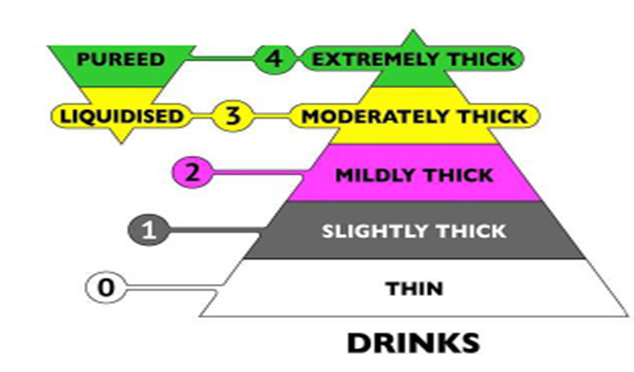
Figure 2. Foods classified as levels 4 to 0
Level 4 Extremely thick: Shows some very slow movement under gravity but cannot be poured; Falls off spoon in a single spoonful when tilted and continues to hold shape on a plate; No lumps; Not sticky.
Level 3 Moderately thick. Smooth texture with no ‘bits’; Moderate effort is required to suck through a standard bore.
Level 2 Mildly thick: Flows off a spoon; Sippable, pours quickly from a spoon, but slower than thin drinks; Mild effort is required to drink this thickness through standard bore straw.
Level 1 Slightly thick: Thicker than water; Requires a little more effort to drink than thin liquids; Flows through a straw, syringe, teat/nipple; Similar to the thickness of most commercially available ‘Anti-regurgitation’ (AR) infant formulas
4.1.3.2. Desired characteristics of dysphagia foods _ More than texture
Not only texture is important for dysphagia foods. Some other aspects should be considered.
Foods with a definite taste or aroma are preferable.
As water is added when foods are processed in a blender, and this may dilute their taste. The use of flavored sauces or other condiments may be advisable.
Foods should present an uniform density.
Chunky soups, rice porridge and other lumpy foods, or foods that contain a mixture of liquids and solids are not suitable, and caution is therefore required.
Temperature of foods also matters.
Foods should be either cold or hot. Items that are the same temperature as the skin are difficult to perceive when placed in the mouth, making it less likely that the swallowing reflex will occur.
Foods should have a pleasant appearance and flavour.
The perception of characteristics considered attractive of the dishes through the 5 senses may result in increased salivation and facilitate swallowing in some cases.
A good appearance can also contribute to the improvement of cognitive and neurological aspects (See Image 1).
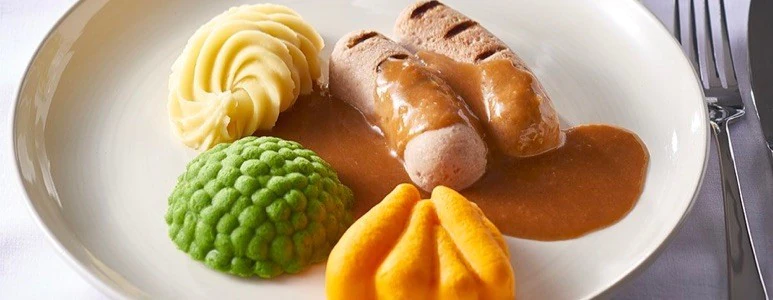
Image 1. Presentation of texture-modified food. Source: Unilever Food Solutions
4.1.4. Texture-modified food and beverages: Definition, requirements and implementation
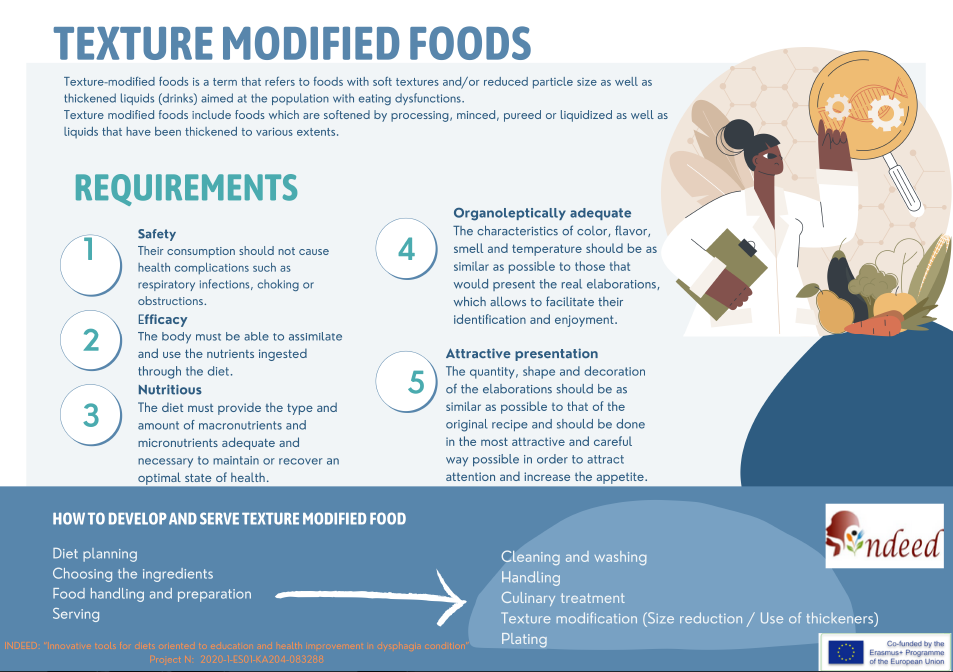
HOW TO IMPLEMENT THE TEXTURE-MODIFIED DIETS WITH SUCCESS IN HEALTH-CARE INSTITUTIONS
BUILDING AWARENESS ABOUT DYSPHAGIA;
CREATING A TEAM;
TRAINING ON IDDSI LEVELS AND METHODS;
CHOOSE OF LEVELS OF INTEREST;
ASSESS PROCESSES AND PROTOCOLS TO CHANGE;
APPROVE CHANGES;
CLEAR PROCEDURES AND COMMUNICATION;
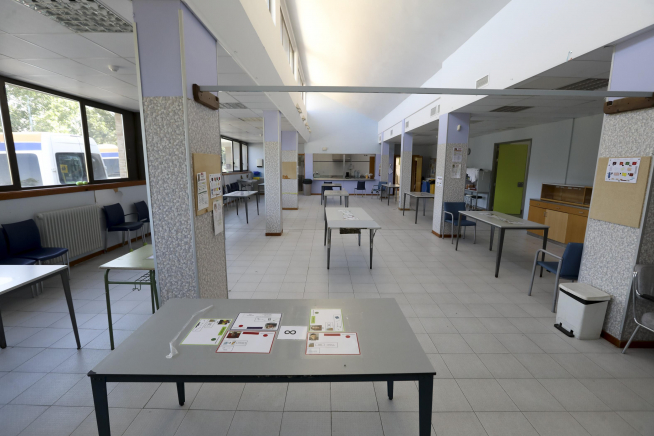
Dining hall in a healthcare institution. Source: Aspace Huesca -Heraldo de Aragón (Autor: Rafael Govantes)
References and sources to Know More
Cichero et al. (2017). Development of International Terminology and Definitions for Texture-Modified Foods and Thickened Fluids Used in Dysphagia Management: The IDDSI Framework. Dysphagia 32(2): 293–314. doi: 10.1007/s00455-016-9758-y
International Dysphagia Diet Standarization Initiative. https://www.iddsi.org/
Aguilera and Park (2016). Texture-modified foods for the elderly: Status, technology and opportunities. Trends in Food Science & Technology 57 (2016) 156-164. http://dx.doi.org/10.1016/j.tifs.2016.10.001
4.2. Tools to modify the thickness of liquids and the texture of solid foods
The aim of this lesson is to learn some basic concepts in rheology and textural properties of dysphagia-oriented food, how to measure their properties and what thickeners can be used to modify the textural and rheological characteristics of food and beverages.
Learning outcomes
To learn some basic concepts in rheology and texture needed to understand the characteristics of texture modified food and thickened fluids
To understand the consequences of the thickening of liquids and foods for dysphagia diets
To know the main characteristics of thickening agents and how to use them
Contents (PPT/PDF 51 slides)
4.2.1. Rheological and textural properties in dysphagia management
-
Specially made and nutritional enriched texture modified foods and thickened fluid has been implemented over the last years for dysphagia management.
-
Ensuring that thickened fluids have suitable flow properties is an essential part of dysphagia management to ensure safe swallowing. Fluids that are too thin may be aspirated, potentially causing pneumonia, while over-thickened fluids may become a choking risk due to residue.
-
Nevertheless the food and beverages used in dysphagia management are usually described qualitatively (e.g. hard, moisture-food, sticky, thin, thick, etc.) and it is still difficult and subjective to categorize the food for patients and caregivers.
-
Many clinicians and researchers agree the terms thick or thin seem not to be enough to ensure the safety of the preparations. Thickened liquids and modified food used for dysphagia management need to be characterized and described more in detail in terms of their rheological properties.
Flow and textural properties of food in dysphagia management
-
Rheological properties* describe how the foods deform or flow in response to stress. They help to characterize the food behavior in complex deformations, such as those encountered during swallowing.
*Rheology is a branch of physics that studies the deformation and flow of materials.
-
Rheological properties of food and liquids used in dysphagia management are complex and they depend on the type and concentration of the thickening agent, temperature, pH, composition of the fluid or solid foodstuff, time after preparation….
-
It is important that research communities and health professionals, including dietitians, nurses, speech and language therapists, physicians and scientists, can use a common terminology and methodology to be used during texture modification for dysphagia management practices.
Flow properties and dysphagia_ Viscosity
-
Viscosity, which is a term broadly used in dysphagia management, is a measure of the resistance of the materials to flow.
-
The unit of measurement is pascal-seconds (Pa. s) in the International System of Units (SI), but it is also reported in Centipoise (cP), where 1cP=1 mPa. s.
-
Liquids like water do not have much resistance to flow and are, therefore, classified as ‘low viscosity’. It takes little effort to stir water with a spoon. However, liquids like molasses or tomato sauce have slow flow rates and consequently a ‘high viscosity’.
-
Some examples of viscosity values are the following: water at 20℃ has a viscosity of 1.0 mPa.s.; honey has a viscosity of 10,000 mPa.s; and tomato sauce has a viscosity of 50,000 mPa.s.
-
Temperature influences viscosity of fluids.
Flow properties and dysphagia_ Viscosity and related terms
-
In the field of dysphagia, the viscosity of food products is commonly measured with a rheometer at 25 ºC at a shear rate of 50 s-1.
-
Common levels of liquid thickness used in dysphagia management in different countries are the following:
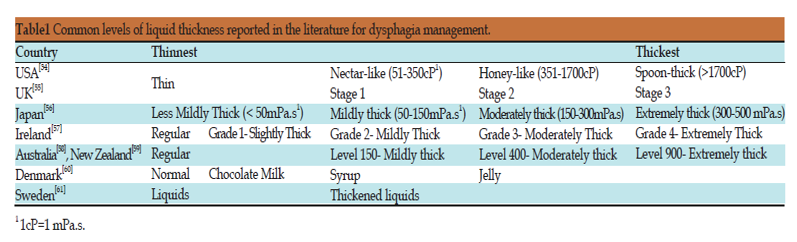
(Source: Cichero and Lam, 2014)
Flow properties and dysphagia_ Viscosity, related terms and levels
The National Dysphagia Diet Task Force defines viscosity in standardized viscosity measurements in centipoise (cP) at a shear rate (s-1) of 50 s-1.
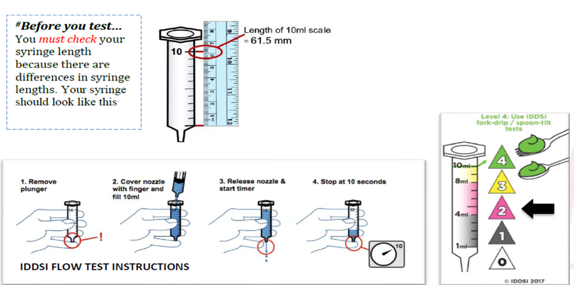
The International Dysphagia Diet Standardization Initiative (IDDSI) utilizes flow rate as an indicator for liquid level; the scale of 0–4 is determined by the amount of liquid remaining in a 10 mL syringe following a free flow period of 10 s.
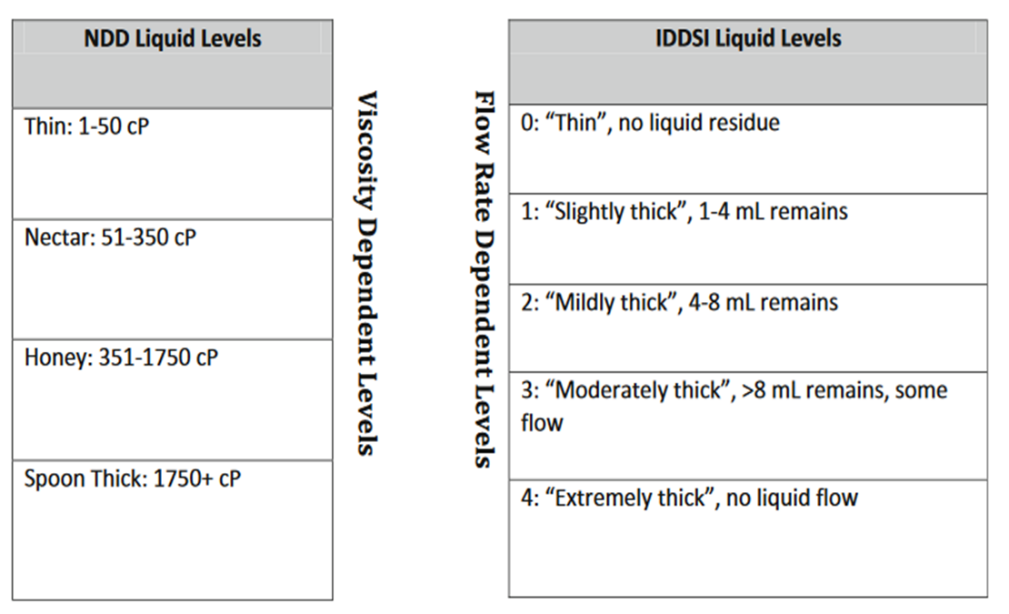
Source: Cichero and Lam, (2014).
Other meaningful flow properties in dysphagia management
Whilst
the viscosity of a liquid provides us with useful information, it
does not provide us with a complete understanding of the structure of
the fluid: Density and yield stress of
fluids are also important.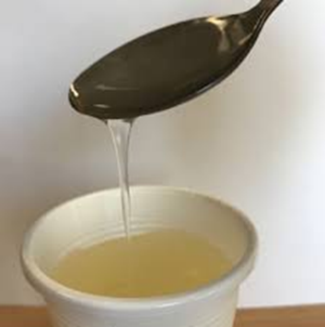
Density is the mass per unit volume. It affects how the fluids move during swallowing processes.
(Source: NHS)
Yield stress is the force required to break down the internal structure of the fluid in order for it to flow. All thickened liquids have a yield stress that must be overcome to allow the liquid to flow.Viscosity, density and yield stress should be considered when designing and preparing thickened fluids for dysphagia conditions.
Textural properties and dysphagia
-
Food texture is the branch of physics that relates to solid or viscoelastic foods.
-
Some textural attributes are: hardness, softness, cohesiveness, stickiness, springiness, adhesiveness, toughness, extensibility,.....
-
Textural parameters are very important when preparing food for dysphagia patients.
-
Food texture adaptation in dysphagia is achieved through particle size modification with or without incorporation of thickeners.
-
Textural properties can be measured by specific equipment named texture analysers.
4.2.2. Methods for measurement the rheological and textural properties
Rheological properties can be measured using different devices and equipment.
Methods are divided into empirical/imitative and fundamental methods.
Empirical and imitative methods involve subjecting the food to a force using a device having specific characteristics, imitating the flow of the food. The data are usually highly specific to a particular food and are difficult to generalize. IDDSI methods are imitative methods
|
|
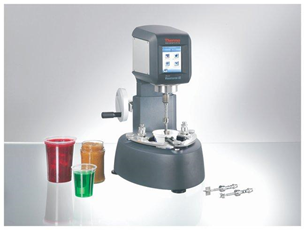
Fundamental tests are based on the measurement of physical properties of the food and the data can be useful for determining processing characteristics. In dysphagia, they are used to evaluate thickeners and to design texture modified food and thickened beverages.
|
Source: https://assets.thermofisher.com |
4.2.2.1. Empirical and imitative methods
Those methods include IDDSI Methods and some others used in different fields of food science.
IDSSI Methods
-
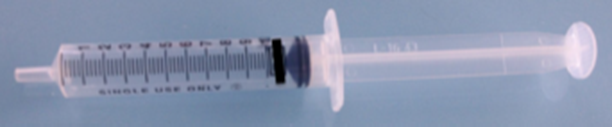
The IDDSI Flow test
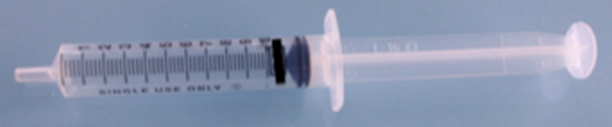
This method uses a 10 mL slip tip hypodermic syringe.
Instructions:
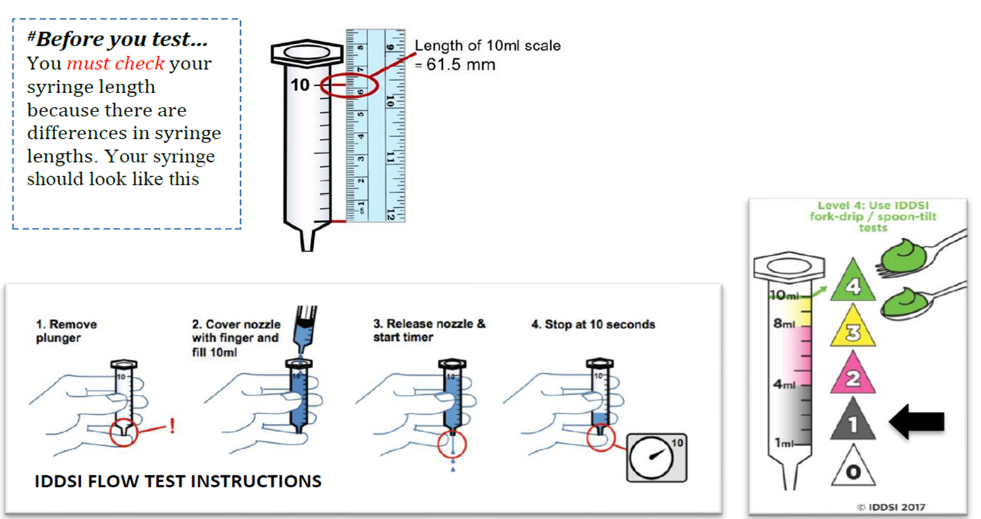
(see IDDSI Flow Test instructions*):
https://www.youtube.com/watch?v=--KHFRql39M
 Testing
tips for IDDSI Flow Test:
Testing
tips for IDDSI Flow Test:
• When using commercial thickener products, follow the manufacturer’s instructions and mix thoroughly, watching closely that there are no lumps or air bubbles present. Be sure to allow the recommended time for the fluid to thicken completely.
• Use a clean, dry syringe of the correct type each time you test.
• Check the nozzle of the syringe is completely clear and free from any plastic residue or manufacturing defects that may occasionally occur.
• Test twice or more to ensure more reliable results.
• Check for lumps – especially if flow suddenly stops. In this case the fluid may not be suitable for dysphagia use.
• Ensure to test the liquid at the intended serving temperature
-
IDDSI Fork/Spoon Drip Test
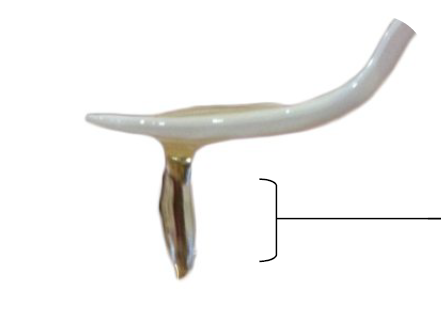
Food may be tested by assessing whether they flow through the tines/prongs of a fork or not.
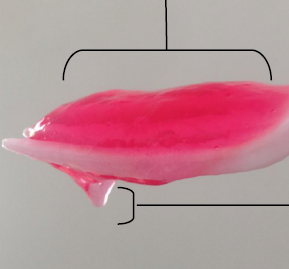
(Source: https://www.iddsi.org)
The spoon tilt test is used to determine the stickiness of the sample (adhesiveness) and the ability of the sample to hold together (cohesiveness).
Testing
tips:

• The sample should be cohesive enough to hold its shape on the spoon.
• A full spoonful must plop off the spoon if the spoon is tilted or turned sideways; a very gentle flick (using only fingers and wrist) may be necessary to dislodge the sample from the spoon, but the sample should slide off easily with very little food left on the spoon. A thin film remaining on the spoon after the Spoon Tilt Test is acceptable, however, you should still be able to see the spoon through the thin film; i.e. the sample should not be firm and sticky.
• A scooped mound may spread or slump very slightly on a plate.
Other empirical o imitative methods
|
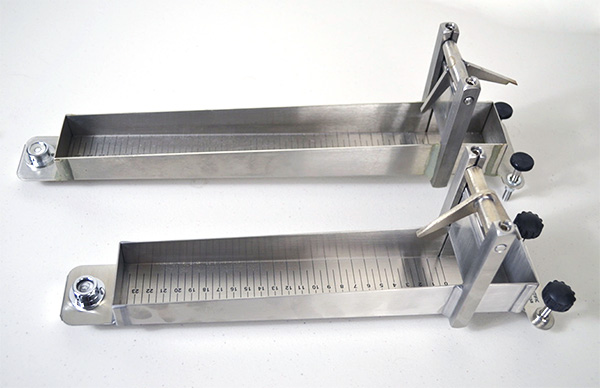
The Bostwick Consistometer is a simple device for measuring consistency and flow rate in a variety of products. It can be used on any viscous material such as sauces, salad dressings, paints, chemicals or cosmetics. The normal way to use the Consistometer is to measure the distance a sample flows in a given time interval. The
"Bostwick" is a trough with 0.5 cm gradations along the
bottom. The trough is separated near one end by a spring-loaded
gate. This forms a chamber where the sample is loaded. |
(Source: https://www.cscscientific.com) |
|
Line-spread test (LST). Some results of the current study suggest that the LST may be useful in the broad categorization of fluids into therapeutically significant groupings but that it cannot be used more specifically to measure fluid viscosity. Some other results suggest that the LST is a more reliable method than the IDDSI test for evaluating the correct and desirable viscosity for the dysphagia diet, and that the IDDSI test provides a means to predict the rheometer-measured viscosity of water thickened with only XG-based thickeners (Kim et al., 2018) |
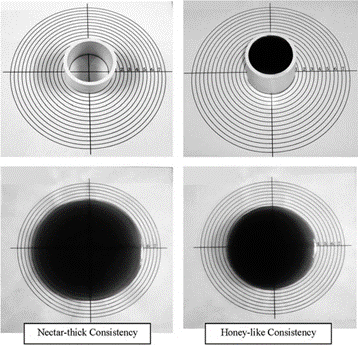
(Source: Kim et al., 2018) |
|
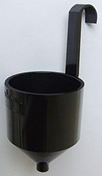
Ford Cup - it is a simple device, based on gravity, used to measure the viscosity of fluids. It measures the time of a known volume of a fluid passing through an orifice located at the bottom. It is not commonly used for dysphagia preparations.
|
(Source: https://www.nonpaints.com) |
Fundamental methods for the measurement of rheological properties
Fundamental tests are based on the measurement of physical properties of the food.
For optimal design of food and liquid adapted for dysphagia, it is necessary to know not only the viscosity of the products, but also the bolus viscoelasticity, yield stress, extensional viscosity, mechanical properties and lubrication properties of food. They can be obtained using fundamental testing methods.
They are commonly used at a laboratory scale for the design of thickening agents and pre-packaged ready-to-use thickened products.
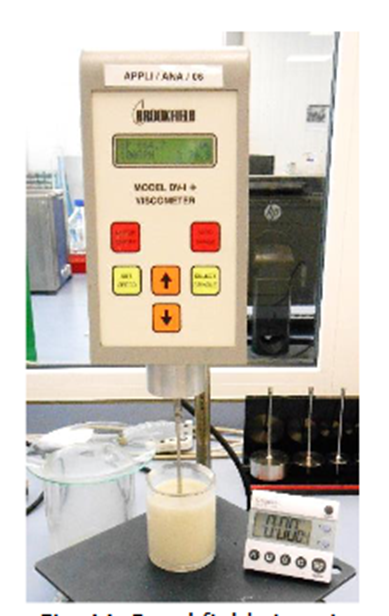 |
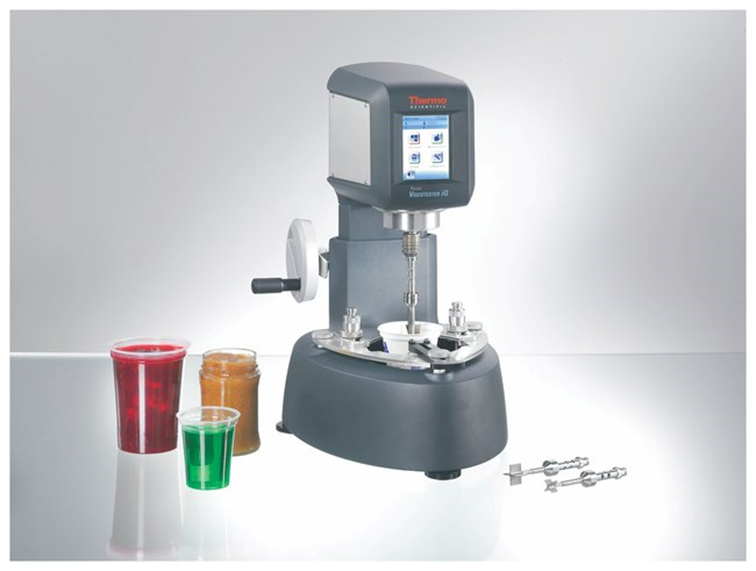 |
|---|---|
| Viscosimeter | Rheometer |
(Source: https://assets.thermofisher.com)
Texture
analyzers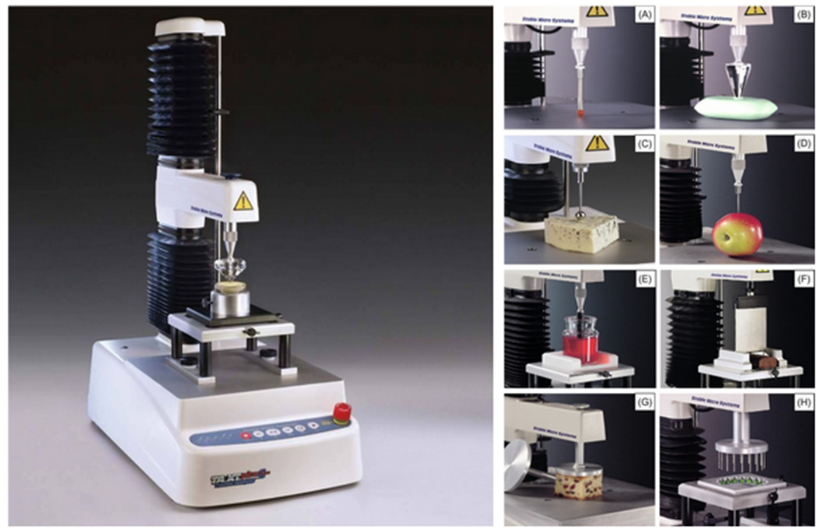
Texture analyzers are also used to measure the rheological and textural properties of semi-solid food.
Both fundamental and imitative tests can be implemented.
The equipment is expensive, but several probes are available for different types of food.
It has been proposed that a texture analyzer would be optimal for the evaluation of the texture of solid or gel-type food used in dysphagia.
https://www.stablemicrosystems.com/TAXTplus.htm
Tribology
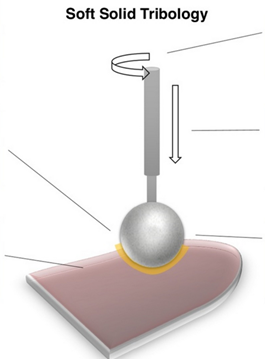
Nowadays, the study of the interaction of food with saliva during mouth manipulation and swallowing is being studied applying food tribology.
-
Tribology describes friction, lubrication and wear between two interacting surfaces.
-
Soft tribology refers to the study of the interaction between food and surfaces within the oral cavity during food consumption.
-
It is an interesting approach for understanding oral processing and sensory perception of foods.
-
It can be useful to study the behavior of food when xerostomia appears, a common problem developed by geriatric population and by other patients.
-
The study of lubrication properties of different thickened liquids, shows differences between thickeners. Modified starch thickeners showed a lower lubricant capacity than that of gum-based ones.
-
Inclusion of tribological parameters into the IDDSI scale would be of interest (Rudge et al., 2019).
4.2.3. Adjusting the consistency of dysphagia-oriented food and beverages
The supply of foods with modified texture and thickened fluids is the basis for the nutritional treatment of dysphagia.
Thin liquids are the type of product that most easily causes choking and should be thickened to improve bolus control and to help prevent aspiration. A range of starches and gums has historically been used to thicken liquids.
On the other hand when solid food is pureed, it may also require the use of thickening agents to adjust the rheological and textural characteristics, if they are not achieved by the culinary preparation and/or the reduction of size particle..
In the past, thickening foods and fluids with starches such as wheat flour, corn flour or tapioca starch, was commonplace: Gravies and custards are homemade fluids that have used these starches for many years. When the grains of starch come into contact with boiling water they absorb the water and expand, thickening the fluid. Unfortunately, when left to cool, the starch may break down and the product ‘weeps’ water. Domestic thickening using ingredients containing starch naturally in its composition (potato, bread….) is also possible, but it is still rarely used in the diets guided by caregivers and health professionals.
Nowadays, modified starches and vegetable gums are preferred. They act as thickening agents, gelling agents, emulsifiers and stabilizers.
Modified starches, proteins, individually or in combination with exudates and seed gums, seaweed extracts and, most recently, microbial polysaccharides, are found to have the ability to improve product mouthfeel, handling properties, and stability characteristics.
Commercial thickeners are also available and include different thickening agents (from those cited above) in their composition. However, they may be considered expensive by some patients. In addition, in some places, they are not easily found in common commercial establishments and those factors limit the acquisition.
Tips for proper thickening of liquids and foods
-
The type and amount of thickener and the characteristics of the food or beverage (dispersing media) are relevant factors.
-
Time after preparation is a key factor, as consistency changes with time.
-
Temperature is also a critical factor.
-
The right consistency is very important, since thickened liquids which are nevertheless still thin, are swallowed quickly by the patients and may flow prematurely into the pharynx.
-
Sticky and adherent textures, along with fine liquids should be avoided, because these textures may cause food residues to accumulate in the oropharynx and lead to aspiration after swallowing.
-
Excessive thickening can also cause negative effects, as it can leave residues inside the pharynx, which may incur risk of aspiration, reduce palatability, and increase viscosity, in addition to generating changes in consistency and cohesiveness.
-
When preparing the liquid beverage, the liquid may become lumpy if it is stirred too slowly or if more thickener is added once it has started to thicken.
-
It takes approximately 5–15 min for its physical properties to stabilize.
4.2.4. Thickening agents
Functions
-
Improvement in moisture binding capacity, structural modification and modifying bolus flow behavior properties are the major functions of food thickeners.
Mechanism of thickening
-
Most commercial thickeners available are polysaccharides and the thickening properties are due to the expanding nature of these high-molecular-weight molecules in solution, even when used at relatively low concentrations.
-
Generally, these long-chain polysaccharide molecules exist as conformationally disordered ‘random coils' in solution, whose shape fluctuates continuously under Brownian motion, increasing the viscosity.
-
Each thickener has different rheological behaviour and characteristics when mixed with fluids
-
The addition of thickeners to fluid affects the perception of flavours.
Sources of food thickeners
-
Food thickeners are obtained from different natural raw material sources which include vegetables, marine plants, microorganisms, and animal connective tissues.
-
They can be classified into four broad categories: gum based, protein based, plant based, and microbe based (Himashree et al., 2022).
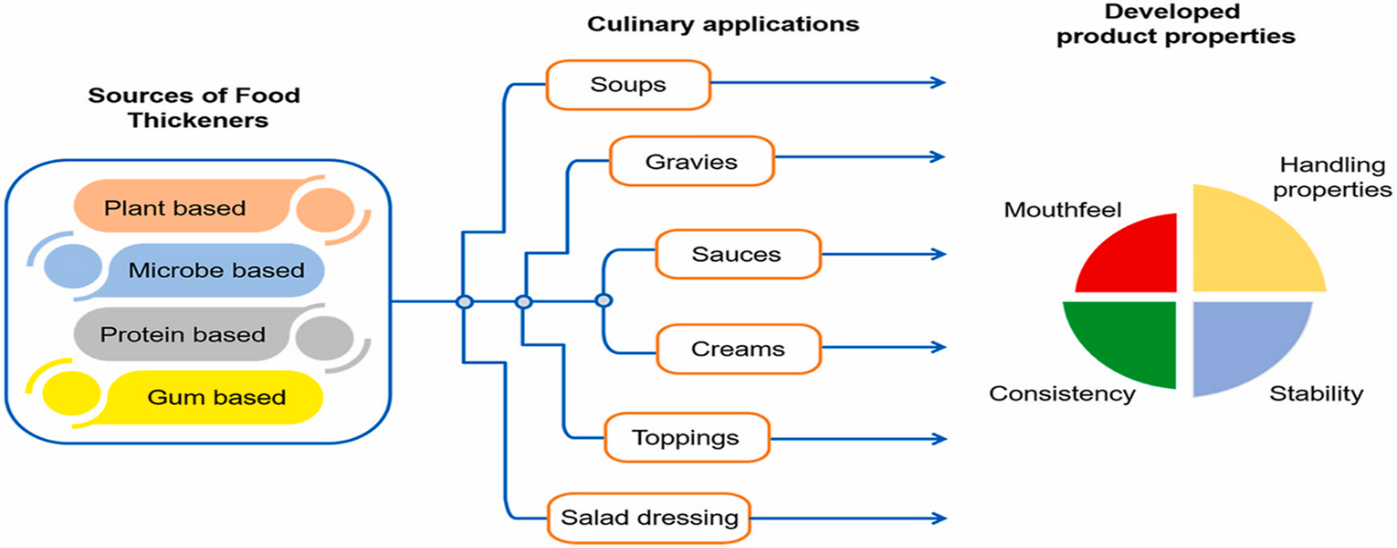
(Source: Himashree et al., 2022)
Thickeners used in dysphagia
Thickeners for dysphagia management are categorized as Food for Special Medical Purposes (FSMP) which is a group of products intended for the dietary management of specific groups of patients with deficits that need to be medically and regulated by EU No 609/2013 and the supplementing (EU) 2016/128.
Thickeners used in dysphagia diets can be classified into two categories: starch-based thickeners and gum thickeners.
-
Starch-based thickeners are the most common thickeners used in commercial foods for dysphagia and in food preparations in puree consistency (Cichero, 2013). This may be because they are inexpensive and easily available.
-
Gum-based thickeners or hydrocolloids have emerged as an alternative to dysphagia by promoting an increase in viscosity and shear properties in watery media. The name comes from “Hydro” which means water and “colloids” that means glue. They are macromolecules that can form viscous dispersions and/or gels with water.
-
In commercial products, combinations of both types may appear (See Table 2).
In some types of fluids, gum-based thickeners are preferred for the treatment of patients with dysphagia, since gums are not influenced by saliva during consumption of fluid foods and starch-based are.
Table 2. Commercial thickening products and their composition. Adapted from Bolivar Prados et al. (2022).
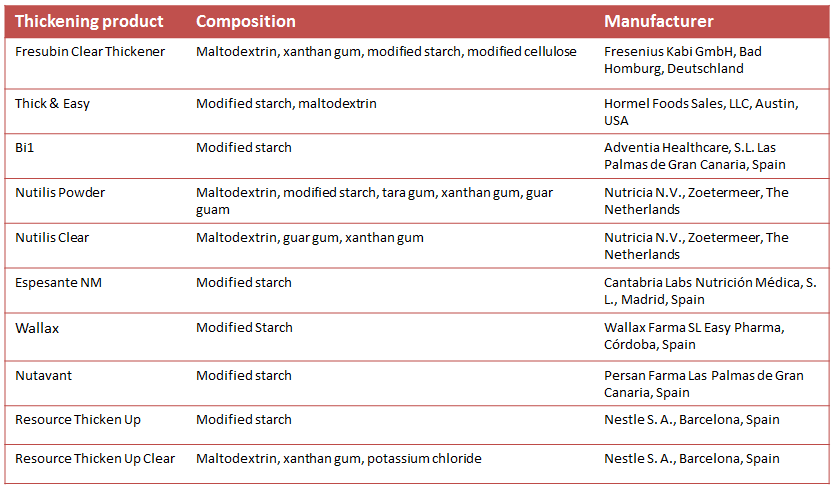
Table 3. Starch Based Thickener Characteristics and examples of use (adapted from Giura et al., 2021)
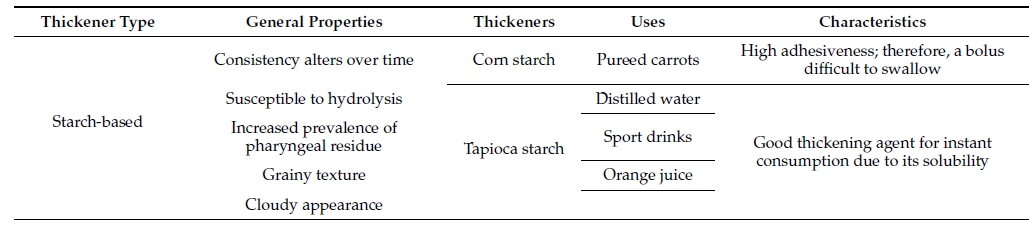
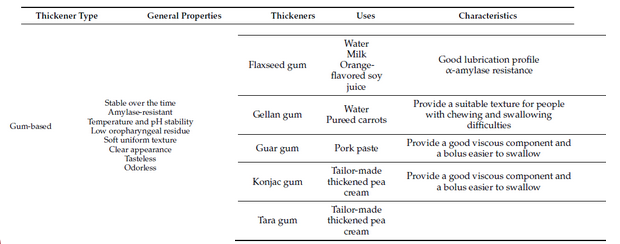
Table 4. Gum-Based Thickeners: Characteristics and examples of use
(adapted from Giura et al., 2021)
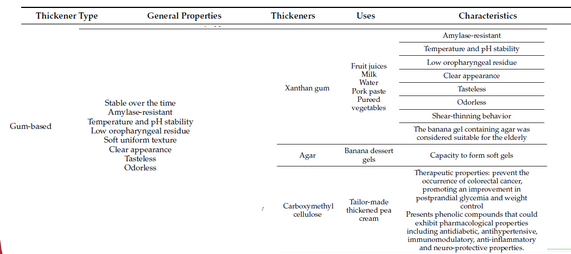
Table 4 (cont.). Gum-Based Thickeners: Characteristics and examples of use (adapted from Giura et al., 2021)
Starch
-
Starch is a soft, white, tasteless powder that is insoluble in cold water, alcohol, or other solvents.
-
Starch is a polysaccharide comprising glucose monomers joined in α 1,4 linkages.
-
Starch is composed by two components: the linear polymer is named amylose and amylopectin, is the branched form.
 Amylose
 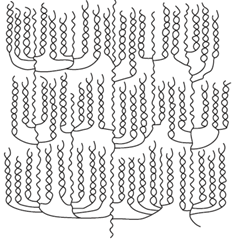 Amylopectin
-
Starch (as potato starch, cornstarch, or starch from other origin) becomes more easily adsorbed and viscous as it cools.
-
The longer the time taken to eat a meal, the colder it becomes and the more likely it is to stick to the pharynx; therefore, caution is required.
-
A large amount must be added.
-
Thickens immediately.
-
Provides stable viscosity irrespective of the type of food or drink.
-
Uses: Good for making molded dishes such as blended foods or mousses.
Modified starches
-
Modified starch is the starch extracted from grains and vegetables which has been treated to improve its ability to keep the texture and structure of the food.
-
“Modified starch” does not mean that it has been genetically modified or produced from genetically modified organisms.
-
All modified starches are safe to use in the EU – they are independently tested by the European Food Safety Authority in order to guarantee their safety. They are labelled either by their name (e.g. modified starch) and/or their E number (e.g. E1404) on a product pack.
-
Modified starches are used in food products that need to be microwaved, freeze-dried, cooked at high temperatures (for example, a ready-made pizza, instant soup, sauces) or baked and fried so that the texture of such food does not change during the cooking process.
-
There are three different ways of modifying starch – it can be heated with water (which is called physical modification), treated with enzymes (enzymatic modification) or with various chemicals (chemical modification).
Physically modified starches are the ones used as food thickeners in dysphagia oriented products. The thermal treatment of starch (physiscal modification) makes it able to form a paste even in cold liquids, so it swells and behaves as an instant thickener.
Guar gum
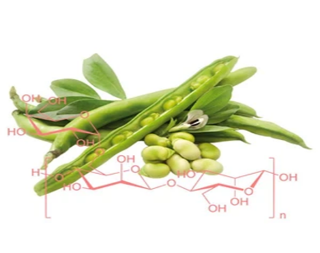
Guar
gum, also called guaran, is a galactomannan polysaccharide extracted
from guar beans that has thickening and stabilizing properties useful
in food, feed, and industrial applications. The guar seeds are
mechanically dehusked, hydrated, milled and screened according to
application.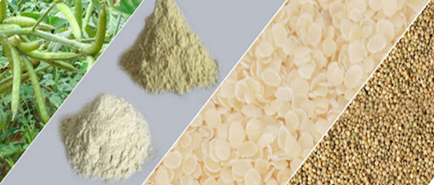
It is typically produced as a free-flowing, off-white powder.
(Source: https://www.plantmedia.com/products/guar-gum
Only a small amount is needed for thickening, but it takes time for stable viscosity to be obtained. Changes the smell of food (to the smell of guar gum). One feature is that it also thickens milk.
Uses: Good for thickening soups and adding to blended foods and purées to make molded dishes.
Xanthan gum
Xanthan gum is the most studied hydrocolloid in diets for dysphagia along with starch. It is a high molecular weight heteropolysaccharide that has residues of 1,4 linked β-D-glucan as the primary structure and trisaccharide side chains with two mannose molecules and a glucuronic acid linked to a D-glucose in the structure.
It is well accepted in relation to the viscosity and texture attributes by patients with dysphagia when incorporated into drinks.
Xanthan
gum is usually dosed in concentrations between 0.88 and 11.5% (De OS
Schmidt et al., 2021). 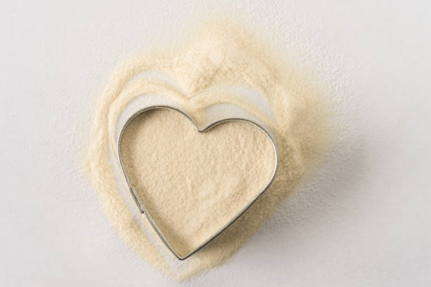
Highly transparent, colorless and odorless, and of low adhesiveness. Suitable for thickening clear liquids and the like. It is not good for thickening milk or high-density liquid diets, although it has recently been improved. It is currently the most popular thickening agent.
Uses: Ideal for thickening to a low viscosity.
(Source: https://www.istockphoto.com)
Characteristics, types, and methods of use of thickening-gelling agents
-
Gelling agents have the property of solidifying liquid components, and are used in foods such as jellies and puddings.
-
A small amount can solidify liquids, and their hardness can be adjusted by varying the amount used.
-
Gelling agents include gelatin (derived from animal skin and bones), agar (Gelidium divaricatum), carrageenan, and pectin.
-
These all have different properties, and are used for different purposes.
-
In recent years, gelling agents for making warm jellies have also come onto the market.
Proteins
-
Some proteins from animal origin are used in some food preparations due to their gelling properties.
-
Proteins from bones, skins and tendons of animals (gelatin), skins of fish (gelatin), milk (caseinates and whey proteins), eggs (egg white proteins.
-
Some proteins from plant origin: chickpea, faba beans and others.
(Source: https://www.istockphoto.com)
Gelatin-
Gelatin jelly (1.6% gelatin concentration, made from 80 g juice and 1.3 g gelatin) is the best-known food that meets dysphagia conditions.
-
Gelatin melts at 20ºC–30ºC. It melts at the temperature of the inside of the mouth. Moreover, as it retains water well, meaning that it flows while the interior remains as a gel and changes shape, it has a pleasant texture when eaten, it is able to flow smoothly through the narrow pharynx.
-
Temperature management must be taken into account because gelatin melts at room temperature.
-
The appropriate concentration of gelatin jelly for use at the start of swallowing training is 1.6% (5 g of gelatin per 300 ml of liquid). The jelly should be soft enough to obble when shaken.
-
The normal gelling agent concentration is 1.5% – 3.0%.
-
Because the surface melts slightly and becomes covered in liquid, this phenomenon is seen in gelatin because at the structural level, its surface possesses hydrophilic groups while its interior possesses hydrophobic groups.
-
The affinity between the oral and pharyngeal mucosa and food is important, and the characteristics of gelatin can be utilized effectively in this area (De OS Schmidt et al., 2021).
-
Care should be taken as it melts in mouth and generate a food with two phases
Agar
-
Other similar ingredients include agar* and starch; however, although they do form food boluses, the physical properties of these materials still pose problems.
-
Agar breaks up inside the mouth when chewed, meaning it is susceptible to aspiration and thus unsuitable for a dysphagia diet.
-
Agar forms a gel at a temperature of 30ºC–40ºC and melts at 70ºC–85ºC. It thus solidifies at room temperature. It is characterized by high cohesiveness and a tendency for water to separate out; it does not dissolve in the mouth; and when it is crushed, it does not change shape while passing through the pharynx, which means caution is required.
-
When making agar jelly, the agar is boiled to dissolve it.
-
*The raw ingredient for agar is a complex polysaccharide obtained from Gelidium divaricatum and other types of red algae. It is a gel that dissolves when heated and solidifies when cooled. It is also used as a coagulating agent in culture medium.
Carrageenan
-
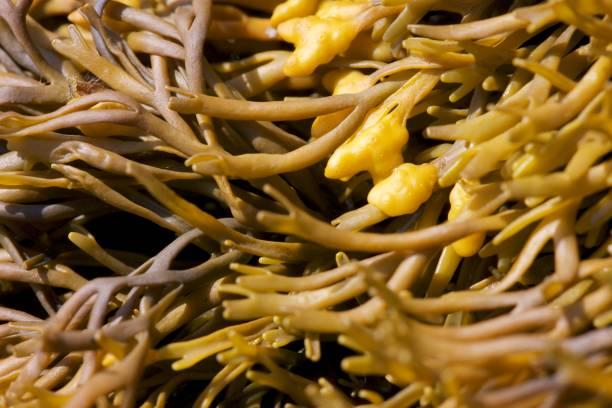
Carrageenan is a gelling agent derived from red algae (Gigartina tenella, Chondrus crispus).
-
Its physical properties are similar to those of gelatin and agar: it solidifies at room temperature, and is stable enough not to leak out.
-
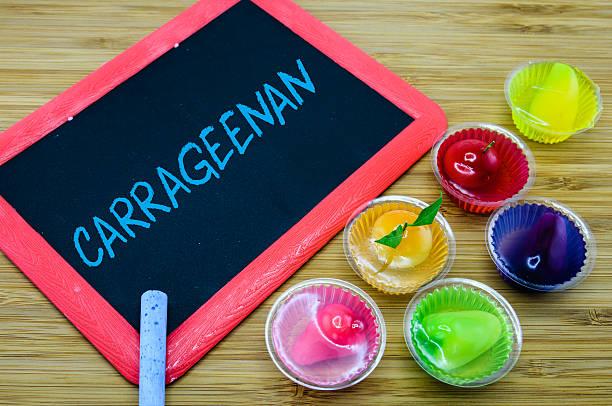
As it is tasteless and odorless, it has no effect on the flavor of other ingredients, and is extremely soft and slightly elastic.
-
Carrageenan is nutritionally neutral and has an extremely high content of fibre, making it indigestible by the human body.
-
A group of similar sulphated polysaccharides, its ability to bind to protein is what makes it useful in meat and dairy products.
-
There are three basic types: Iota Carrageenan, Kappa Carrageenan and Lambda Carrageenan,
(Source: https://www.istockphoto.com)
Read more at: https://www.boldsky.com/health/wellness/2019/carrageenan-uses-benefits-side-effects-128665.html
Pectin
-
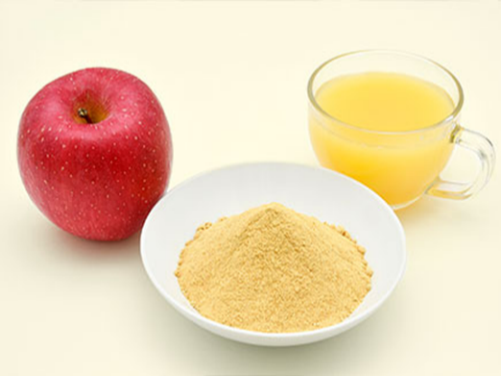
Pectin is a polysaccharide found in citrus fruits and apple skin that can be extracted in water.
-
It is used for gelling jams, jellies, yogurt, and other foods.
-
Pectins with a high methyl ester content turn into gel in the presence of sugars and other solutes (at least 60%) and at low pH (<3). The strength of the gel and the regulating temperature depend on the concentration and type of sugar, the cooling rate, and the pH.
-
There are other types of pectin which form gels at different conditions.
-
Pectin shares similarities with carrageenan in conditions of low strain but exhibits quite different characteristics when subjected to conditions of high strain (Sharma et al., 2017).
(Source: https://www.istockphoto.com)
Glucomannan and galactomannan
-
Glucomannan is a dietary fiber usually made from the root of the konjac plant. It's historically been used as food and medicine in Asian cultures.
-
Glucomannan is a water-soluble polysaccharide that is considered a dietary fiber.
-
It is a hemicellulose component in the cell walls of some plant species. Glucomannan is a food additive used as an emulsifier and thickener.
-
It is a major source of mannan oligosaccharide (MOS) found in nature, the other being galactomannan, which is insoluble.
-
Its role as a thickening agent in dysphagia products has been recently investigated.
Other fibers of plant origin
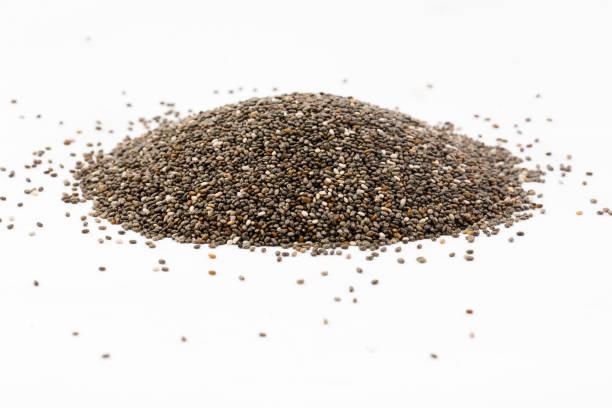 The chia (Salvia
Hispanica L.) seeds will gel and
thicken the drink. Chia seeds don't always have to be soaked in
liquid - they can be added to baked goods like muffins, scones, and
the like. Because chia seeds form a gel in liquid, they can be added
to soups, stews, sauces, and marinades to help thicken the liquid in
place of corn starch or flour. Chia seeds can also be blended into
juice smoothies to add the thicker texture normally provided by
whole fruits or yogurt.
The chia (Salvia
Hispanica L.) seeds will gel and
thicken the drink. Chia seeds don't always have to be soaked in
liquid - they can be added to baked goods like muffins, scones, and
the like. Because chia seeds form a gel in liquid, they can be added
to soups, stews, sauces, and marinades to help thicken the liquid in
place of corn starch or flour. Chia seeds can also be blended into
juice smoothies to add the thicker texture normally provided by
whole fruits or yogurt.-
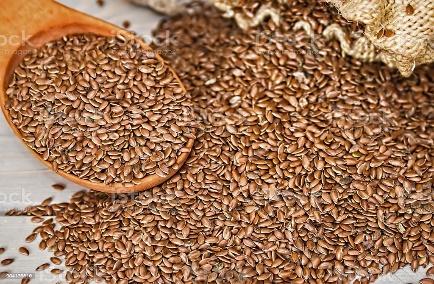 Ground flax seed (Linum
usitatissimum) can also be used to
thicken soups and stews. It can be used as an egg replacement in
quick bread recipes (1 tablespoon ground flaxseed combined with 3
tablespoons water is equivalent to one medium egg).
Ground flax seed (Linum
usitatissimum) can also be used to
thicken soups and stews. It can be used as an egg replacement in
quick bread recipes (1 tablespoon ground flaxseed combined with 3
tablespoons water is equivalent to one medium egg).
(Source:
https://www.istockphoto.com)
To be used in dysphagia oriented products, the
mucilage must be extracted from the seeds and used in the form of
chia gum or flaxseed gum. See Ribes et al. (2022) or Viera et al.,
(2021) for more information.
Commercial thickening agents
-
Food thickeners are commercially available as powders that can be added to any drink or pureed food.
-
Modified maize starch (pre-gelatinised) and gums (such as xanthan gum or galactomannans) are the polysaccharides normally used in commercially available thickeners. In some cases, they are used in combination.
-
Viscosities of starch-based thickened beverages are different from those of gum-based thickened beverages, mainly due to this different thickening process. They also differ in to what extent they modify the taste and the appearance of the food or beverages.
-
Some studies show that gum-based thickeners are safer because they are not affected by salivary enzymes (amylase).
-
Their thickening properties may change in different food matrices and should be studied.
-
The composition of the thickeners could influence hydration and absorption of medication.
-
It is also convenient to check the instructions given in the labels.
-
Some examples of commercial products and uses are the following:
-
By adding Resource® ThickenUp™ Clear (Nestle), Nutlis Clear (Nutricia) into foods such as puréed vegetables you can achieve the correct consistency, without changing the taste or look of the food.
-
PreciseR have developed a liquid thickener also useful for drink and medication trollies which gives instructions for level 1-4 fluids and thickens a wide range of beverages, supplements and laxatives. Free online training is available on the website: https://elearning.precisethickn.com.au
-
Nutricia also have a thickener called ‘Nutilis’ powder. This has a table of levels of scoops for thickening levels 1-4 (given as a guide only). Support is available from: nccl@nutricia.com.
 (Source:nccl@nutricia.com.)
 (Source:https://www.nestlehealthscience.com)
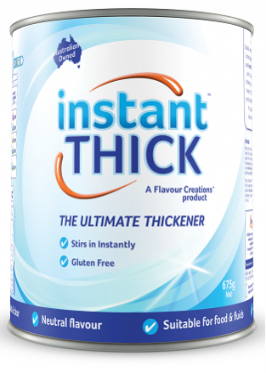 Source:https://www.flavourcreations.com.au)
Example: How to thicken drinks
-
Add the recommended number of flat scoops of resource Thicken Up Clear™ to a dry empty cup/glass;
-
No. of level scoops: mildly=2; moderately=4; extremely=8 per 200 mls;
-
Pour in 200 mls of your chosen drink;
-
Immediately stir briskly with a spoon until the powder is dissolved;
-
Leave to stand for 2 minutes until the drink has thickened;
-
Check consistency is correct - if it is not right you will have to pour the drink away and start again.
Other commercially available thickened products
A large range of prethickened fluids as waters, juices or supplements are available from different pharmaceutical companies.
In some cases, they provide the IDDSI levels of thickness. These are labelled with the colours which represent the thickness level. Other companies may also be able to supply products with the levels evaluated.
Thickeners and bowels disorders
-
Most gums are polysaccharides (soluble fibre and/or insoluble fibre eg xanthan gum). Some mostly soluble gums such as guar and pectin, can have a laxative effect if used in large quantities (>12g per day).
-
Xanthan gum is not recommended in quantities greater than 10g per day. This is worth noting for patients on thickened fluids, who may need to be supplied with a variation of thickened fluids made with varied ingredients to suit their individual needs.
-
Nursing staff should check products used if bowel issues occur.
Practical exercise: Guide to prepare thickened drinks
-
The goal of the activity are to learn thickening methods of liquids and foods
-
To do this activity we need a glass 200ml, spoon, fork or whisk, syringe, thickeners, water or drinks.
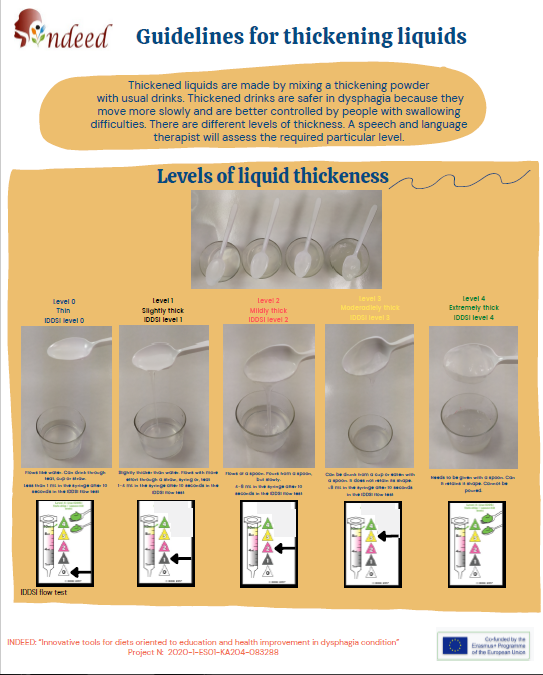
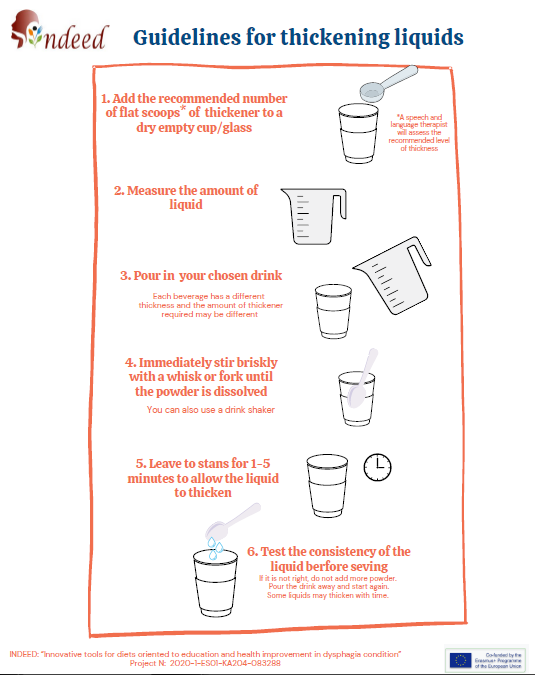
(See Unit 4.3. For more information about thickening levels)
Resources
-
Andersen, U. T., Beck, A. M., Kjaersgaard, A., Hansen, T., & Poulsen, I. (2013). Systematic review and evidence based recommendations on texture modified foods and thickened fluids for adults (≥ 18 years) with oropharyngeal dysphagia. e-SPEN Journal, 8(4), e127-e134.
-
Bolivar-Prados, M., N. Tomsen N, Arenas C., Ibáñez L, Clave P. (2022). Hidden risks in thickening products’ labelling for dysphagia treatment. Food Hydrocolloids 123 106960. https://doi.org/10.1016/j.foodhyd.2021.106960.
-
Cichero & Lam (2014). Thickened Liquids for Children and Adults with Oropharyngeal Dysphagia: the Complexity of Rheological Considerations. Journal of GHR 21 3: 1073-1079. doi:10.6051/j.issn.2224-3992.2014.03.408-13.
-
Cichero, J. A. Y. (2015). Texture‐modified meals for hospital patients. In J. Chen & A. Rosenthal (Eds.), Modifying food texture, volume 2: Sensory analysis, consumer requirements and preferences (pp. 135– 162). Cambridge, UK: Woodhead Publishing.
-
Clerici, M. T. P. S., & Schmiele, M. (2018). Physically modified starch is most commonly used as a food thickener.
-
Daubert C & Foegeding A. (2010). In Rheological Principles for Food Analysis. Nielsen, Food Analysis, Food Science Texts Series.
-
De OS Schmidt, H., Komeroski, M. R., Steemburgo, T., & de Oliveira, V. R. (2021). Influence of thickening agents on rheological properties and sensory attributes of dysphagic diet. Journal of texture studies.
-
Gallegos G., Turcanu, M., Assegehegn, G., & Brito‑de la Fuente E. (2021). Rheological Issues on Oropharyngeal Dysphagia. Dysphagia: 3.
-
Giura et al. (2021). Exploring tools for designing Dysphagia-Friendly Foods: A review. Foods 10: 1334. doi: 10.3390/foods10061334.
-
Hadde et al., (2020). Evaluation of Thickened Fluids Used in Dysphagia Management Using Extensional Rheology. Dysphagia (2020) 35:242–252. https://doi.org/10.1007/s00455-019-10012-1.
-
Himashree, P., Sengar, A. S., & Sunil, C. K. (2022). Food thickening agents: Sources, chemistry, properties and applications-A review. International Journal of Gastronomy and Food Science, 100468.
-
Kim et al., (2018). Comparative study of IDDSI flow test and line-spread test of thickened water prepared with different dysphagia thickeners. Journal of texture Studies
-
Lee, H. Y., Yoon, S. R., Yoo, W., & Yoo, B. (2016). Effect of salivary reaction time on flow properties of commercial food thickeners used for dysphagic patients. Clinical nutrition research, 5(1), 55-59.
-
Matsuo, K., & Fujishima, I. (2020). Textural changes by mastication and proper food texture for patients with oropharyngeal dysphagia. Nutrients, 12(6), 1613.
-
Methacanon, P., Gamonpilas, C., Kongjaroen, A., & Buathongjan, C. (2021). Food polysaccharides and roles of rheology and tribology in rational design of thickened liquids for oropharyngeal dysphagia: A review. Comprehensive reviews in Food Science and Food Safety 20: 4101 – 4119.
-
Moret-Tatay et al. (2015). Commercial thickeners used by patients with dysphagia: Rheological and structural behaviour in different food matrices. Food Hydrocolloids 51 (2015) 318-326.
-
Nicosia & Robins (2007). Dysphagia22: 306–311
-
Park, H. S., Kim, D. K., Lee, S. Y., & Park, K. H. (2017). The effect of aging on mastication and swallowing parameters according to the hardness change of solid food. Journal of Texture Studies, 48, 362– 369.
-
Rudge, R. E., Scholten, E., & Dijksman, J. A. (2019). Advances and challenges in soft tribology with applications to foods. Current Opinion in Food Science, 27, 90-97.
-
Sungsinchai, S., Niamnuy, C., Wattanapan, P., Charoenchaitrakool, M., & Devahastin, S. (2019). Texture modification technologies and their opportunities for the production of dysphagia foods: A review. Comprehensive reviews in food science and food safety, 18(6), 1898-1912.
-
Vieira J.M., Oliveira, F.D., Salvaro, D.B., Maffezzolli, G. P., de Mello, J.D.B., Vicente, A. A.& Cuhna, R. L. (2020). Rheology and soft tribology of thickened dispersions aiming the development of oropharyngeal dysphagia-oriented products. Current Research in Food Science 3: 19-29.
-
Yang, H. W., Dai, H. D., Huang, W. C., & Sombatngamwilai, T. (2020). Formulations of dysphagia-friendly food matrices with calorie-dense starchy thickeners and their stability assessments. Journal of Food Measurement and Characterization, 14(6), 3089-3102.
4.3. Levels, descriptors and measurement methods in dysphagia oriented products
The aim of this module is to learn descriptors and measurement methods of the food or drink levels
Learning outcomes
To learn common terminology to describe food textures and drink thickness
To discuss detailed descriptors for the all levels drinks and foods
To apply simple measurement methods for foods and drinks levels detection
Contents (PPT/PDF 49 slides)
The Complete IDDSI Framework Detailed
Definitions document provides detailed descriptors for all levels of
the IDDSI Framework. The Complete IDDSI Framework Detailed
Definitions 2019 is an update to the 2016 document and has been taken
as reference..
Descriptors are supported by simple measurement methods that can be used by people with dysphagia or by caregivers, clinicians, food service professionals or industry to confirm the level a food or drink fits into.
The IDDSI Framework provides a common terminology to describe food textures and drink thickness. IDDSI tests are intended to confirm the flow or textural characteristics of a particular product at the time of testing.
Testing should be done on foods and drinks under the intended serving conditions (especially temperature).
https://www.iddsi.org/Resources/Videos/Introduction-to-IDDSI
4.3.1. Levels, descriptors and methods for liquid food

Description/Characteristics
-
Flows like water
-
Fast flow
-
Can drink through any type of teat/nipple, cup or straw as appropriate for age and skills.
Physiological rationale for this level of thickness
-
Functional ability to safely manage liquids of all types
Testing method
IDDSI Flow Test: Less than 1 mL remaining in the 10 mL slip tip syringe after 10 seconds of flow
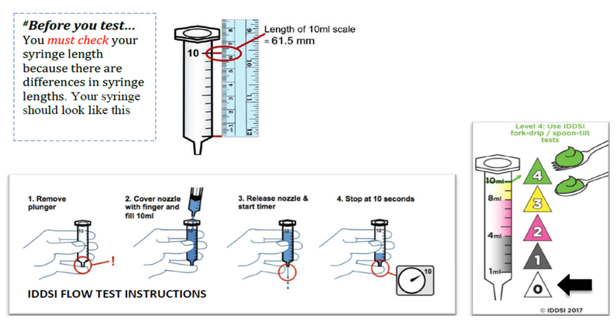
(Source: https://www.iddsi.org)

Description/Characteristics
-
Thicker than water
-
Requires a little more effort to drink than thin liquids
-
Flows through a straw, syringe, teat/nipple
-
Similar to the thickness of most commercially available ‘Anti-regurgitation’ (AR) infant formulas
Physiological rationale for this level of thickness
-
Often used in the pediatric population as a thickened drink that reduces speed of flow yet is still able to flow through an infant teat/nipple. Consideration to flow through a teat/nipple should be determined on a case-by-case basis.
-
Also used in adult populations where thin drinks flow too fast to be controlled safely. These slightly thick liquids will flow at a slightly slower rate.
Testing method
IDDSI Flow Test: Test liquid flows through a 10 mL slip tip syringe# leaving 1-4 mL in the syringe after 10 seconds
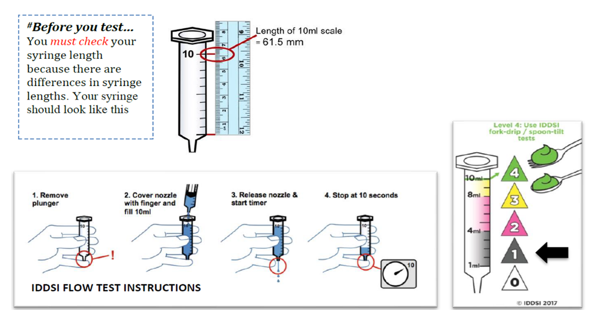
(Source: https://www.iddsi.org)

Description/Characteristics
-
Flows off a spoon
-
Shippable, pours quickly from a spoon, but slower than thin drinks
-
Mild effort is required to drink this thickness through standard bore straw (standard bore straw = 0.209 inch or 5.3 mm diameter)
Physiological rationale for this level of thickness
-
If thin drinks flow too fast to be controlled safely, these Mildly Thick liquids will flow at a slightly slower rate
-
May be suitable if tongue control is slightly reduced.
Testing method
IDDSI Flow Test: Test liquid flows through a 10 mL slip tip syringe leaving 4 to 8 mL in the syringe after 10 seconds
(Source: https://www.iddsi.org)


Description/Characteristics
-
Can be drunk from a cup
-
Moderate effort is required to suck through a standard bore or wide bore straw (wide bore straw = 0.275 inch or 6.9 mm)
-
Cannot be piped, layered or molded on a plate because it will not retain its shape
-
Cannot be eaten with a fork because it drips slowly in dollops through the prongs
-
Can be eaten with a spoon
-
No oral processing or chewing required – can be swallowed directly
-
Smooth texture with no ‘bits’ (lumps, fibers, bits of shell or skin, husk, particles of gristle or bone)
Physiological rationale for this level of thickness
-
If tongue control is insufficient to manage Mildly Thick drinks (Level 2), this Liquidized/Moderately thick level may be suitable
-
Allows more time for oral control
-
Needs some tongue propulsion effort
-
Pain on swallowing
Testing method
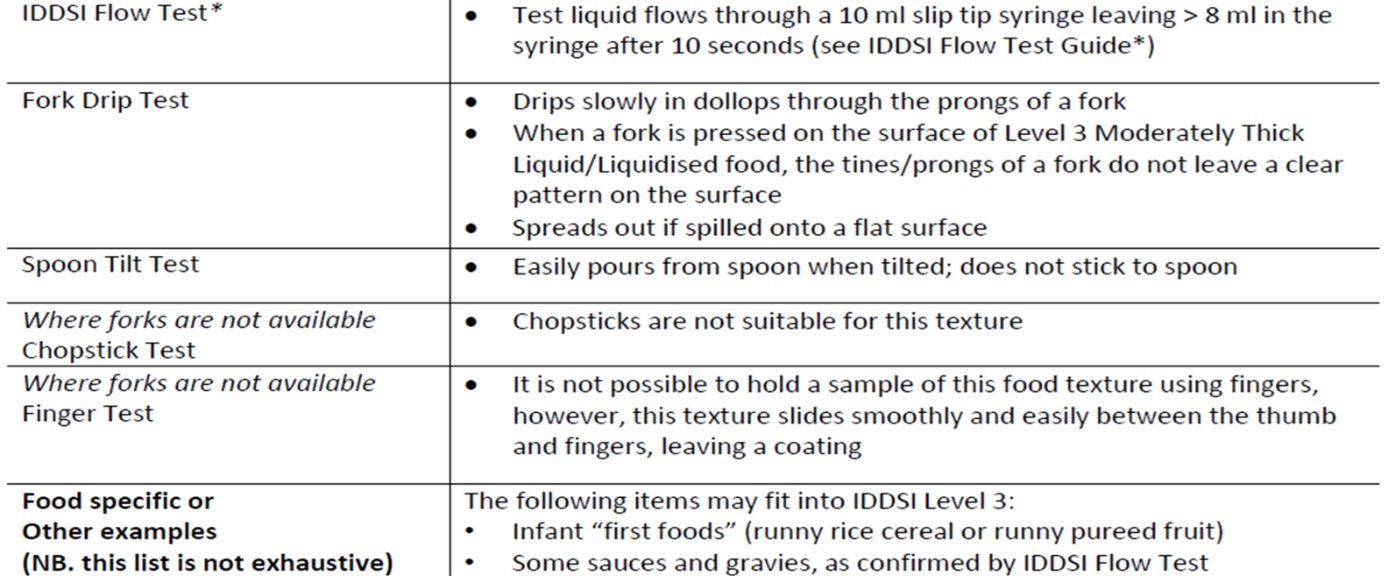
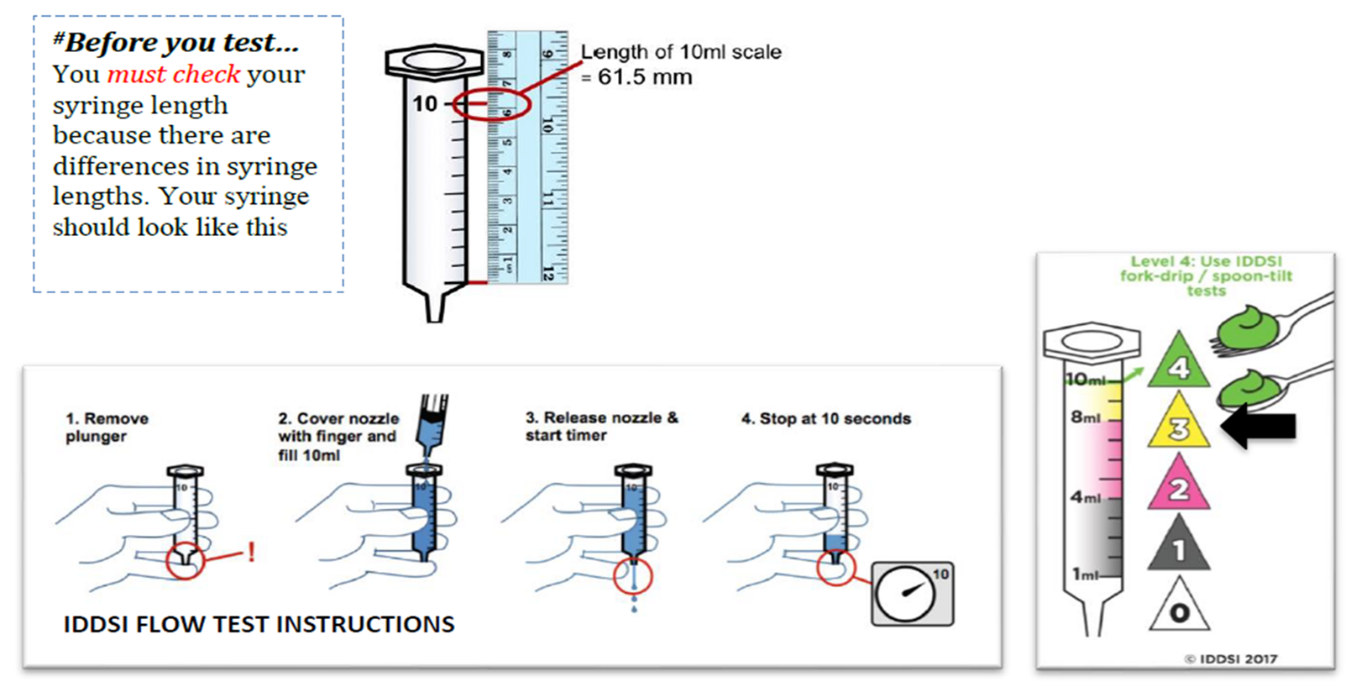
(Source: https://www.iddsi.org)
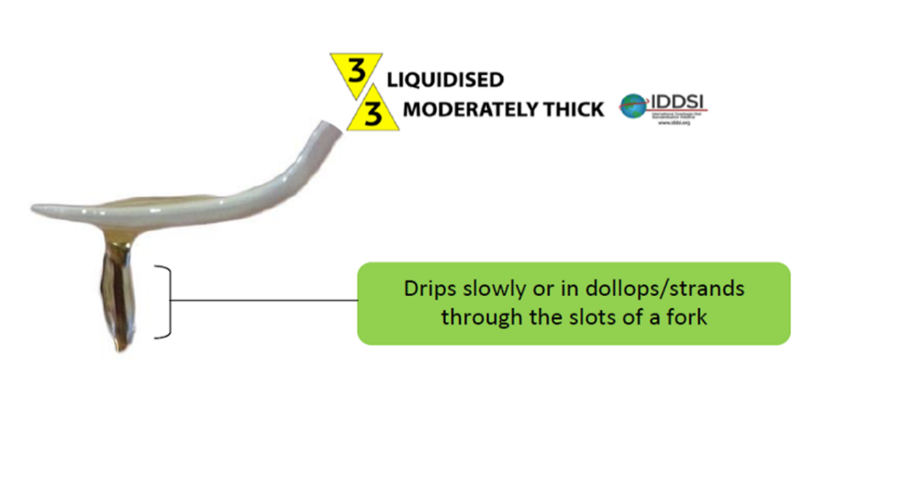
Fork Drip Test
(Source: https://www.iddsi.org)
4.3.2. Levels, descriptors and methods for solid-like food


Description/Characteristics
-
Usually eaten with a spoon (a fork is possible)
-
Cannot be drunk from a cup because it does not flow easily
-
Cannot be sucked through a straw
-
Does not require chewing
-
Can be piped, layered or molded because it retains its shape, but should not require chewing if presented in this form
-
Shows some very slow movement under gravity but cannot be poured
-
Falls off spoon in a single spoonful when tilted and continues to hold shape on a plate
-
No lumps
-
Not sticky
-
Liquid must not separate from solid
Physiological rationale for this level of thickness
-
If tongue control is significantly reduced, this category may be easiest to control
-
Requires less propulsion effort than Minced & Moist (level 5), Soft & Bite-Sized (Level 6) and Regular and Regular Easy to Chew (Level 7) but more than Liquidized/Moderately thick (Level 3)
-
No biting or chewing is required
-
Increased oral and/or pharyngeal residue is a risk if too sticky
-
Any food that requires chewing, controlled manipulation or bolus formation are not suitable
-
Pain on chewing or swallowing
-
Missing teeth, poorly fitting dentures
Testing method

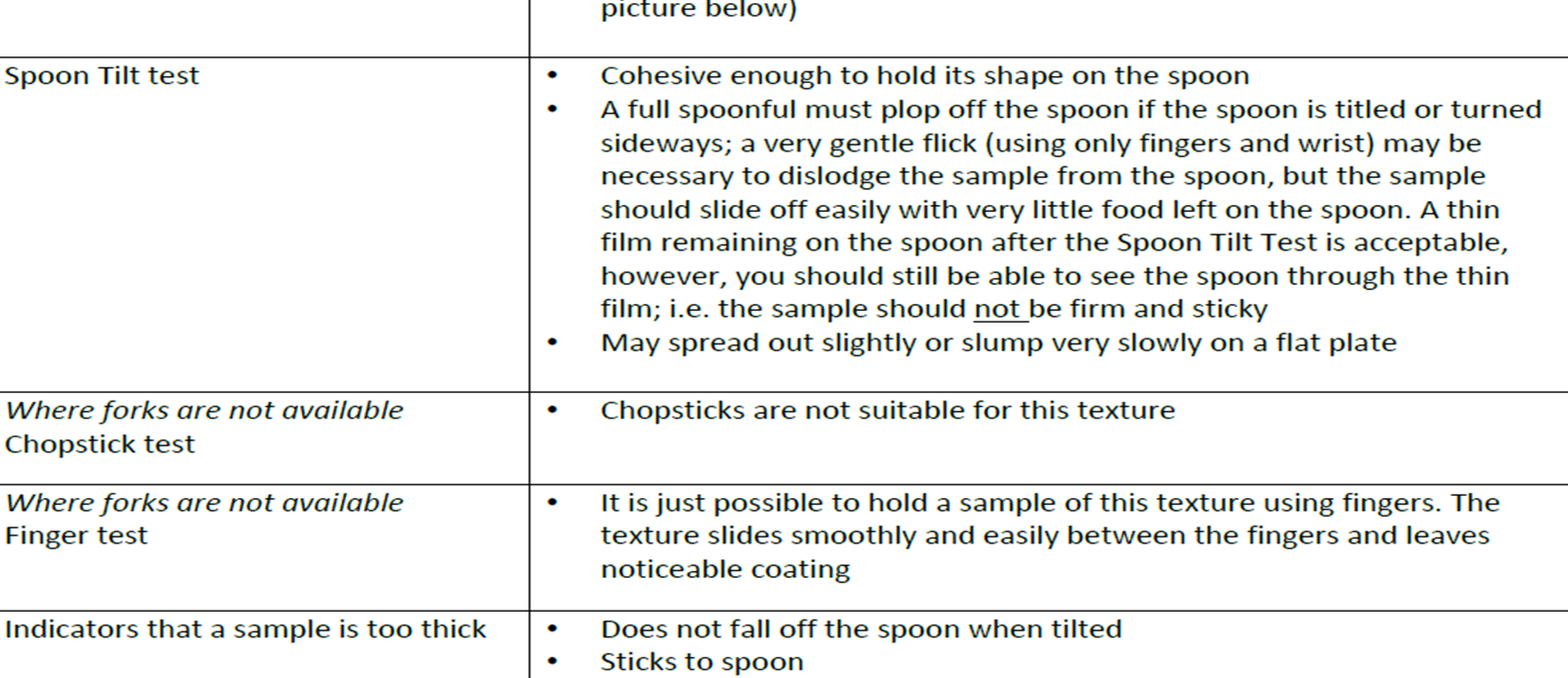
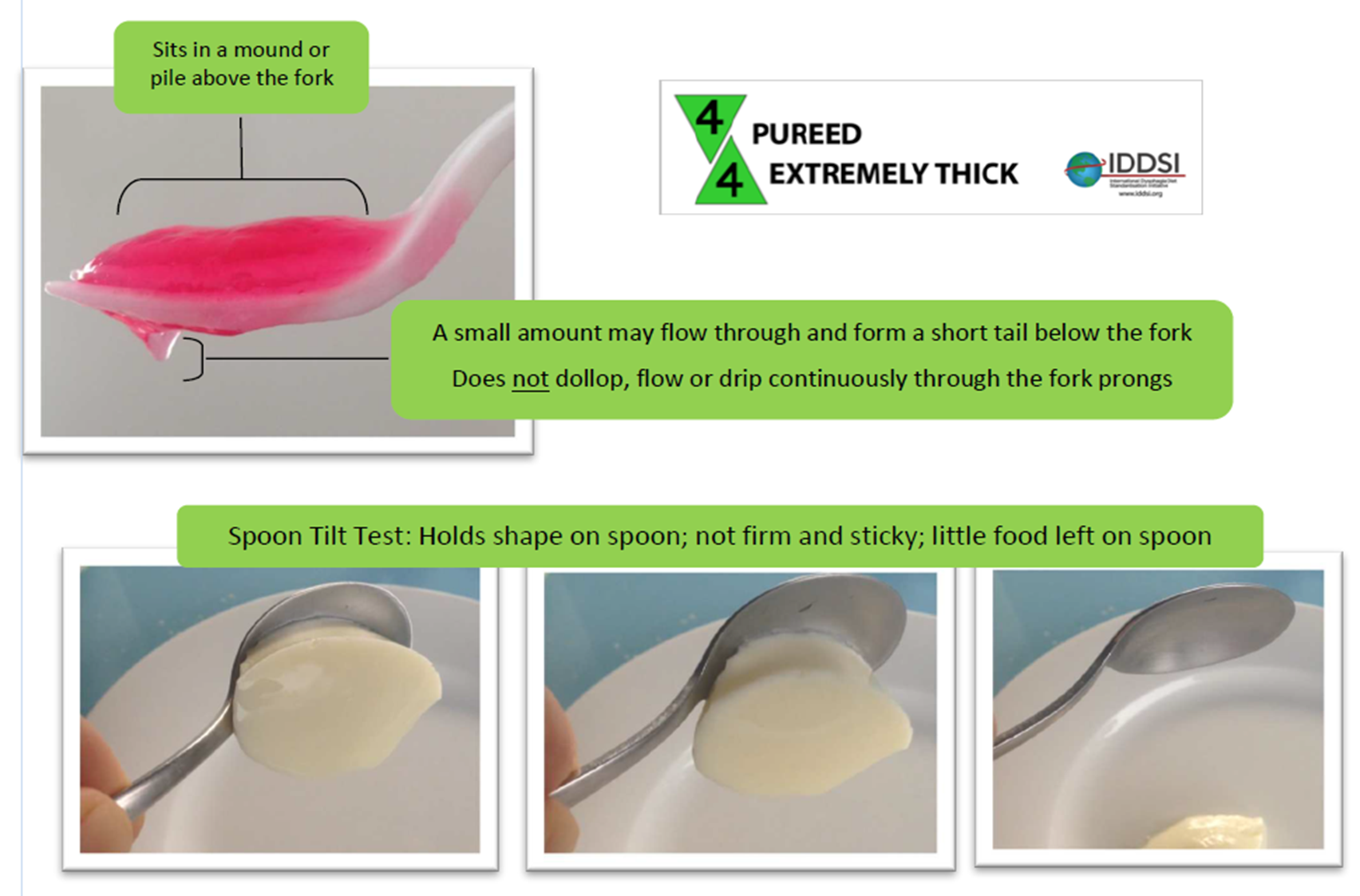
Fork Drip Test and Spoon Tilt Test
(Source: https://www.iddsi.org)
The following images show examples of foods that would be suitable or unsuitable for Level 4 according to the IDDSI Spoon Tilt Test
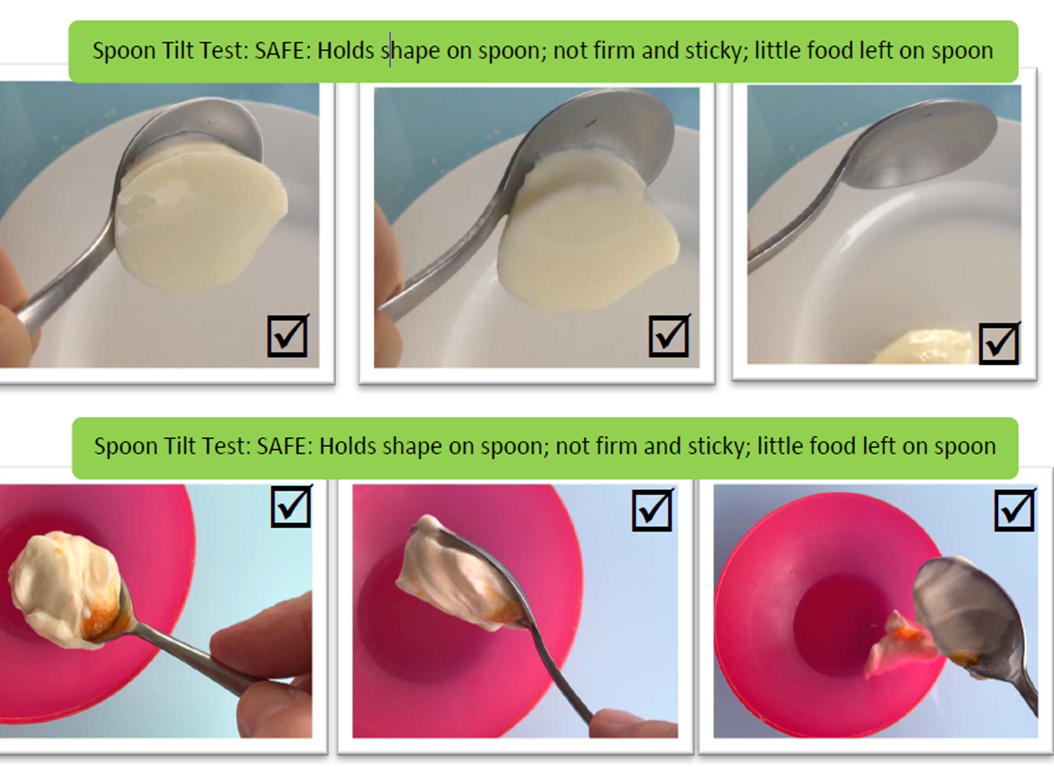
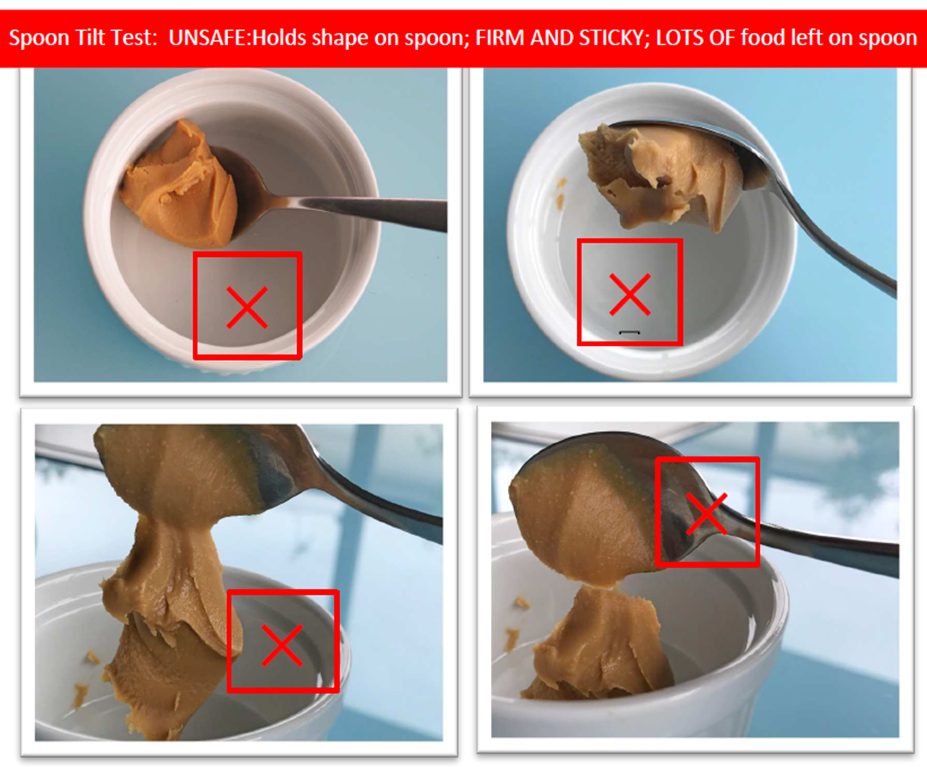
(Source: https://www.iddsi.org)

Description/Characteristics
-
Can be eaten with a fork or spoon
-
Could be eaten with chopsticks in some cases, if the individual has very good hand control
-
Can be scooped and shaped (e.g. into a ball shape) on a plate
-
Soft and moist with no separate thin liquid
-
Small lumps visible within the food
-
Pediatric, equal to or less than 2 mm width and no longer than 8mm in length
-
Adult, equal to or less than 4mm width and no longer than 15mm in length
-
Lumps are easy to squash with tongue
Physiological rationale for this level of thickness
-
Biting is not required
-
Minimal chewing is required
-
Tongue force alone can be used to separate the soft small particles in this texture
-
Tongue force is required to move the bolus
-
Pain or fatigue on chewing
-
Missing teeth, poorly fitting dentures
Testing methods
Fork Pressure test
-
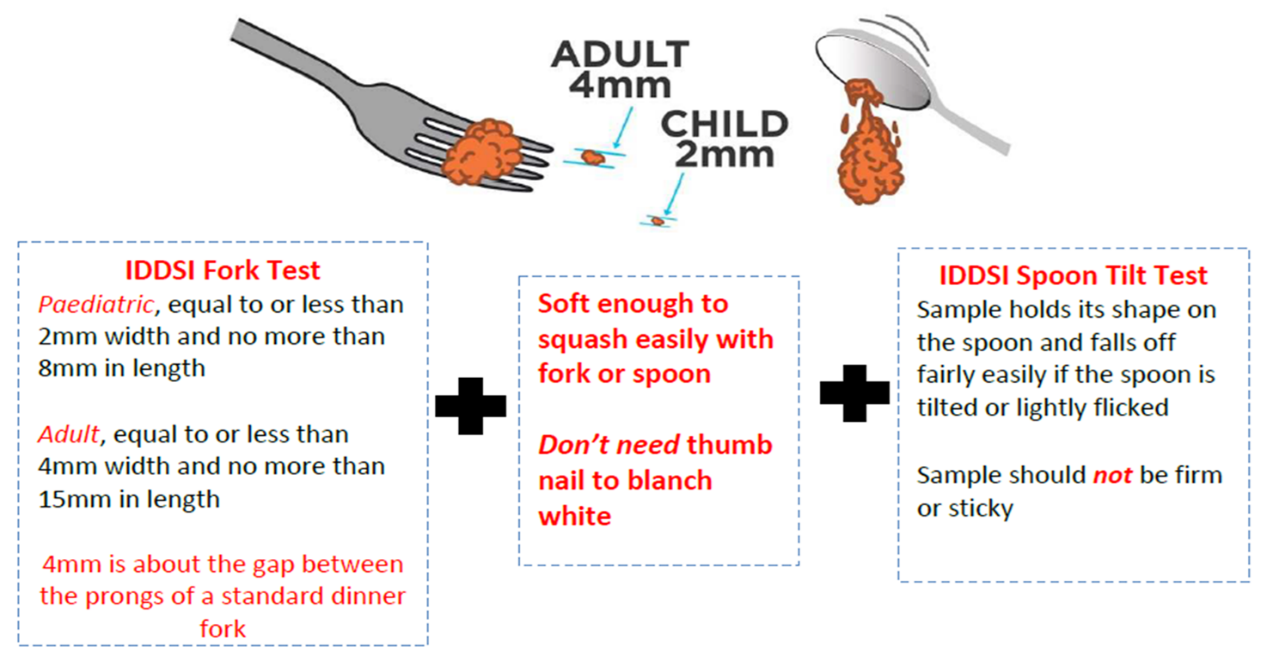
When pressed with a fork the particles should easily be separated between and come through the tines/prongs of a fork
-
Can be easily mashed with little pressure from a fork [pressure should not make the thumb nail blanch to white]
Fork Drip test
-
When a sample is scooped with a fork it sits in a pile or can mound on the fork and does not easily or completely flow or fall through the tines/prongs of a fork
Spoon Tilt test
-
Cohesive enough to hold its shape on the spoon
-
A full spoonful must slide/pour off/fall off the spoon if the spoon is tilted or turned sideways or shaken lightly; the sample should slide off easily with very little food left on the spoon; i.e. the sample should not be sticky
-
A scooped mound may spread or slump very slightly on a plate
FOOD SPECIFIC OR OTHER EXAMPLES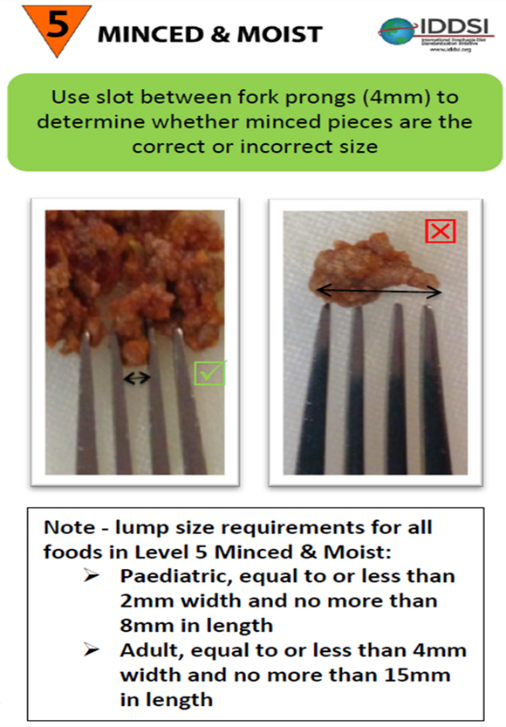
MEAT
-
Finely minced* or chopped*, soft mince
-
Pediatric, equal to or less than 2mm width and no longer than 8mm in length
-
Adult, equal to or less than 4mm width and no more than 15mm in length
-
Serve in mildly, moderately or extremely thick, smooth, sauce or gravy, draining excess
*If texture cannot be finely minced it should be pureed
(Source: https://www.iddsi.org)
FISH
-
Finely mashed in mildly, moderately or extremely thick smooth, sauce or gravy, draining excess
-
Pediatric, equal to or less than 2mm width and no longer than 8mm in length
-
Adult, equal to or less than 4mm width and no more than 15mm in length
FRUIT
-
• Serve finely minced or chopped or mashed
-
• Drain excess juice
-
• If needed, serve in mildly, moderately or extremely thick smooth sauce or gravy AND drain excess liquid. No thin liquid should separate from food
-
Pediatric, equal to or less than 2mm width and no longer than 8mm in length
-
Adult, equal to or less than 4mm width and no more than 15mm in length
VEGETABLES
-
Serve finely minced or chopped or mashed
-
Drain any liquid
-
If needed, serve in mildly, moderately or extremely thick smooth sauce or gravy and drain excess liquid. No thin liquid should separate from food
-
Pediatric, equal to or less than 2mm width and no longer than 8mm in length
-
Adult, equal to or less than 4mm width and no more than 15mm in length
CEREAL
-
ž Thick and smooth with small soft lumps
-
Pediatric, equal to or less than 2mm width and no longer than 8mm in length
-
Adult, equal to or less than 4mm width and no more than 15mm in length
-
Texture fully softened
-
Any milk/fluid must not separate away from cereal. Drain any excess fluid before serving
RICE, COUSCOUS, QUINOA (and similar food textures)
-
Not sticky or glutinous
-
Should not be particulate or separate into individual grains when cooked and served
-
Serve with smooth mildly, moderately or extremely thick sauce AND Sauce must not separate away from rice, couscous, quinoa (and similar food textures). Drain excess fluid before serving
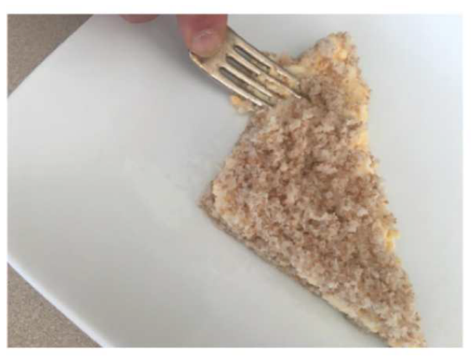
BREAD
-
No regular, dry bread, sandwiches or toast of any kind
-
Use IDDSI Level 5 Minced & Moist sandwich recipe video
-
Pre-gelled ‘soaked’ breads that are very moist and gelled through the entire thickness
Minced & Moist food must pass all three tests:
(Source: https://www.iddsi.org)

Description/Characteristics
-
Can be eaten with a fork, spoon or chopsticks
-
Can be mashed/broken down with pressure from fork, spoon or chopsticks
-
A knife is not required to cut this food, but may be used to help load a fork or spoon
-
Soft, tender and moist throughout but with no separate thin liquid
-
Chewing is required before swallowing
-
‘Bite-sized’ pieces as appropriate for size and oral processing skills
-
Pediatric, 8mm pieces (no larger than)
-
Adults, 15 mm = 1.5 cm pieces (no larger than)
Physiological rationale for this level of thickness
-
Biting is not required
-
Chewing is required
-
Food piece sizes designed to minimize choking risk
-
Tongue force and control is required to move the food and keep it within the mouth for chewing and oral processing
-
Tongue force is required to move the bolus for swallowing
-
Pain or fatigue on chewing
-
Missing teeth, poorly fitting dentures
Testing methods
Fork Pressure test
-
Pressure from a fork held on its side can be used to ‘cut’ or break apart or flake this texture into smaller pieces
-
When a sample the size of a thumb nail (1.5x1.5 cm) is pressed with the tines of a fork to a pressure where the thumb nail blanches to white, the sample squashes, breaks apart, changes shape, and does not return to its original shape when the fork is removed.
Spoon Pressure test
-
Pressure from a spoon held on its side can be used to ‘cut’ or break this texture into smaller pieces.
-
When a sample the size of a thumb nail (1.5 cm x1.5 cm) is pressed with the base of a spoon, the sample squashes, breaks apart, changes shape, and does not return to its original shape when the spoon is removed.
Where forks are not available - Chopstick test
-
Chopsticks can be used to break this texture into smaller pieces or puncture food
Where forks are not available - Finger test
-
Use a sample the size of a thumb nail (1.5 cm x 1.5 cm). It is possible to squash a sample of this texture using finger pressure such that the thumb and index finger nails blanch to white. The sample breaks apart and will not return to its initial shape once pressure is released.
EXAMPLES:
https://iddsi.org/framework/food-testing-methods/
FOOD SPECIFIC OR OTHER EXAMPLES
MEAT
-
Cooked, tender meat no bigger than:
-
Pediatric, 8mm pieces
-
Adults, 15 mm = 1.5 x 1.5 cm pieces
-
If texture cannot be served soft and tender at 1.5 cm x 1.5 cm (as confirmed with fork/ spoon pressure test), serve minced and moist
FISH
-
Soft enough cooked fish to break into small pieces with fork, spoon or chopsticks no larger than
-
Pediatric, 8mm pieces
-
Adults, 15 mm = 1.5 cm pieces
-
No bones or tough skins
CASSEROLE/STEW/CURRY
-
Liquid portion (e.g. sauce) must be thick (as per clinician recommendations)
-
Can contain meat, fish or vegetables if final cooked pieces are soft and tender and no larger than
-
Pediatric, 8mm pieces
-
Adults, 15 mm = 1.5 cm pieces
-
No hard lumps
FRUIT
-
Serve minced or mashed if cannot be cut to soft & bite-sized pieces
-
Pediatric, 8mm pieces
-
Adults, 15 mm = 1.5 cm pieces
-
Fibrous parts of fruit are not suitable
-
Drain excess juice
-
Assess individual ability to manage fruit with high water content (e.g. watermelon) where juice separates from solid in the mouth during chewing
VEGETABLES
-
Steamed or boiled vegetables with final cooked size of
-
Pediatric, 8mm pieces
-
Adults, 15 mm = 1.5 cm pieces
-
Stir fried vegetables may be too firm and are not soft or tender. Check softness with fork/spoon pressure test
CEREAL
-
Smooth with soft tender lumps no bigger than
-
Pediatric, 8mm pieces
-
Adults, 15 mm = 1.5 cm pieces
-
Texture fully softened
-
Any excess milk or liquid must be drained and/or thickened to thickness level recommended by clinician
BREAD
-
No regular dry bread, sandwiches or toast of any kind
-
Use IDDSI Level 5 Minced & Moist sandwich recipe video to prepare bread and add to filling that meets Level 6 Soft & Bite sized requirements
-
Pre-gelled ‘soaked’ breads that are very moist and gelled through the entire thickness
RICE, COUCOUS, QUINOA (and similar food textures)
-
Not particulate/grainy, sticky or glutinous
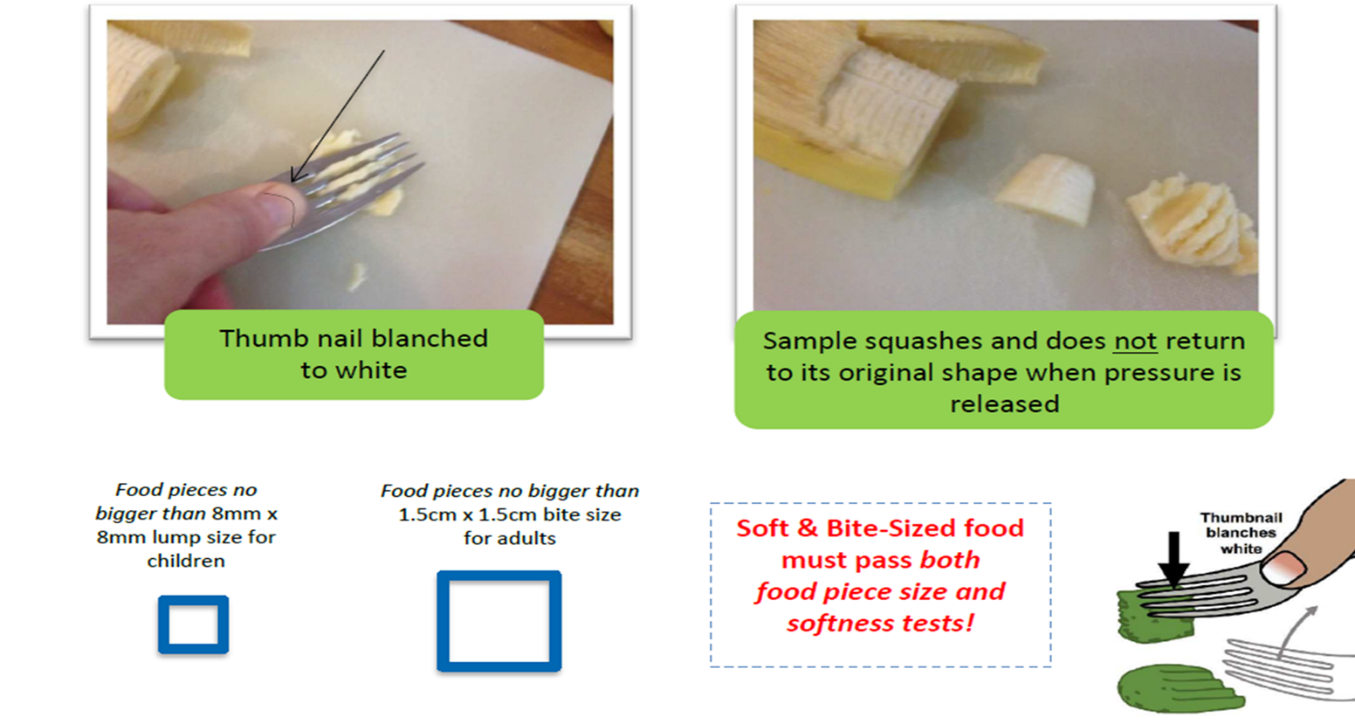
(Source: https://www.iddsi.org)

Description/Characteristics
-
Normal, everyday foods of soft/tender textures that are developmentally and age appropriate
-
Any method may be used to eat these foods
-
Sample size is not restricted at Level 7, therefore, foods may be of a range of sizes
-
Smaller or greater than 8 mm pieces (Pediatric)
-
Smaller or greater than 15 mm = 1.5 cm pieces (Adults)
-
Does not include: hard, tough, chewy, fibrous, stringy, crunchy, or crumbly bits, pips, seeds, fibrous parts of fruit, husks or bones
-
May include ‘dual consistency’ or ‘mixed consistency’ foods and liquids if also safe for Level 0, and at clinician discretion. If unsafe for Level 0
-
Thin, liquid portion can be thickened to clinician’s recommended thickness level
Physiological rationale for this level of thickness
-
Requires the ability to bite soft foods and chew and orally process food for long enough that the person forms a soft cohesive ball/bolus that is ‘swallow ready’. Does not necessarily require teeth.
-
Requires the ability to chew and orally process soft/tender foods without tiring easily
-
May be suitable for people who find hard and/or chewy foods difficult or painful to chew and swallow
-
This level could present a choking risk for people with clinically identified increased risk of choking, because food pieces can be of any size. Restricting food piece sizes aims to minimize choking risk (e.g. Level 4 Pureed, Level 5 Minced & Moist, Level 6 Soft & Bite-sized have food piece size restrictions to minimize choking risk)
-
This level may be used by qualified clinicians for developmental teaching, or progression to foods that need more advanced chewing skills
-
If the person needs supervision to eat safely, before using this texture level consult a qualified clinician to determine the person’s food texture needs, and meal time plan for safety
-
People can be unsafe to eat without supervision due to chewing and swallowing problems and/or unsafe mealtime behaviors. Examples of unsafe mealtime behaviors include: not chewing very well, putting too much food into the mouth, eating too fast or swallowing large mouthfuls of food, inability to self-monitor chewing ability.
-
Clinicians should be consulted for specific advice for patient needs, requests and requirements for supervision.
-
Where mealtime supervision is needed, this level should only be used under the strict recommendation and written guidance of a qualified clinician
Testing methods
Fork Pressure test
-
Pressure from a fork held on its side can be used to ‘cut’ or break apart or flake this texture into smaller pieces
-
When a sample the size of a thumb nail (1.5x1.5cm) is pressed with the tines of a fork to a pressure where the thumb nail blanches to white, the sample squashes, breaks apart, changes shape and does not return to its original shape when the fork is removed.
Spoon Pressure test
-
Pressure from a spoon held on its side can be used to ‘cut’ or break or flake this texture into smaller pieces
-
When a sample the size of a thumb nail (1.5x1.5cm) is pressed with the base of a spoon to a pressure where the thumb nail blanches to white, the sample squashes, breaks apart, changes shape and does not return to its original shape when the spoon is removed.
Where forks are not available - Chopstick test
-
Chopsticks can be used to puncture this texture
Where forks are not available - Finger test
-
Use a sample the size of a thumb nail (1.5x1.5cm). It is possible to squash a sample of this texture using finger pressure such that the thumb and index finger nails blanch to white. The sample squashes and breaks apart and will not return to its initial shape once pressure is released.
EXAMPLES: https://iddsi.org/framework/food-testing-methods/
FOOD SPECIFIC OR OTHER EXAMPLES
MEAT
-
Cooked until tender
-
If texture cannot be served soft and tender, serve minced and moist
FISH
-
Soft enough cooked fish to break into small pieces with the side fork, spoon or chopsticks
CASSEROLE/STEW/CURRY
-
Can contain meat, fish, vegetables, or combinations of these if final cooked pieces are soft and tender
-
Serve in mildly, moderately of extremely thick sauce AND drain excess liquid
-
No hard lumps
FRUIT
-
Soft enough to be cut broken apart into smaller pieces with the side of a fork or spoon. Do not use the fibrous parts of fruit (e.g. the white part of an orange).
VEGETABLES
-
Steam or boil vegetables until tender. Stir fried vegetables may be too firm for this level. Check softness with fork/spoon pressure test
CEREAL
-
Served with texture softened
-
Drain excess milk or liquid and/or thicken to thickness level recommended by clinician
BREAD
-
Bread, sandwiches and toast that can be cut or broken apart into smaller pieces with the side of a fork or spoon can be provided at clinician discretion
RICE, COUSCOUS, QUINOA (and similar food textures)
-
No special instructions
Easy to Chew foods must break apart easily with the side of a fork or spoon and pass Fork Pressure Test:
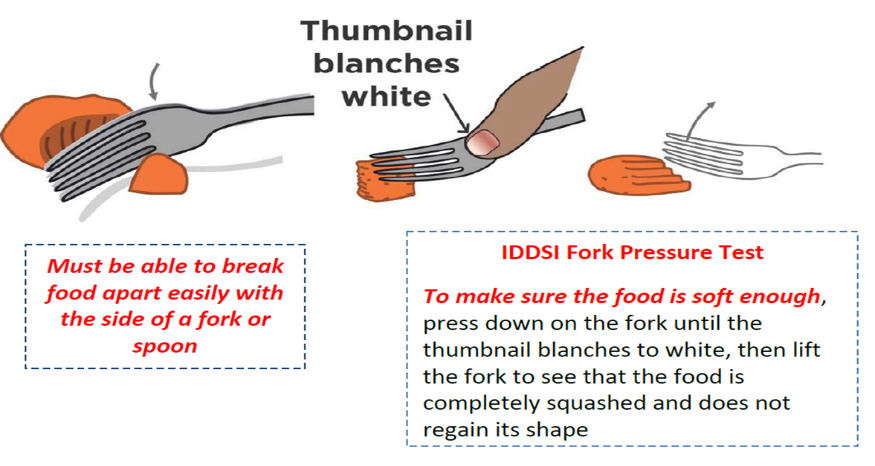
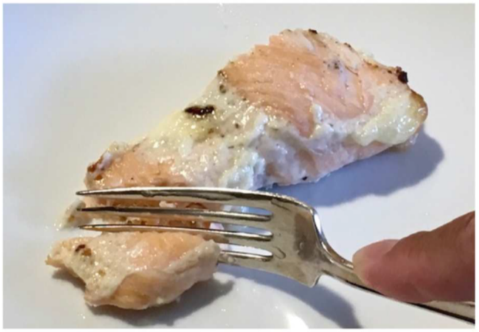
(Source: https://www.iddsi.org)

Description/Characteristics
-
Normal, everyday foods of various textures that are developmentally and age appropriate
-
Any method may be used to eat these foods
-
Foods may be hard and crunchy or naturally soft
-
Sample size is not restricted at Level 7, therefore, foods may be of a
-
range of sizes
-
Smaller or greater than 8mm pieces (Pediatric)
-
Smaller or greater than 15 mm = 1.5 cm pieces (Adults)
-
Includes hard, tough, chewy, fibrous, stringy, dry, crispy, crunchy, or crumbly bits
-
Includes food that contains pips, seeds, pith inside skin, husks or bones
-
Includes ‘dual consistency’ or ‘mixed consistency’ foods and liquids
Physiological rationale for this level of thickness
-
Ability to bite hard or soft foods and chew them for long enough that they form a soft cohesive ball/bolus that is ‘swallow ready’
-
An ability to chew all food textures without tiring easily
-
An ability to remove bone or gristle that cannot be swallowed safely from the mouth
Testing methods
-
Not Applicable
4.4. Texture‐modified foods preparation techniques and equipment
The aim of
this module is to learn about texture‐modified foods preparation
techniques and equipment 
Learning outcomes
-
To choose the best cooking methods to achieve the necessary texture
-
To apply equipment for the production of modified food
-
To know new advanced food production methods
Contents (PPT/PDF 30 slides)
(Source: https://www.istockphoto.com)
4.4.1. Texture-modified foods
-
Texture-modified foods are culinary preparations that modify the characteristics of foods in order to make them safe, effective, nutritious and organoleptically and visually appealing to people with chewing and swallowing problems.
-
They must meet five characteristics: safety, efficacy, nutritious, organoleptically adequate and attractive presentation.
-
The texture modified food should be as similar as possible to the original preparation.
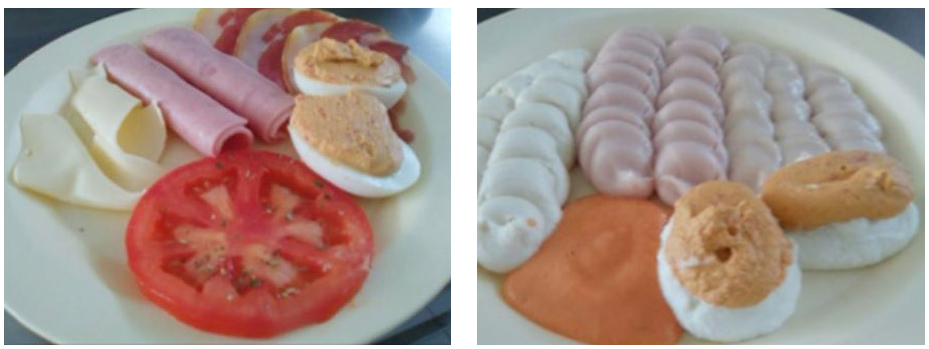
Fig 1. Texture modified food (right) and conventional food (left). Source: CADIS- ASPACE (Huesca)
Stages for preparation of texture modified foods
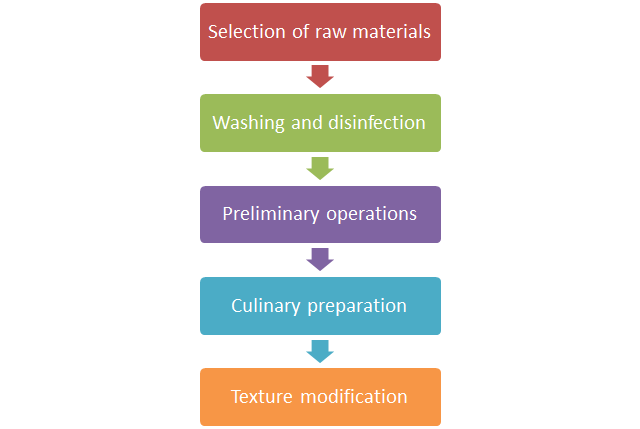
It is necessary to establish protocols for the elaboration and adaptation of the texture of the different dishes. There is no standardized protocol, but the following stages are recommended:

-
Selection of raw ingredients
Foods present a series of characteristics that determine their nutritional composition and behavior during culinary processes.
Foods should be chosen as fresh as possible and in an optimal state of maturation.
Selection of certain portions or cuts from food avoiding dangerous, hard or undesirable parts in meats, vegetables, fruits and legumes.
Selection of foods and parts with high nutritional value (Review Unit 3.1. for more information about nutrition and nutritive values of different ingredients).
-
Washing and disinfection
This stage is especially important in the case of foods that are not going to be subjected to heat treatment.
See Unit 4.5. for more information about Food hygiene.
-
Handling _ Preliminary operations
Cleaning and sorting
Elimination of inedible or dangerous parts and selection of those to be subjected to further culinary processing.
Cutting
Reduction of the size of the food, which will condition the cooking conditions and the interactions of the food with the heating medium.
-
Culinary preparation
Culinary techniques are procedures that involve heat treatment or other types of treatment, which allow their characteristics to be modified. It determines the texture of the food, but also the flavor, color, aroma and nutritional value.
Different techniques can be applied such as baking, braising, frying, sautéing or grilling, which can favor the appearance of crusts on the surface.
Stews, confit, steaming, papillote or vacuum cooking maintain the flavor and give rise to soft and smooth textures.
Boiling and poaching diminish flavor and aroma, but result in soft and tender textures.
-
Texture modification
The reduction of the particle size of the elaborations is necessary when the characteristics obtained after the application of the culinary technique are not adequate to guarantee the safety and efficacy of the swallowing process.
The use of professional machines with high chopping and mixing power may be necessary.
During this process, the following aspects should be controlled:
- If addition of liquids is needed
- If addition of thickeners is needed
-Minimize the modification of the nutritive value, avoiding dilutions or increases in caloric density.
- Minimize the loss of organoleptic characteristics.
Refrigeration and cold storage
Temperature should be lowered using a blast chiller or cooler unit.
Cold storage should be at 5ºC.
Reheating
Microwaves, stem ovens or ovens may be used to reheat the food.
4.4.2. Methods of food preparation (Tips for texture‐modified foods cooking)
Many ingredients that are hard when raw become softer after cooking. They should be cut up across the grain, and cooked until they are sufficiently soft.
Dry ingredients can have liquid or fat added to make them softer and smoother.
Potatoes and eggs may have a binder added to soften them and make them hold together more easily.
The savory taste of protein foods is drawn out when they are cooked at a low temperature for a long time, and this method also enables them to be cooked without excessive loss of water content.
Raw vegetables are difficult to eat, and thus should be cooked. Salads should consist of steamed or dressed dishes.
Preparation
Adding liquid: Too low water content makes food difficult to swallow, but when too high, it can cause choking.
The right amount of liquid should be added in preparing food so that it is soft and easily taken in.
Liquid should be added to chopped boiled green vegetables, and they should be boiled until soft.
For example, bread can be made into French toast, and steamed fish substituted for grilled fish.
Adding a binder: Make mince into meatballs (with added egg) or hamburgers.
Ways of cutting food: If the first one or two bites are difficult, rather than chopping food up finely, score it or make cuts at narrow intervals most of the way through. Thin foods are difficult to perceive in the mouth, so it is better to cut food to a thickness of 5–10 mm and cook it until soft. Check the direction in which the fibers run and cut them up across the grain, as this makes the cooked food easier to chew.
Adding fat (salad oil, mayonnaise, butter, cream, etc.) to food makes it smoother and easier to swallow. Generally speaking, fish or meat with a high fat content does not harden after cooking, and is easy to eat.
For example, mashed potatoes or sweet potato cakes should be served rather than steamed potatoes.
Temperature
The temperature of food should be around 20ºC above or below body temperature. This difference between body temperature and food temperature provides a stronger stimulus that is more likely to trigger the swallowing reflex.
This reflex is most likely to be triggered when the pharyngeal mucosa is touched by something slightly cold.
A temperature of around 10ºC–15ºC also feels pleasant in the mouth, thus promoting ease of eating.
When preparing meals with more than one component (e.g. meat, potatoes and carrots), purée the foods separately and arrange them on the plate separately. This means that the flavour and the colour of the individual foods are maintained much as they are in a normal meal.
Foods and drinks thickened can be chilled, frozen and reheated. Many people find it easy to make batches of food they eat relatively often and freeze the extra portions for later use (if you freeze the food in ice cube trays, it allows easy control of portions as you need only defrost and reheat as many cubes as you need for each meal).
Bread and other foods made with grain, such as biscuits and cakes, are a particular problem for patients with dysphagia. The granular structure of these foods means that they are extremely hard to swallow. Using soaking solutions can help you achieve a smooth texture with these foods.
Bread in Modified Texture Diets
Gelled soaked breads and cakes are listed in the standards as suitable for Level 7 Regular Easy to Chew, Level 6 Soft Bite-Sized and Level 5 Minced & Moist diets.
The bread sandwich recommendations are to use the soaked bread methods or gelled bread methods (using the Shape It product with soaked whole bread but also with bread processed into fine crumbs for safety). The method on the IDDSI website is to finely chop the bread, add an equal amount of water and margarine or butter; mix, making it into a shape and serving. This saves the worry that the soaking is not complete, as any thickening products used, thicken quite quickly, but can leave dry sections which are not soaked.
Top with a finely chopped or blended egg/mayonnaise or tinned fish/tartare sauce, paté or cream/feta cheese mix. The fillings can be adjusted to suit the diet requirement. The combination of water and fat reduces the stickiness of the bread and improves bolus cohesion. It can be eaten with a fork or spoon unless served as a finger food.
Always test for suitable textures having a focus on dryness and or stickiness.
4.4.3. Choice of cooking methods and equipment
-
Carefully consider the best cooking methods to achieve the necessary texture. For example, poaching or simmering will soften ingredients, making them easier to purée.
-
You can add flavor by browning and roasting ingredients prior to poaching and simmering.
-
The products can be heat-treated using conventional food production equipment: ovens, boiling pans or cookers, but specialized professional equipment is more suitable for this.
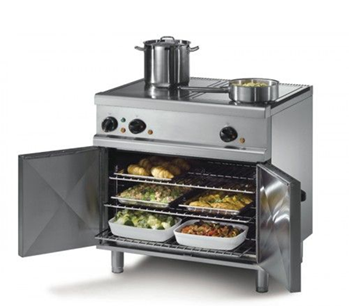
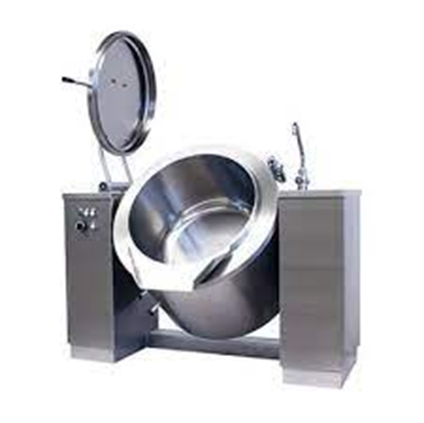
(Source: https://www.iddsi.org)
Cooking Centers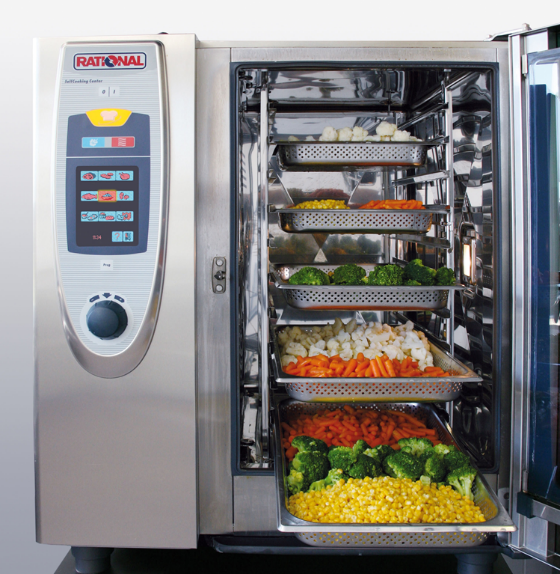
-
Self-Cooking Center makes healthy cooking quick and easy.
-
Self-Cooking Center has been developed not only to simplify the cooking procedure, but also to cook items more healthily and with less wastage than conventional cooking appliances. For example, at the touch of a button, the Self-Cooking Center cooks vegetables in an ideal ‘climate’, with exactly the right combination of wet and dry heat, to retain vital vitamins and nutrients as well as full flavour and colour.
(Source: http://www.publicityworks.biz)
For preparation puréed dysphagia food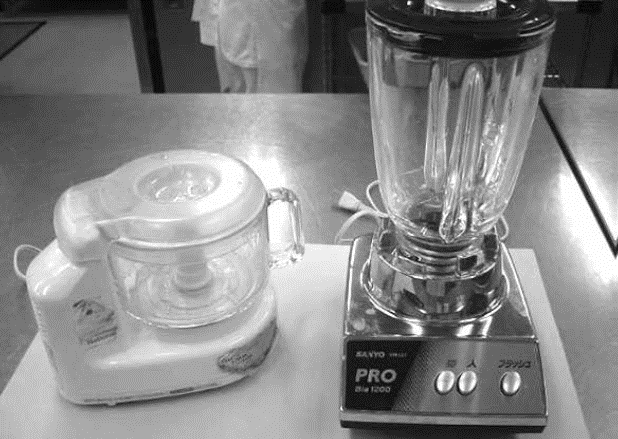
-
A food processor and a blender are essential for the preparation of a dysphagia diet.
-
The type of device used is determined by the type of ingredient and its quantity.
-
A food processor is frequently used for chopping and other basic preparation.
-
It may be used to grind ingredients with a low water content, or when preparing foods of a paste consistency.
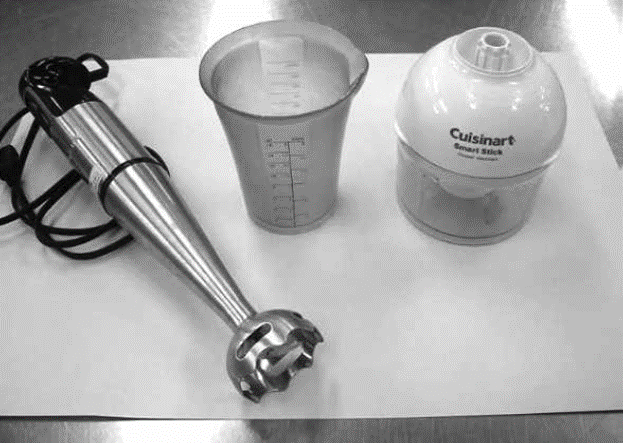
-
A blender is used to blend ingredients or foods with a high water content.
-
A hand blender is a useful household implement for blending small amounts.
-
It can also be used as a food processor by removing the blade and fitting it to the container that comes as part of the set.
-
Hot food breaks down more easily than cold food. So where possible, purée when it is still hot (but not boiling). Check your blender is suitable for hot food first.
-
Leave your food processer running for longer – the purée will become smoother and thicker the longer it is blended.
(Source: https://www.iddsi.org)
Professional equipment
The innovative equipment for hospital, clinic,
elderly care facility, rehabilitation center, or nursing home can
reduce labor time and increase patient satisfaction. The solutions
for a perfect texture include immersion blenders, turbo-liquidisers,
bowl cutters and combo appliances (vegetable slicers + bowl cutters).
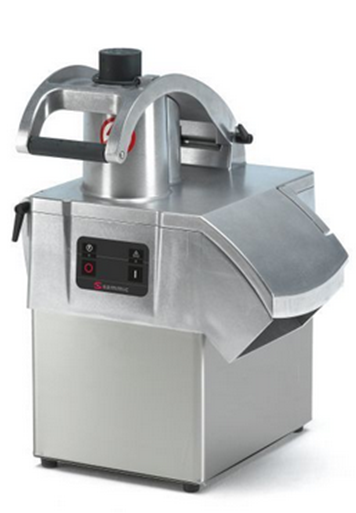
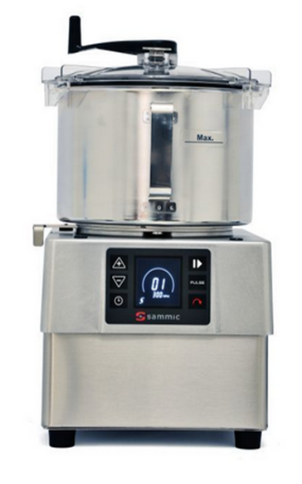
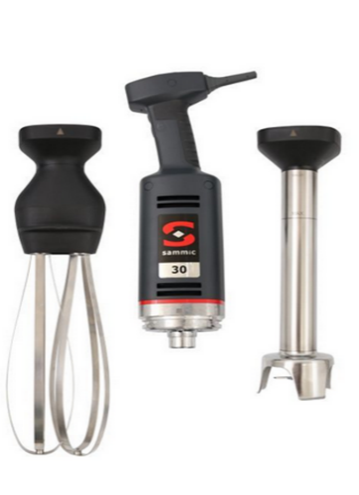
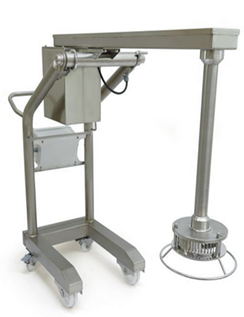




https://www.sammic.com/a/sammic-healthcare-solutions
(Source: https://www.sammic.com/a/sammic-healthcare-solutions)
To properly prepare and puree food for dysphagia patients, having the right foodservice equipment is essential. Blixers, meat grinders, emulsifiers and mixers provide versatility and can help to create food and drinks for each IDDSI.
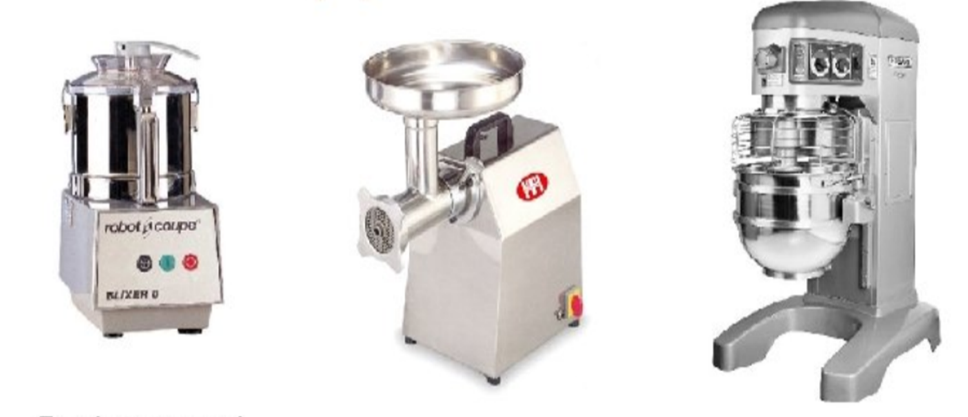
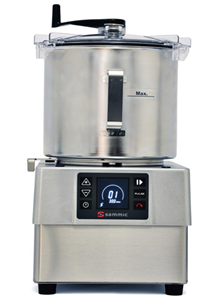


(Source: https://www.iddsi.org)
Home style equipment
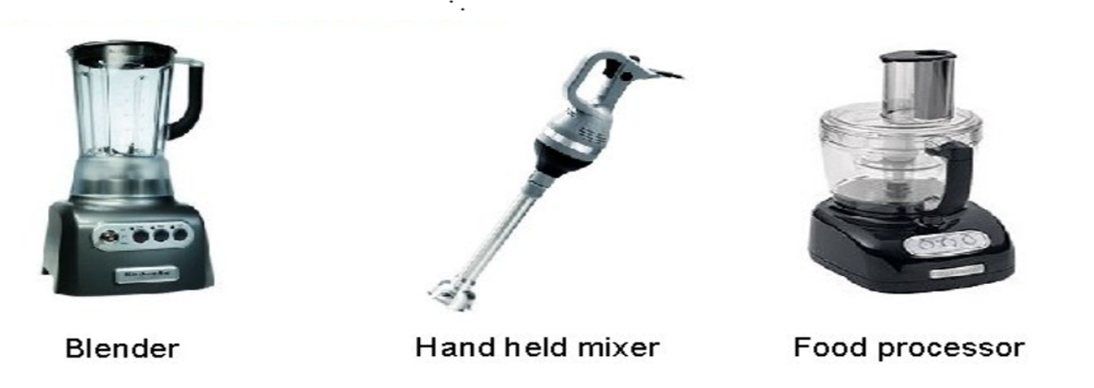
(Source: https://www.iddsi.org)
Thermomix
-
The thermomix is very suitable for the production of small quantities of pureed food.
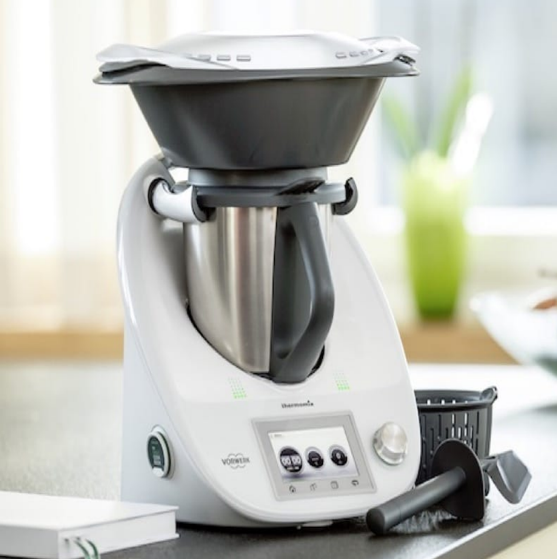
-
Thermomix is a multi-purpose kitchen appliance. He has a heating element, a motor for fast or slow blending and stirring, and a weighing scale.
-
The functions can be accessed simultaneously to carry out steaming, emulsifying, blending, precise heating, mixing, milling, whipping, kneading, chopping, weighing, grinding and stirring.
-
Thermomix also has a touchscreen with a guided mode which allows the user to follow recipes step by step.
(Source: https://www.thermomix.com)
Paco-Jet technology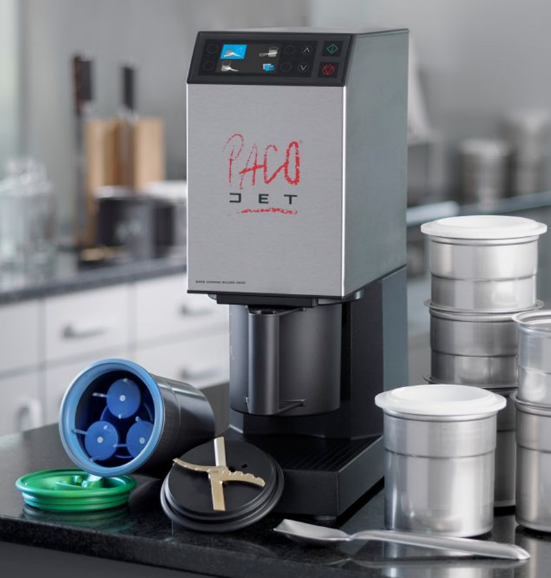
-
Pacotizing meat, starch, vegetables or fruit produces a perfectly smooth texture with natural colours and intense flavours, which can then be formed into natural food shapes. The result is a delightful meal that looks and tastes just like a normal meal from the daily menu.
-
Your need: Select and roughly chop ingredients; Top up with liquid to eliminate empty cavities and ensure a flat surface; Freeze at -22° C (-8° F) for at least 24 hours; Attach beaker to the Pacojet and pacotize the amount required; Complete recipe, Heat to required temperature and thicken.
(Source: http://www.pacojet-care.com/care-en/showcases/pacojetworkflow.php)
Sous Vide method
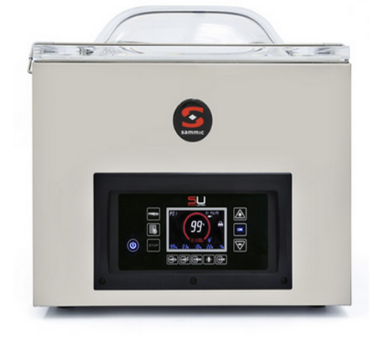
-
Sous-vide solutions are ideal for low, to no touch cooking and bulk re thermalizing.
-
Healthcare operations of all sizes implement sous-vide stations adjacent to cooking lines to better control the flow of food to decrease patient wait time.
-
Sous vide, which means “under vacuum” in French, refers to the process of vacuum-sealing food in a bag, then cooking it to a very precise temperature in a water bath. This technique produces results that are impossible to achieve through any other cooking method.
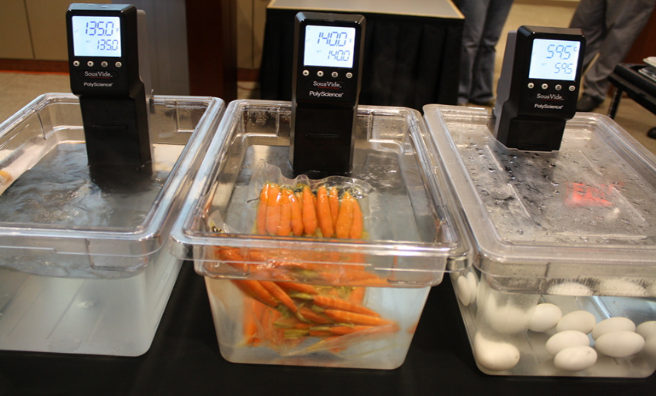
-
Equipment required: vacuum machine, circulation bath Immersion circulators.
(Source: https://anovaculinary.com/what-is-sous-vide/)
Freezing and reheating tips
-
When freezing ensure the food is cooled to 8°C within 90 minutes before putting in the freezer.
-
Freeze in small batches that are well wrapped.
-
If using molds, freeze and then decant from the molds and store in sealed containers.
-
Defrost fully before reheating.
-
For best results steam to reheat — wrap in cling film to protect.
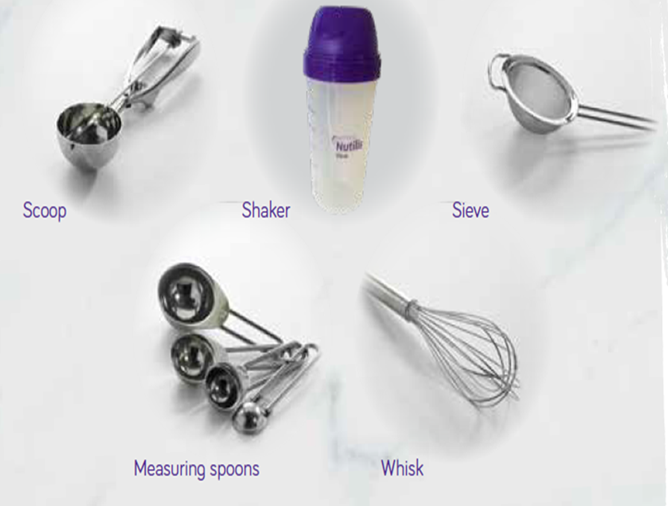
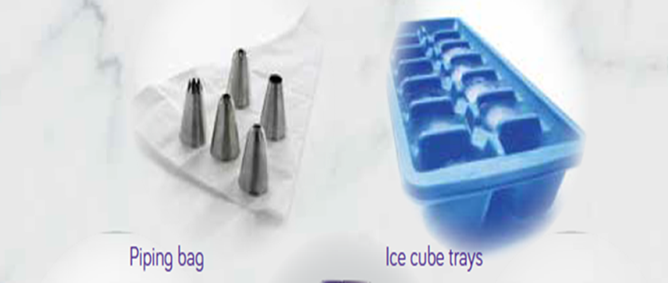
Source: designed by Canva Pro
4.4.4. Alternative technologies (high‐pressure, hydrodynamic pressure, pulsed electric field, plasma, ultrasound treatment, 3D printing technology)
-
Recently, alternative technologies, including those involving the use of high‐pressure, hydrodynamic pressure, pulsed electric field (PEF), plasma, ultrasound, and irradiation, have been applied to modify the texture (for example, hardness, adhesiveness, cohesiveness), sensory characteristics (aroma and flavor), and to maintain the nutritional value and extend the shelf life of an array of food materials (Jin, Yu, & Gurtler, 2017; Yoshioka et al., 2016).
Non-thermal technologies are of special interest for their ability to preserve color, texture, taste, nutrients, and nutritional density of foods.
High‐pressure treatment
HPP can be used to modify the texture of meat and meat products. HPP at ≥300 MPa could be an alternative to produce meat‐based dysphagia foods. High hydrodynamic pressure (HDP) processing is a novel technology that allows high‐pressure shockwave to pass through water to tenderize vacuum‐packaged meat.
Pulsed electric field
PEF treatment is another interesting technology that can be used to modify the texture of food. PEF at higher frequencies and lower pulse numbers could lead to a decrease in the water loss, but to an increase in the water‐holding capacity of meat upon cooking.
Ultrasound
US is another efficient technology that can be used to improve the texture of protein gel. US has been noted to be capable of reducing the hardness of starch‐based foods to the lowest level (level 4) and is therefore a recommended technique to improve the texture of carbohydrate‐based foods for dysphagic patients.
3D printing technology
Recently, three‐dimensional (3D) printing
technology has been used to produce foods with a variety of texture
from various raw material sources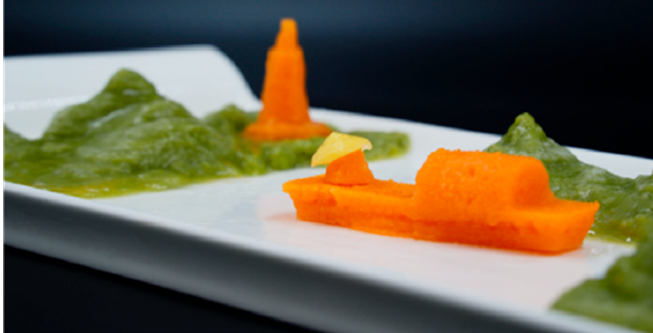
3D printing has been used in the past to help elderly patients with dysphagia - difficulty swallowing or chewing - by creating inks made from puréed food and extruding them into a shape that resembles the real dish, like carrots or chicken, to make it more visually appealing.
Kouzani et al. used this method to 3D print a
tuna fish consisting of tuna, pumpkin, and beetroot purees. The
method reduced the design and fabrication time and cost, decreased
the dependency on a skilled cook, and enhanced the visual appearance,
consistency and repeatability of the foods produced that could
potentially be enjoyed by people with dysphagia who require pureed
food.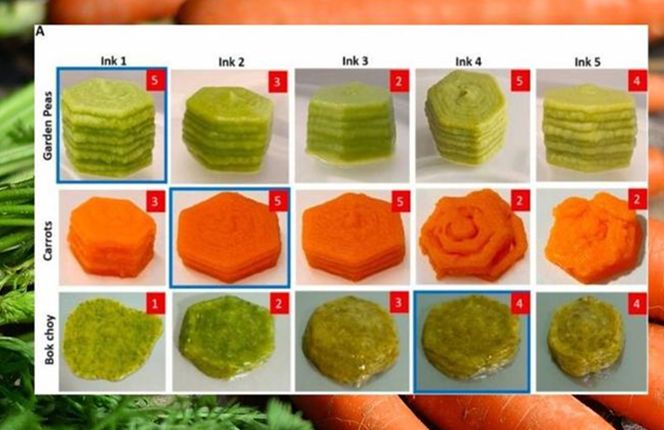
However, while the benefits include a shorter time to fabricate foods in a more appetizing texture and shape, these freeze-dried powders and dehydrated food inks often need to be stabilized with a lot of food additives, like hydrocolloids, to ensure a smooth print process.
This can change the aroma, taste, and texture of 3D printed food, which makes it much less appetizing to dysphagia patients, as you can imagine, and can lead to issues like malnutrition.
(Source: Pant et al., 2021)
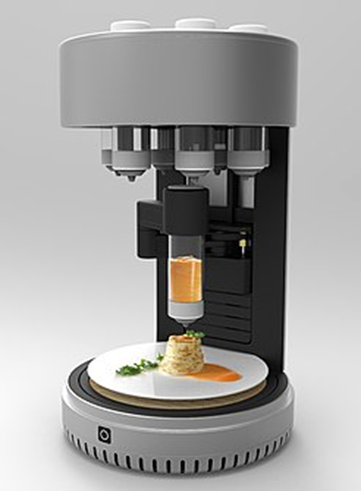
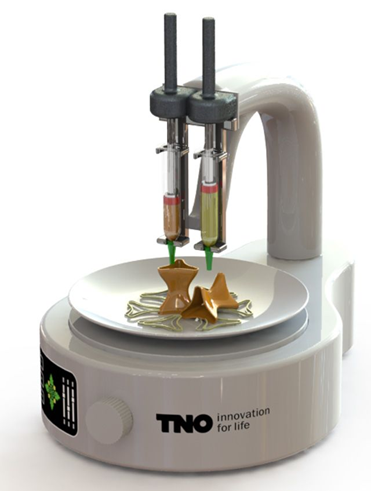
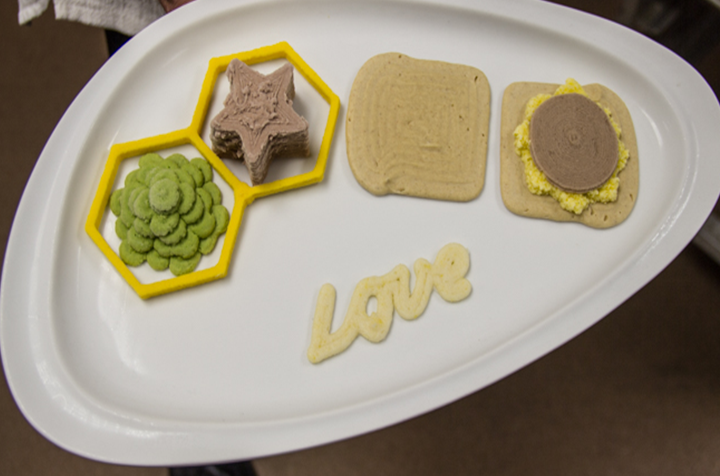
Source:
4.4.5. Ready-to-eat texture modified foods
Foods specifically targeted to patients with dysphagia have undergone a great evolution in recent years.
The food industry has developed a multitude of products for these patients, such as cereal-based breakfasts and snacks, dairy posters or fruit compotes and, above all, pureed textured foods for main meals.
 Source:
Hormel Health Labs
Source:
Hormel Health Labs
 Source:
Nuticia Healthcare
Source:
Nuticia Healthcare
The purees, although similar in their nutritional characteristics, have different technical and preparation characteristics. In general, these products have a long shelf life, the preparation in the kitchen is faster and easier than the traditional elaboration of texturized products, they have a greater hygienic guarantee and the adequacy to the nutritional needs is greater. Their main disadvantage is the price.
They can be presented in various formats according to the technology used for their production.
Dehydrated
They are reconstituted with water and incorporate modified starch as texturizers.
Freeze-dried
They are reconstituted following the manufacturer's instructions and usually contain potato starch.
Pasteurized
They should be kept refrigerated and after opening should be consumed within a few days. They have a high nutritional and sensory quality.
Sterilized
They usually incorporate modified starch and maltodextrins. Due to the heat treatment of sterilization, some vitamins may be lost and the color and flavor may be affected.
Resources
Yoshioka, K., Yamamoto, A., Matsushima, Y., Hachisuka, K., & Ikeuchi, Y. (2016). Effects of high pressure on the textural and sensory properties of minced fish meat gels for the dysphagia diet. Food and Nutrition Sciences, 7, 732– 742.
Jin, T. Z., Yu, Y., & Gurtler, J. B. (2017). Effects of pulsed electric field processing on microbial survival, quality change and nutritional characteristics of blueberries. LWT—Food Science and Technology, 77, 517– 524.
Lazenby-Paterson, T. (2020). Thickened liquids: do they still have a place in the dysphagia toolkit?. Current opinion in otolaryngology & head and neck surgery, 28(3), 145-154.
Merino, G., Gómez, I., Marín-Arroyo, M. R., Beriain, M. J., & Ibañez, F. C. (2020). Methodology for design of suitable dishes for dysphagic people. Innovative Food Science & Emerging Technologies, 64, 102383.
Pant, A., Lee, A. Y., Karyappa, R., Lee, C. P., An, J., Hashimoto, M., ... & Zhang, Y. (2021). 3D food printing of fresh vegetables using food hydrocolloids for dysphagic patients. Food Hydrocolloids, 114, 106546.
Sukkar, S. G., Maggi, N., Travalca Cupillo, B., & Ruggiero, C. (2018). Optimizing texture modified foods for oro-pharyngeal dysphagia: a difficult but possible target?. Frontiers in nutrition, 5, 68.
Sungsinchai, S., Niamnuy, C., Wattanapan, P., Charoenchaitrakool, M., & Devahastin, S. (2019). Texture modification technologies and their opportunities for the production of dysphagia foods: A review. Comprehensive reviews in food science and food safety, 18(6), 1898-1912.
http://www.pacojet-care.com/care-en/showcases/pacojetworkflow.php
4.5. Hygiene and food safety in dysphagia
The aim of this module to show some of the key aspects of food safety and hygiene for professionals who are involved with food handling of people suffering from dysphagia
Learning outcomes
To be aware of the types of contaminants and the hazards associated with them
To get into the most frequent food-borne diseases
To review the principles to be followed to achieve correct food hygiene
Contents (PPT/PDF 49 slides)
4.5.1. Food hygiene and texture-modified diets
The need of formation on food safety
Professionals have a responsibility to ensure that they serve food that is safe and free of contamination.
Food safety, nutrition and food security are inextricably linked.
Unsafe food creates a vicious cycle of disease and malnutrition, particularly affecting infants, young children, elderly and the sick.
Hygienic preparation and serving of food is always paramount, but much more for those people suffering from dysphagia.
Users of dysphagia diets may be considered as part as at-risk groups, as they include in many cases, fragile infants and elderly, malnourished individuals. They cannot tolerate even small levels of microbial contamination.
Appropriate hygiene must be applied as necessary during all stages preceding the consumption of food to ensure that it is safe.
Food hygiene and texture-modified diets
Characteristics of texture-modified food which imply a higher hygienic risk vs convectional food.
They are prepared using ingredients rich in nutrients for microbial growth
High Aw values, which facilitates microbial growth
They require from high manipulation
It is difficult to maintain a safe temperature during processing and serving
(Source: https://www.istockphoto.com)
What should we do?
All the operations applied to prepare the food should take particular caution to prevent food-borne illness caused by biological, chemical, or physical hazards.
But pay attention!
Contaminants cannot be seen with the naked eye. Many types of food contamination can cause illness without a change in appearance, odor, or taste of the food.
Cross-contamination happens when germs are transferred from one food item to the other, usually from raw food to ready-to-eat foods, by contaminated hands, equipment, or utensils.
4.5.2. Type of hazards
What do we mean by hazards when handling food?
A food hazard is an agent in a food with the potential to cause adverse health effects.
There are 3 types of hazards:
-
Biological hazards (Microorganisms and parasites)
-
Chemical hazards
-
Physical hazards
Continuum of potential food-related hazards and their consequences for consumers.
Source: Blackburn. Food Spoilage Microrganisms, 2004
BIOLOGICAL HAZARDS _ Microorganisms
-
Microorganisms are the most common type of food biological contamination and the agents involved in outbreaks of food-borne illness.
-
Some microorganisms simply cause spoilage of food (spoilage microorganisms), while others can cause illness and even death if consumed (pathogen microorganisms).
-
It should be stand out is that many types of microbial contamination can cause illness without changing the appearance or flavour of the food.
-
Microorganisms are microscopically living organisms that multiply rapidly in the right environment (nutrients, pH and temperature).
The factors that affect the growing of the microorganisms in the food are:
-
Nutrients
-
Water activity
-
pH
-
Temperature
-
Oxygen availability
-
Presence of antimicrobial agents
Food products may be contaminated at the farm or field, at processing, packaging, distribution or during food preparation.
The microorganisms are classified into three major groups: bacteria, viruses and fungi (molds and yeasts).
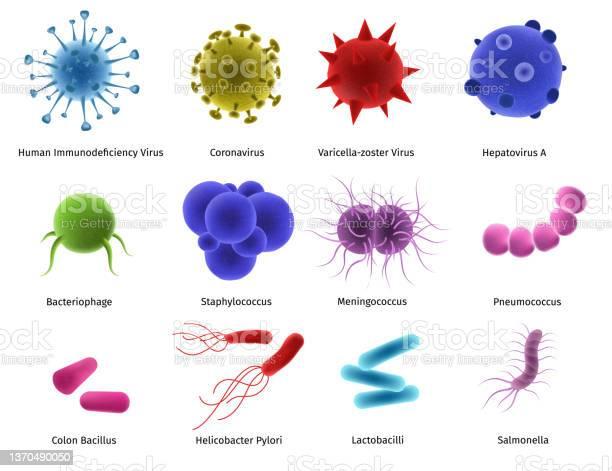
(Source: https://www.istockphoto.com)
Microorganisms _ Bacteria
-
Bacteria are the most common cause of food-borne illness.
-
Bacteria are single-celled organisms that can be round, rod, or spiral in shape.
-
Bacteria that can cause foodborne illness include Escherichia coli O157:H7, Bacillus cereus, Salmonella spp, Campylobacter jejuni, Clostridium spp., Lysteria monocytogenes and Vibrio spp., among others.
(Source: https://www.istockphoto.com)
Bacteria act in two ways: as pathogens or as toxins released by the bacteria.-
Pathogen bacteria causes infectious diseases, obtaining their nutrients from food (meat, eggs, dairy) and reproduce rapidly when proper conditions (temperature, pH).
-
Some other bacteria release toxins into food products and can cause illness when eaten.
Bacteria growth and reproduction is affected by temperature, moisture level, available nutrient sources, oxygen levels, pH of the environment (acidity or alkalinity), presence or absence of inhibitors (such as preservatives) and the length of time (see table).
Table. Bacterial growth needs
|
Needs |
Description and examples |
|
Food characteristics |
Protein rich food Unwashed fruit and vegetables Food with a high moisture content |
|
pH of the media (acidity) |
Most bacteria prefer a neutral environment of pH 7 but may grow in a pH range of 4,6 to 9.0 |
|
Temperature |
Bacteria grow rapidly between 15 and 50 ºC, but can multiply even at lower and higher temperature |
|
Time |
Most bacteria multiply and increase in number by simple cell division and can |
|
Oxygen |
Most bacteria need air. Some others are anaerobic (such as Clostridium botulinum) |
|
Water activity (moisture) |
High Aw favours microbial growth rate and low Aw reduces microbial growth rate |
Bacteria that we should “know”
Salmonella, Campylobacter, and
Enterohaemorrhagic Escherichia coli
are among the most common foodborne
pathogens that affect millions of people annually – sometimes with
severe and fatal outcomes. Symptoms are fever, headache, nausea,
vomiting, abdominal pain and diarrhea.
Examples of foods involved in outbreaks of salmonellosis are eggs,
poultry and other products of animal origin. Foodborne cases with
Campylobacter are mainly caused by raw milk, raw or undercooked
poultry and drinking water. Enterohaemorrhagic Escherichia coli is
associated with unpasteurized milk, undercooked meat and fresh fruits
and vegetables.
Listeria
infection leads to miscarriage in pregnant women or death of newborn
babies. Although disease occurrence is relatively low, listeria’s
severe and sometimes fatal health consequences, particularly among
infants, children and the elderly, count them among the most serious
foodborne infections. Listeria is found in unpasteurised dairy
products and various ready-to-eat foods and can grow at refrigeration
temperatures.
Vibrio cholerae
infects people through contaminated water or food. Symptoms include
abdominal pain, vomiting and profuse watery diarrhoea, which may lead
to severe dehydration and possibly death. Rice, vegetables, millet
gruel and various types of seafood have been implicated in cholera
outbreaks.
Microorganisms _ Viruses
-
Viruses are much smaller microorganisms than bacteria that can grow and reproduce inside living cells.
-
Viruses cannot grow in food products, but may survive in the food.
- They may be present in the food or enter the food by contamination from polluted water, animals or food handled by an infected employee who failed to follow correct hygiene practices.
-
(Source: https://www.istockphoto.com)
Virus that we should “know”
Viruses responsible for foodborne illness include Hepatitis A, Norwalk virus, rotavirus, among others.
-
Norovirus infections are characterized by nausea, explosive vomiting, watery diarrhoea and abdominal pain.
-
Hepatitis A virus can cause long-lasting liver disease and spreads typically through raw or undercooked seafood or contaminated raw produce. Infected food handlers are often the source of food contamination.
Microorganisms _ 
Molds are microorganisms with larger cell size that form chains and branches.
-
Important molds that cause spoilage of food products include Aspergillus spp, Fusarim spp, Penicillium spp., Rhizopus spp.
- Some species may cause illness, through the production of metabolites called aflatoxins.
- Yeasts are microorganisms that can cause spoilage of food, but they are also used in fermentation processes.
(Source: https://www.istockphoto.com)
2. CHEMICAL HAZARDS
-
There are a number of chemicals that are not allowed in food and some others should be below safe limits.
-
Some chemical contaminants appear naturally in food and some others added during the processing.
-
Chemical contamination can lead to acute poisoning or long-term diseases, such as cancer.
-
Naturally occurring and environmental pollutants chemical hazards include the following:
mycotoxins, marine biotoxins, grain aflatoxins, compounds from undercooked legumes, agricultural chemicals (pesticides, fungicides, antibiotics). A long-term exposure can affect the immune system and normal development, or cause cancer.
-
Persistent organic pollutants (POPs), Dioxins are highly toxic and can cause reproductive and developmental problems, damage the immune system, interfere with hormones and cause cancer
-
Heavy toxic metals (lead, copper, mercury…) can cause neurological and kidney damage.
-
Housekeeping products are also chemical hazards.
-
They can contaminate the food if they are not properly labelled, stored and used.
-
Food must be stored apart from housekeeping products.
-
Food packages should not be used to keep cleaning or chemical products.
(Source: https://www.istockphoto.com)
3. PHYSICAL HAZARDSPhysical contamination occurs when objects such as stones, bones, wood, plastic, needles, human or animal hair, dirt, metal, glass, jewelery, fingernails are found in food.
-
Finding this objects may cause illness or injury to the person.
-
Food handlers training is essential to avoid physical hazards. They should use hair restraints and avoid wearing jewelry, artificial nails, nail polish.
4.5.3. Most frequent foodborne illness
Foodborne diseases are caused by contamination of food and occur at any stage of the food production, delivery and consumption chain.
They can result from several forms of environmental contamination including pollution in water, soil or air, as well as unsafe food storage and processing.


(Source: WHO, 2021)
Salmonellosis
Among the most frequently occurring food-borne infections.
Salmonellosis is caused by Salmonella bacteria of several different types.
Bacteria can be found on fresh meat, poultry, shelled or cracked eggs, and shellfish from contaminated waters. Bacteria also can be found in foods made from these products and contaminated during preparation.
The presence of Salmonella bacteria in food is unnoticeable because the appearance, flavour, and odour of the food usually are not altered.
Symptoms of salmonellosis include nausea, vomiting, abdominal pain, diarrhea, headache, chills, weakness, drowsiness, and possibly fever. The illness usually lasts two or three days, but it may linger.
Symptoms of salmonellosis vary in severity, depending on an individual’s susceptibility to the infection, the total number of cells ingested, and the bacterial strains involved.
Salmonellosis can be avoided by reducing the possibility of food contamination during handling and processing, by adequately cooking vulnerable foods (which can be contaminated even under the best processing conditions), and by preventing the cross-contamination of foods during the preparation process.
Staphylococcal infection
Staphylococcus aureus bacteria are responsible for frequent outbreaks of food-borne illness. The most common source of staphylococcal contamination is the human body, where organisms are found on the skin and in the mouth, nasal passages, and throat of healthy people.
Toxins are produced when foods that support the growth of staphylococci are contaminated with the organism and are allowed to stand for a sufficient period at temperatures favourable for bacterial growth.
Bacteria are killed when subjected to temperatures of 60°C for 10 minutes, but toxins are highly resistant to heat, cold, and chemicals. Freezing, refrigerating, or heating foods to serving temperatures does not significantly reduce the amount of toxin. The more toxins a person ingests, the greater the reaction of the body.
Foods high in protein readily support the growth of staphylococci and have been involved in many outbreaks of food poisoning. Such foods include custards; meat sauces and gravies; fresh meats; cured meats; meat products; roasted poultry and dressing; poultry, egg, and fish salads and mixtures; raw milk; puddings; and cream-filled pastries. Any food that requires a considerable amount of handling during preparation is a possible source of food poisoning, particularly if it is not kept at safe temperatures during or after preparation.
Symptoms of staphyloccal infection usually occur two or three hours after consumption of the toxin-containing food. However, the time may vary from 30 minutes to six hours. Specific symptoms of staphylococcal food intoxication include nausea, vomiting, diarrhea, dehydration, cramps, and prostration.
Campylobacteriosis
Campylobacteriosis is a food-borne infection caused by the pathogen C. jejuni.
Food-borne outbreaks have been linked to raw or undercooked meat or poultry or these products being recontaminated after cooking by contact with C. jejuni–contaminated materials such as cutting boards.
C. jejuni is sensitive to heat and temperatures below 86ºF (30°C) and can be easily destroyed through proper food-handling practices. The growth of this bacterium quickly declines at room temperature and more slowly at refrigerated temperature. The organism also is sensitive to acidic conditions.
Listeriosis
L. monocytogenes is the species of bacteria that can cause listeriosis. The source of the bacteria is most often contaminated food.
Individuals most susceptible to listeriosis are persons older than 60, newborns, and patients whose immune systems are compromised. Individuals suffering from cirrhosis, diabetes mellitus, and ulcerative colitis are more at risk. Complications including miscarriage, meningitis, septicemia, pneumonia, and endocarditis can result from serious cases of listeriosis.
L. monocytogenes is particularly problematic in food service operations because the bacteria grow slowly at refrigeration temperatures and on moist surfaces, even sponges and drains.
Haemorrhagic colitis by E. coli 0157:H7
E. coli 0157:H7 is a bacterium that has caused many food-related out-breaks. The bacterium can cause haemorrhagic colitis (bloody diarrhoea) and renal failure (haemolytic uremic symptoms).
Undercooked or raw ground beef and red meat (lamb and pork) and unpasteurized milk have been implicated as transmitters of E. coli. E.coli 0157:H7, which has also been found in prepared foods (such as mashed potatoes, cream pies, finfish, and some cheeses).
To avoid this haemorrhagic colitis, it is recommended: Good food-manufacturing practices, proper heating of meats and following good hand-washing and personal hygiene practices at all times.
4.5.4 Correct food hygiene
Personal hygiene in Food handlers
All food handlers must be aware that high standards of personal hygiene are important.
Some rules for food workers are the following:
Food handlers must wear clean outer clothing and hair and beard restraints (hats, hairnets)
Food handlers should keep their fingernails short and not wear any jewelry on their arms and hands.
Food handlers should use gloves of food handling utensils or papers to handle ready-to eat-food.
Food handlers should use hands-fee taps and paper towel dispensers to reduce the risk of contamination
Food handlers must wash their hands frequently using soap and water and paper towels to dry.
Food handlers should cover any wounds, cuts or open bruises on their hands or arms with a waterproof bandage.
Food handlers who feel ill with symptoms such as vomiting, diarrhea, sore throat or fever must report to their manager or supervisor.
Employees should be trained in proper food-handling and sanitation practices and they must in a healthy state and be free from infections.
Safe food handling
These are “Five keys to safer food”, which were developed by WHO to educate safe food handling behaviors to all consumers and food handlers:
Keep clean
Separate raw and cooked
Cook thoroughly
Keep food at safe temperatures
Use safe water and raw materials
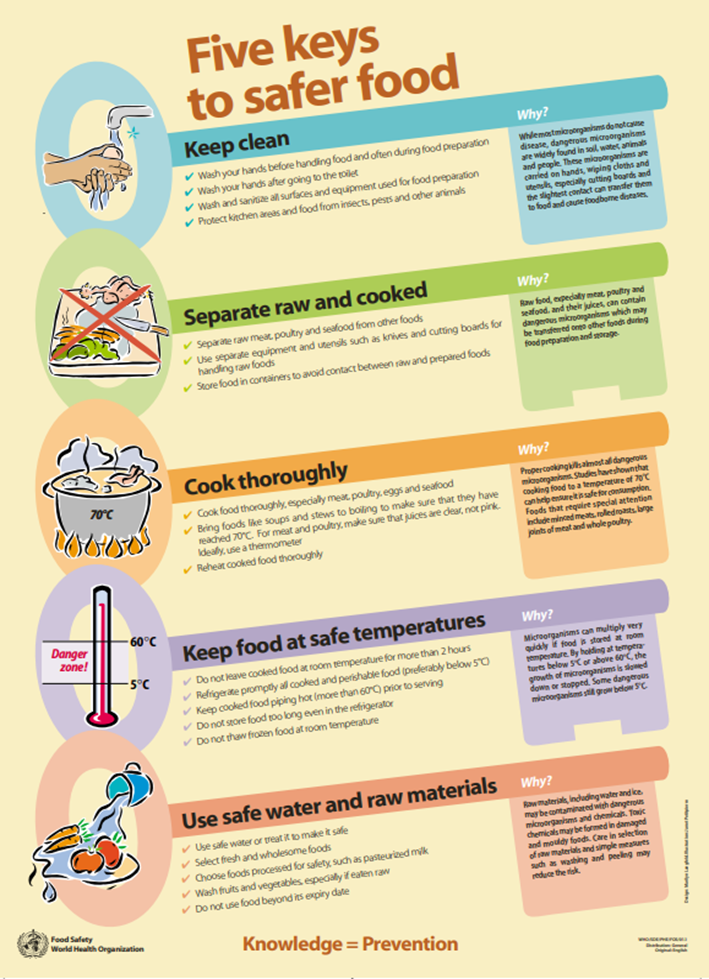
(Source: WHO, 2021)
Storing food
Food storage should be aimed to keeping nutritional, sensory and hygienic quality.
The procedures have to:
Prevent or delay microbiological activity
Prevent or delay enzymatic activity and chemical reactions
Prevent contamination from other agents.
You must carefully follow storage instructions.
A use-by date on food is about safety. This is the most important date to remember. You can eat food until and on the use-by date but not after. You will see use-by dates on food that goes off quickly, such as meat products or ready-to-eat salads.
For the use-by date to be a valid guide, you must carefully follow storage instructions. For example, if the instructions on the packaging tell you to refrigerate after opening, you should keep the food in a fridge at 5°C or below. Find out more about chilling your food correctly.
After the use-by date, don't eat, cook or freeze your food. The food could be unsafe to eat or drink, even if it has been stored correctly and looks and smells fine., including meat and milk, can be frozen before the use-by date though so plan ahead.
The best before date, sometimes shown as BBE (best before end), is about quality and not safety. The food will be safe to eat after this date but may not be at its best. Its flavour and texture might not be as good. Best before dates appear on a wide range of foods including frozen foods, dried foods and tinned foods.
The best before date will only be accurate if the food is stored according to the instructions on the packaging.
Chilling food
Chilling food properly helps stop harmful bacteria from growing.
To keep your food safe:
store any food with a 'use by' date, along with cooked dishes, salads and dairy products, in your fridge
keep chilled food out of the fridge for the shortest time possible during preparation
cool cooked food quickly at room temperature and then place in the fridge within one to two hours
You need to check that your fridge is cold
enough using a fridge thermometer. This is because the dials on
fridges don't always show you the right temperature. Your fridge
should be 5°C or below.
Don't overfill your fridge. Leaving space allows air to circulate and maintains the set temperature.
Video:
https://www.youtube.com/watch?v=6dBZq-RskPg&list=PLkq7R7IpXHhU8fZRxHKRKgM26q8Fh6eXQ&index=4
Freezing food
A freezer acts as a pause button - food in a freezer won't deteriorate and most bacteria cannot grow in it.
You can freeze pre-packaged food right up to the 'use by' date.
Leftovers and homemade goods should be frozen as soon as possible.
Make sure any warm dishes are cooled before putting them in your freezer.
To stop the cold air in your freezer from drying out your food you can:
place food in an air-tight container
wrap it well in freezer bags or freezer wrap
It doesn't matter if you cook your meat from frozen or fresh, you can use your leftovers to make a new meal.
Check packet instructions to ensure that foods are suitable for freezing, especially for Ready-To-Eat foods.
Defrosting your food
When you take your food out of the freezer, it's important to defrost it safely before cooking or eating it.
Don't defrost food at room temperature. Ideally, food should be defrosted fully in the fridge. If this isn't possible, use a microwave on the defrost setting directly before cooking. Check the guidance on food packaging and allow enough time for your food to defrost properly. Large items, can take up a long time to defrost fully in the fridge.
Make sure your food is fully defrosted before cooking. Partially defrosted food may not cook evenly, meaning that harmful bacteria could survive the cooking process. Once food has been defrosted, eat it within 24 hours.
The 'Danger Zone'
Most harmful bacteria will grow at temperatures above 8°C and below 63°C – this is known as the ‘Danger Zone’ for microbial growth. That’s why we advise that the safest way to defrost food is in the fridge overnight. By defrosting in the fridge, your food should never enter the ‘Danger Zone’. Your fridge should be 5°C or below, as some bacteria can grow at lower temperatures than 8°C.

Avoid cross-contamination
Cross-contamination is the transfer of harmful bacteria to food from other foods, cutting boards, and utensils if they are not handled properly.
This is especially true when handling raw meat, poultry, eggs, and seafood, so keep these foods and their juices away from already cooked or ready-to-eat foods and fresh product.
To avoid cross-contamination:
Keep apart raw meat, poultry, fish and shellfish from other foodstuffs when purchasing preparing and storing food.
Always use a clean cutting board. Wash cutting boards, dishes, and counter tops with hot, soapy water after preparing each food item and before you go on to the next item.
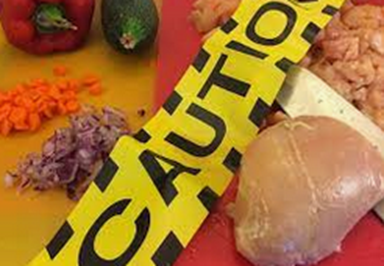
If possible, use one cutting board for fresh produce and a separate one for raw meat, poultry, and seafood.
Once cutting boards become excessively worn or develop hard-to-clean grooves, you should replace them.
Wash hand with hot, soapy water after preparing each food item and before you go on to the next item
(Source: https://www.istockphoto.com)
Food labelling
Food labelling must ensure all the mandatory
information to the consumers. Should reflect quantity, list of
ingredients, nutrition information, instructions to storage or to
use, shelf-llife, and presentation of allergens (e.g. soy, nuts,
gluten, and lactose)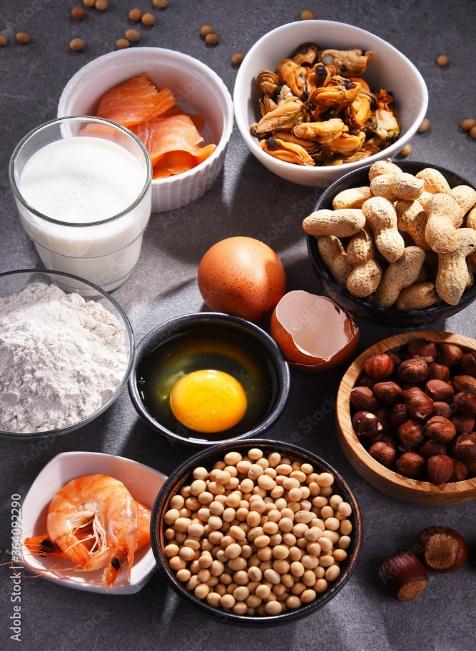
Allergens
When working with commercially available dysphagia adapted products is necessary to consider the following aspects:
Those products do not contain usually lactose or gluten, but it is necessary to confirm and check technical sheets.
Some products may content dairy products, egg, fish, selfish, legumes, chocolate.
Those aspects should be taken into account when working with users suffering food intolerances and/or food allergies.
(Source: https://stock.adobe.com)
Control and monitoring of food safety
The HACCP is a process or system for control of food safety in food service in health institutions.
HACCP stands for Hazard Analysis and Critical Control Point.
These hazards or critical situations may result from pathogenic microorganisms; chemical residue; physical objects; employees; or adulteration or cross-contamination at any point during the distribution, storage, or preparation system.
The seven principles of HACCP are: Identify hazards, determine Critical Control Points (CCP), set up critical limits, monitor CCP, take corrective actions, verify and keep records.
CCP refers to any point where action must be taken to eliminate the hazard.
The process can be used to control any point in the food production process or system where a hazard or critical situation may occur.
These hazards or critical situations may result from pathogenic microorganisms; chemical residue; physical objects; employees; or adulteration or cross-contamination at any point during the distribution, storage, or preparation system.
In food service management, HACCP focuses on the flow of food through the operation, beginning with the decision of what foods to include on the menu and continuing with recipe development, food procurement, delivery and storage, preparation, holding or displaying, service, cooling, storage, and reheating.
In food service management, HACCP focuses on the flow of food through the operation, beginning with the decision of what foods to include on the menu and continuing with recipe development, food procurement, delivery and storage, preparation, holding or displaying, service, cooling, storage, and reheating.
Depending on the system used in the food service operation, the HACCP process would differ
A conventional food service system receive, prepare, cook, hold, and serve would entail the largest number of CCPs.
CCPs need to be developed for each step.
Correct temperatures for both hot and cold systems must be constantly monitored. Some bacteria will continue to grow and reproduce if safe temperatures are not maintained.
Resources
Food Service Manual for Healthcare Institutions. 3th ed. AHA. 2004
Food Microbiology. 4th Ed. ASM Press. 2013
4.6. Texture‐modified foods taste and aesthetic presentation
The aim of this module is to learn about presentation tips of texture‐modified foods for dysphagia diets
Learning outcomes
To understand the benefits of the good taste and aesthetic presentation of texture‐modified foods
To get acquainted with methods to make pureed dishes more appetizing
Contents (PPT/PDF 32 slides)
4.6.1. Sensory Properties of Texture-modified diet
-
It is important that pureed food looks, tastes and smells good so that it is appetising to eat. For an adult, shapeless, dull colored food is unappealing. Almost as significant is the fact that nursing attendants, feeding residents pureed food, often project a negative attitude about unattractive food.
-
That cause the main problem, resulting in frequent low percent of food consumed by residents on the Pureed Diet.
-
The more attractive the food, the better it is received by residents and care givers alike. The goal is to serve the most attractive food to all residents, including those needing the Pureed Diet.
-
The smell and appealing appearance of food can help to increase appetite as we eat with our eyes, and our noses!
-
How can smooth, moist pureed food have an enhanced image?
Texture-modified diet: Opportunities
This article reviews the latest applications
and improvement opportunities for the production of textured foods
for dysphagia.
It gives an up-to-date overview of the latest technologies for producing texturized foods while maintaining their sensory properties and creating appealing products for the consumer.
To learn more, please read it:
https://ift.onlinelibrary.wiley.com/doi/abs/10.1111/1541-4337.12495
Texture: According to IDDSI evaluation
-
Optimization:
-
Appearance
-
Flavour
-
Kinesthetiscs
-
-
Importance of using good descriptors
Texture-modified diet: Sensory Attributes
It is widely observed that pureed diets lack
sensory or taste appeal and can lead to food refusal and reduced
intake. Many elderly people suffer from a loss of taste and smell in
addition to stimuli, which has a negative impact on their enjoyment
of meals and dietary habits. This provides a challenge to design TMFs
that have attractive sensory properties. Vision and auditory
perception are reported to be the dominant features in human
perception of food. The appearance of a meal in terms of the colour,
taste and smell, all perceived by the orbitofrontal cortex involved
in processing pleasant stimuli, and how it is served is shown to play
an important role in the evaluation of foods among the elderly and
dysphagics.
To learn more, please read it: https://ifst.onlinelibrary.wiley.com/doi/abs/10.1111/ijfs.14483
Even though manipulation of texture remains to
be a common strategy in dysphagia management, pureed diets are
reported to lack sensory or taste appeal which can result in food
refusal and reduced intake TMFs.
To formulate TMFs that give pleasurable meal experiences, varying ingredients and processing conditions can be used improve taste, aroma and visual aspects of these foods. As such, sensory modified foods may be formulated and used to improve swallowing in dysphagics whilst maintaining palatability.
To learn more, please read it: https://ifst.onlinelibrary.wiley.com/doi/abs/10.1111/ijfs.14483
4.6.2. Tips for improving the acceptability of puréed foods
The taste of puréed foods needs to be more intense than for regular texture foods. This is because the act of chewing a food releases flavors in the mouth. Once a food is puréed, it does not require chewing. It can be simply swallowed without much time for the flavor of the food to be tasted.
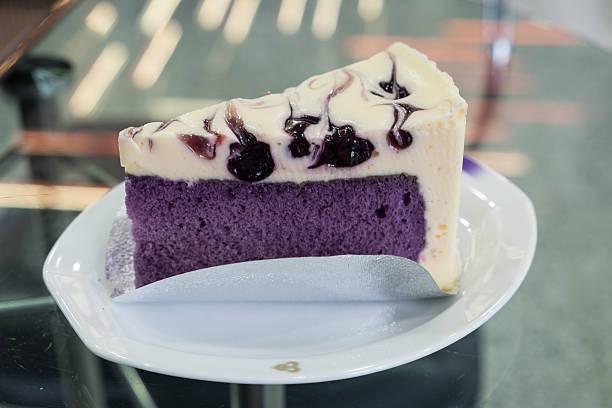
Increasing the flavor of puréed foods helps with flavor recognition.
By adding a sauce or gravy to puréed meat will not only make it look more appetising but also add extra flavour and moisture.
When preparing puréed foods, try using flavorful liquids instead of water. For instance, use broth or gravy in puréed meats, and fruit juice or dairy products in desserts.
Spices and ground herbs can also be added to puréed foods to add variety and increase acceptability can make a meal look and taste delicious as well. However, these alter the natural flavors of food and may make it harder to identify puréed foods.
It is important that pureed food looks, tastes and smells good so that it is appetising to eat.
To do this, blend each type of food separately to keep its individual colour and flavour.
Present the foods on a plate so you can see each type separately.
Avoid blending a whole meal together as this makes food look unattractive and reduces the flavour in the mouth.
Pureed food can be shaped on the plate to look attractive to eat using spoons, an ice-cream coop, the ridges of a fork, special food moulds or by using the nozzles on a piping bag.
Using garnishes such as fruit and herbs helps make food look attractive, but you should not eat these if they need to be chewed.
4.6.3. Presentation tips (spacing and shaping, spacing and color, moulded puréed food, piping)
-
Using moulds aids meal presentation and helps to make meals recognizable to the diner. They can also reduce preparation time and wastage for kitchen staff.
-
Piping bags will give you the ability to make interesting shapes and designs on the plate. Using different nozzles will allow you to vary the presentation.
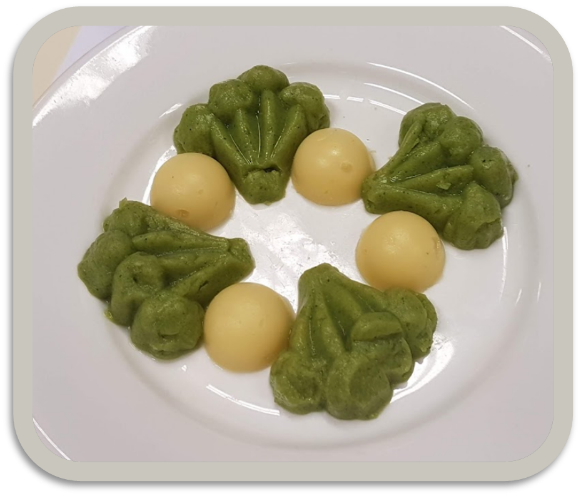
-
Unless preparing a complete dish make sure that individual components are separated on the plate.
-
Make an interesting shape on the plate with a quenelle — the purée is formed into an oval shape with the use of two spoons to mould the mixture.
-
Use different shaped and coloured plates for each dish.
Spacing and shaping
-
Kind of goes hand-in-hand with consistency. If you’re not working with an already divided plate, spacing food groups appropriately on the plate can affect puree how appetizing a meal looks.
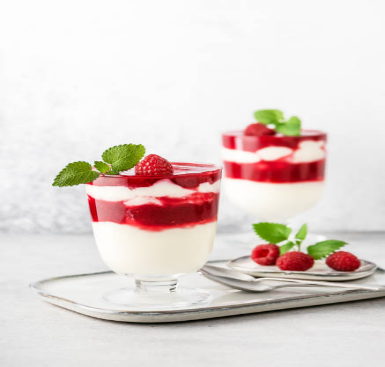
-
Especially if the preparation of pureed foods does not involve molds or piping, you may just be using a scoop to put foods on the plate.
-
In which case, make sure foods are not piled one on top of the other and are neatly scooped on to the plate.
-
Adding thickener to smooth pureed food creates body and a soft scoopable mashed potato shape.
-
Thickened food allows pureed food to be served on the regular dinner plate, instead of a deep divided dish containing liquefied food. The dinner plate is a home-like normal way to serve food, thus adding to a resident's dignity and quality of life.
-
Food can be thickened and pureed separately, layered into pans and baked. This technique allows for an entree like lasagna, to be served in a most attractive rectangle of colorful layers.
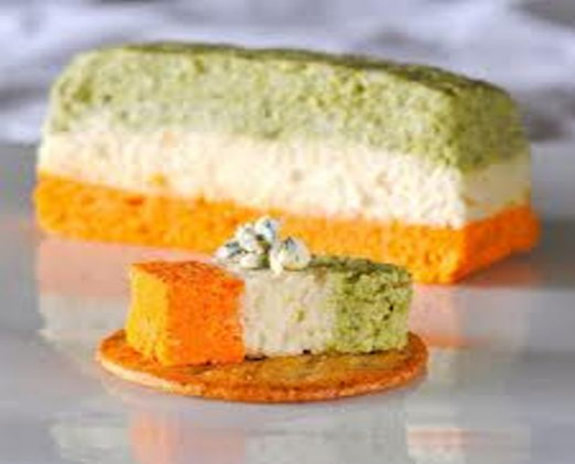
Spacing and Color
-
Make the color on the plate pop! For some who may have difficulty seeing, using a colored plate instead of a white one may help make foods stand out better and therefore make it easier for them to eat.
-
Create as much natural looking color contrast as possible for the pureed diet.
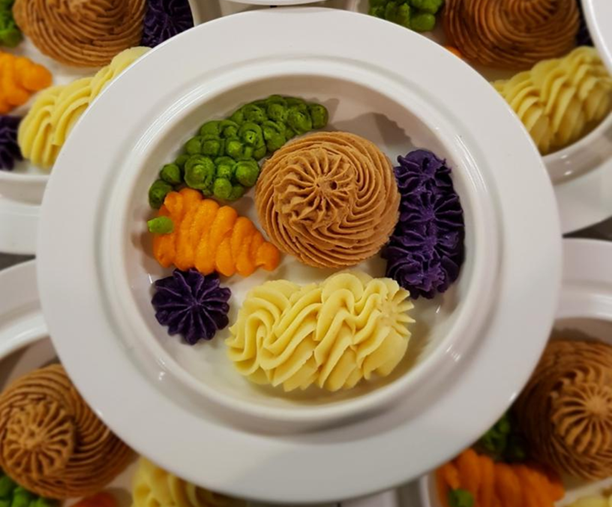
-
Prepare frozen vegetables over canned whenever possible.
-
Omit vegetables that make a sauce dull.
-
If mushrooms are on the menu, combine them with the pureed meat for taste, rather than pureeing them into a white sauce. Or, puree mushrooms in a rich dark brown sauce, for excellent color and taste.
-
Use amounts of kitchen bouquet to create chocolate colored brown sauce.
-
Heat smooth BB-Q sauce for a quick, tasty, colorful sauce for chicken, pork or beef.
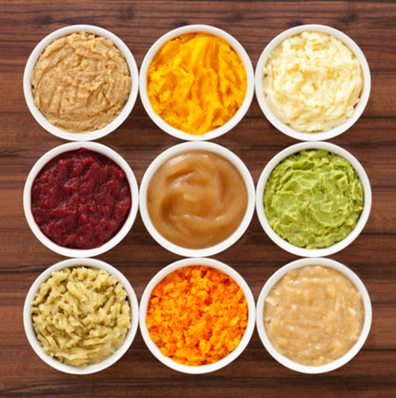
-
Have white sauce made up in advance to serve over pureed meat and further garnish with powdered parsley. Sour cream provides excellent color contrast when served over dark green spinach or red beets.
-
Purchase jellied cranberry sauce in cans, for easy slices of a popular red garnish.
-
Have a small bowl of shredded cheddar cheese, set out at room temperature during serving, for a sprinkle of gold color over cauliflower, mashed potatoes or fish.
(Source: https://stock.adobe.com)
Molded puréed food
-
Food molds allow those on a puréed diet to enjoy a visual variety of foods on their plate.
-
Molds are awesome ways to help make pureed foods look natural again, add interest, and really improve plate presentation!
-
Molds can be used to turn the pureed food back into its original shape.
-
For instance, roast beef can be pureed and poured into plastic molds, which are then frozen, and when ready to prepare a meal the purees can be defrosted, heated, and pressed onto the plate.
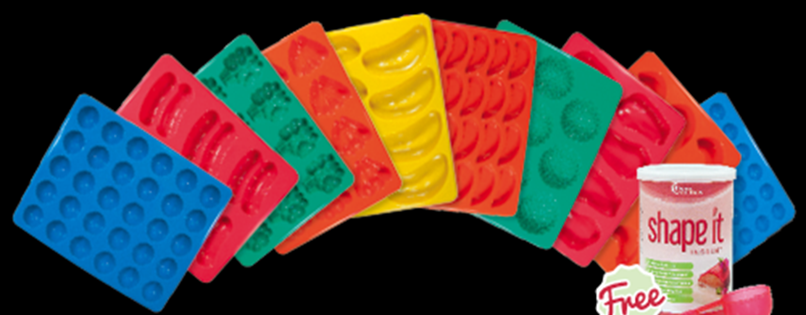
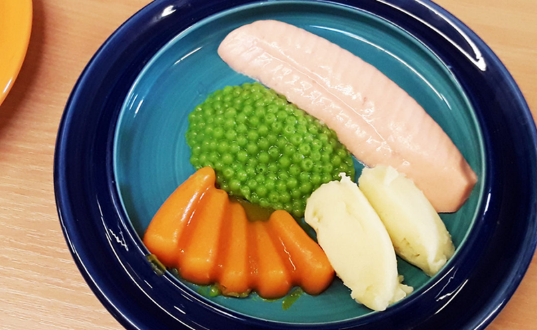
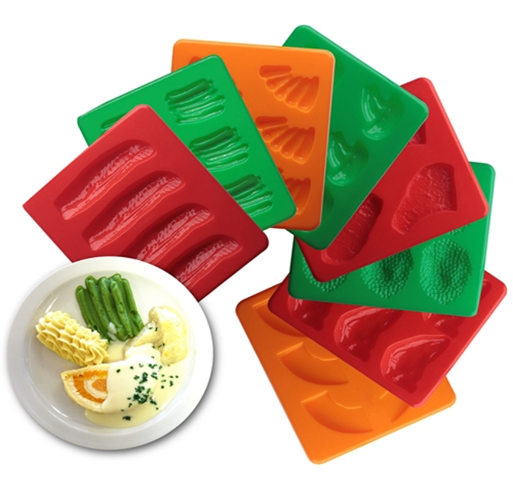
(Source: https://www.foodserviceexpress.com)
-
Food-shaped templates used to form pureed food into a natural product for a more attractive appearance
-
Molds filled with thickened pureed mixture and frozen for approx. 2 hrs
-
Food is then removed from mold and stored individually until further use
-
Most molds are shaped into portion sizes of 3-4 oz. (1/2 cup)
-
Research indicates food molds may help increase the acceptance of pureed foods
(Source: https://www.foodserviceexpress.com)
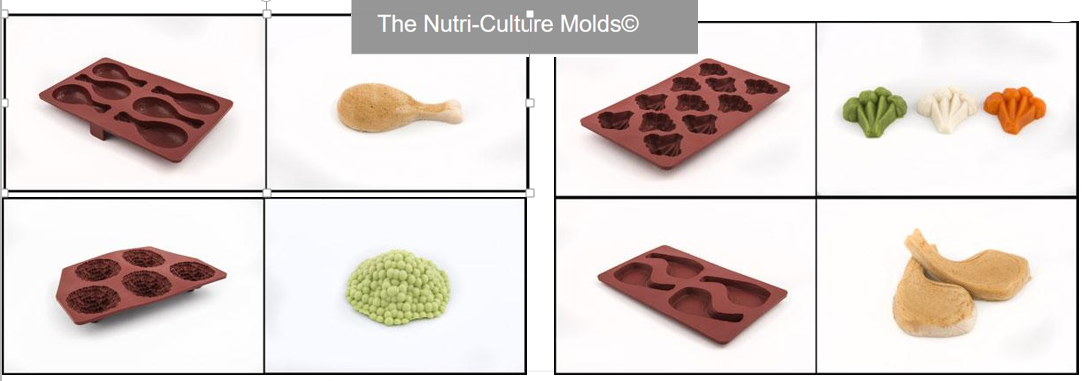
(Source : https://www.emotionfood.ch/the-molds/)
Pastry bag and tips
-
Pastry bag and tips can create attractive effects with pureed foods
-
Piping can be used as well to add unique characteristics to pureed foods that would be found in certain foods naturally, such as the stems on carrots.
Examples:
-
Flat tip to make pureed roast beef slices, bacon, or turkey slices
-
Round tip to make spaghetti or other pasta shapes
Be creative!
Piping
-
Piping is as simple as adding the pureed mixture into a plastic piping bag and adding the appropriately shaped tip to create a beautiful plate.
-
Few garnishes are as pretty as a star of whipped topping from a pastry bag.
-
Pureed food, such as green beans, can be put into large pastry bags to create a variety of shapes using a tube tip.
-
Mashed potatoes, so often served as a scoop, can be piped on the dinner plate creating an interesting wave or zigzag.
-
Peas can be pureed and piped using a leaf cake decorating tip.
-
These green leaves can be frozen and added later as garnishes to dinner meals lacking a green vegetable.
-
To make garnishing with a pastry bag easier, roll wax paper into a cone, add tip, fill cone with topping, sour cream, mayonnaise even pureed peas, etc., garnish item and toss the wax paper out for fast clean up.
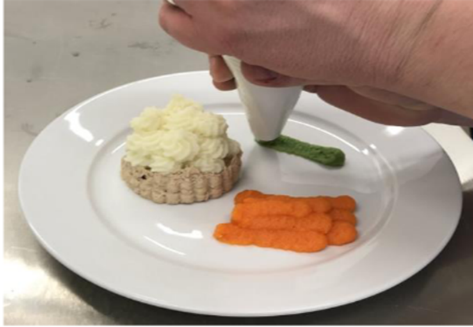
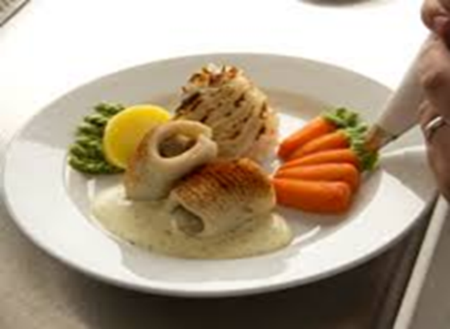
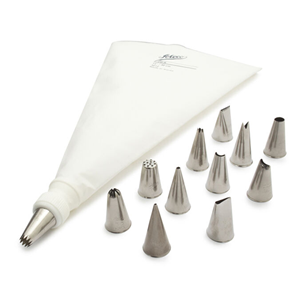
(Source: https://www.webstaurantstore.com)
Pastry Tip Sizes and Shapes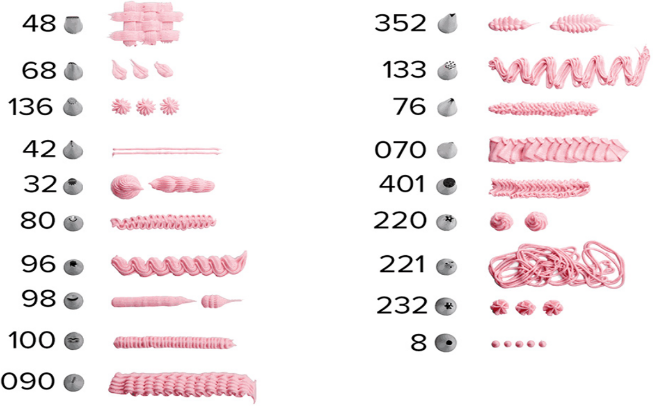
-
Decorating tips are assigned different numbers based on the shape and size of their openings.
-
There is a graphic that shows some of the most common pastry tip numbers and what the result of using them is.
(Source: https://www.webstaurantstore.com)
4.6.4. Plating and serving
Whenever possible, serving the table to the patients with dysphagia follows common principles.
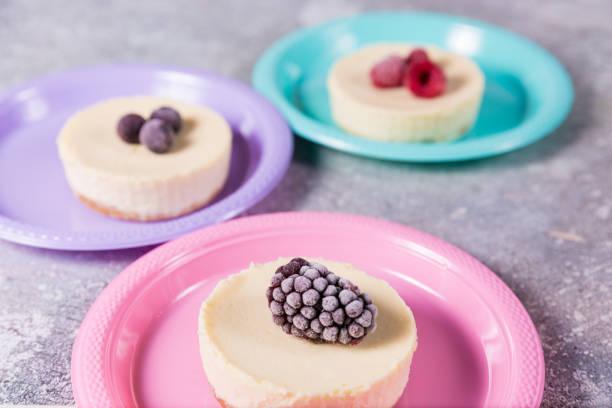
Extras: colorful napkins; parfait cups; battery-operated candles; dinner music.
Dining table accessories are essential. Plates, cutlery and glasses are but some among other table accessories that can be chosen with care and attention in order to unleash your creativity and complete the space furniture.
Accessories for the dining table are available in a multitude of colors, materials and shapes, range from a classic to a modern style and are designed to meet any furnishing requirement.
(Source: https://stock.adobe.com)
Samples of puréed food serving:
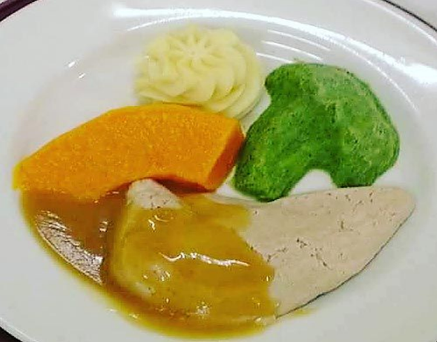
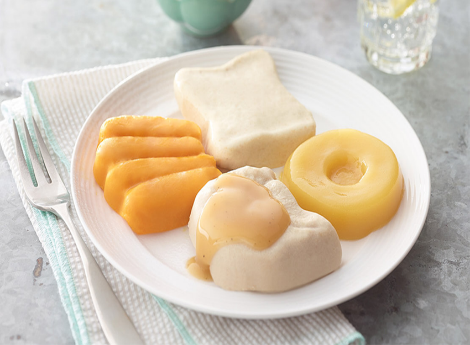
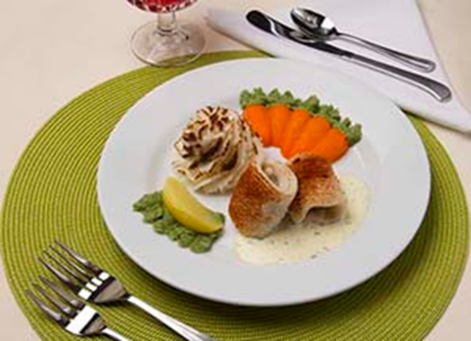
(Source: https://stock.adobe.com)
Resources
Guénard‐Lampron, V., Masson, M., & Blumenthal, D. (2021). Critical review of sensory texture descriptors: From pureed to transitional foods for dysphagia patients. Journal of Texture Studies, 52(5-6), 665-678.
Lepore, J. R., & Dahl, W. J. (2013). Sensory Acceptability of Puréed Foods: FSHN1213/FS206, 11/2012. EDIS, 2013(1).
Munialo, C. D., Kontogiorgos, V., Euston, S. R., & Nyambayo, I. (2020). Rheological, tribological and sensory attributes of texture‐modified foods for dysphagia patients and the elderly: A review. International Journal of Food Science & Technology, 55(5), 1862-1871.
Sungsinchai, S., Niamnuy, C., Wattanapan, P., Charoenchaitrakool, M., & Devahastin, S. (2019). Texture modification technologies and their opportunities for the production of dysphagia foods: A review. Comprehensive reviews in food science and food safety, 18(6), 1898-1912.
https://www.webstaurantstore.com/guide/583/types-of-pastry-bags-and-tips.html