Unit 4 - Food preparation
4.6. Texture‐modified foods taste and aesthetic presentation
4.6.1. Sensory Properties of Texture-modified diet
-
It is important that pureed food looks, tastes and smells good so that it is appetising to eat. For an adult, shapeless, dull colored food is unappealing. Almost as significant is the fact that nursing attendants, feeding residents pureed food, often project a negative attitude about unattractive food.
-
That cause the main problem, resulting in frequent low percent of food consumed by residents on the Pureed Diet.
-
The more attractive the food, the better it is received by residents and care givers alike. The goal is to serve the most attractive food to all residents, including those needing the Pureed Diet.
-
The smell and appealing appearance of food can help to increase appetite as we eat with our eyes, and our noses!
-
How can smooth, moist pureed food have an enhanced image?
Texture-modified diet: Opportunities
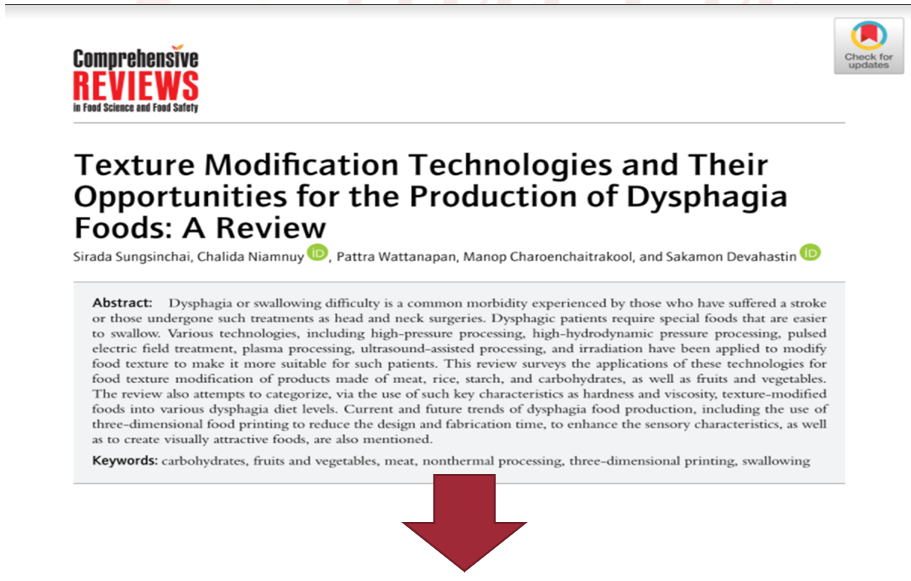
This article reviews the latest applications
and improvement opportunities for the production of textured foods
for dysphagia.
It gives an up-to-date overview of the latest technologies for producing texturized foods while maintaining their sensory properties and creating appealing products for the consumer.
To learn more, please read it:
https://ift.onlinelibrary.wiley.com/doi/abs/10.1111/1541-4337.12495
Texture: According to IDDSI evaluation
-
Optimization:
-
Appearance
-
Flavour
-
Kinesthetiscs
-
-
Importance of using good descriptors
Texture-modified diet: Sensory Attributes
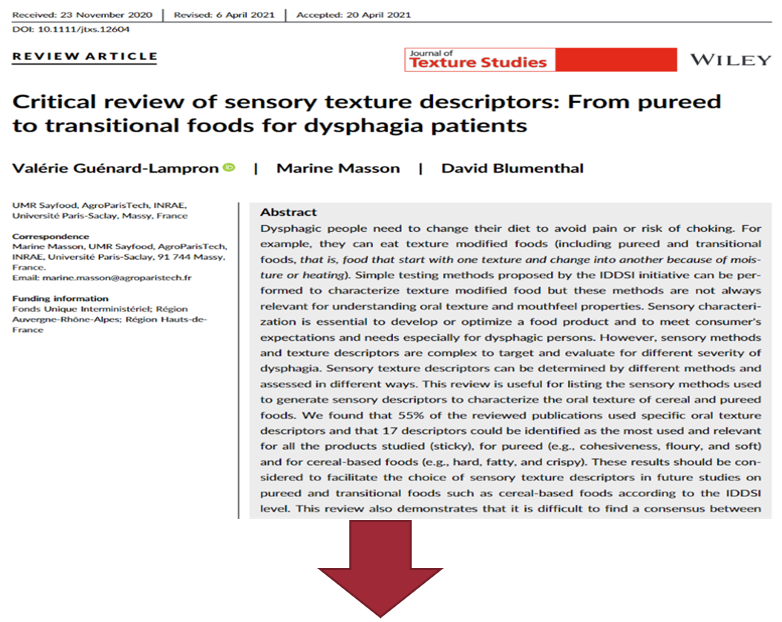
It is widely observed that pureed diets lack
sensory or taste appeal and can lead to food refusal and reduced
intake. Many elderly people suffer from a loss of taste and smell in
addition to stimuli, which has a negative impact on their enjoyment
of meals and dietary habits. This provides a challenge to design TMFs
that have attractive sensory properties. Vision and auditory
perception are reported to be the dominant features in human
perception of food. The appearance of a meal in terms of the colour,
taste and smell, all perceived by the orbitofrontal cortex involved
in processing pleasant stimuli, and how it is served is shown to play
an important role in the evaluation of foods among the elderly and
dysphagics.
To learn more, please read it: https://ifst.onlinelibrary.wiley.com/doi/abs/10.1111/ijfs.14483
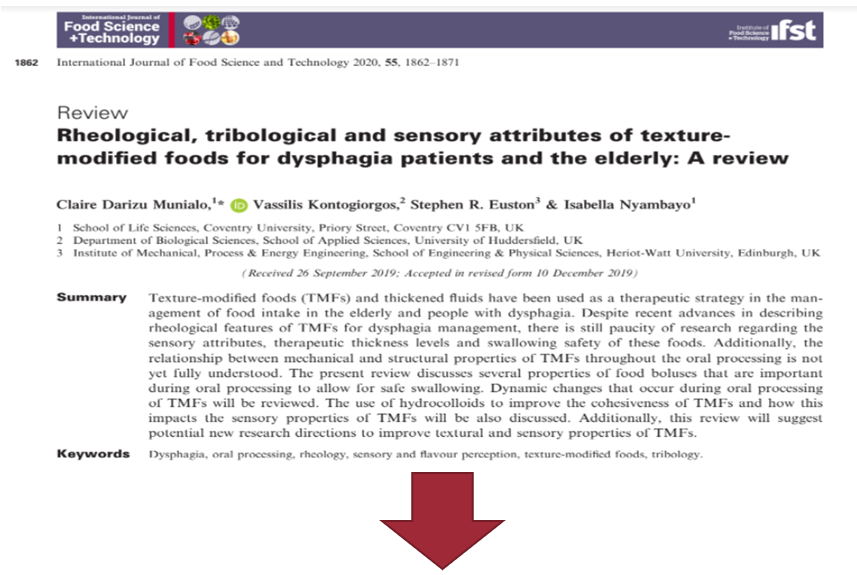
Even though manipulation of texture remains to
be a common strategy in dysphagia management, pureed diets are
reported to lack sensory or taste appeal which can result in food
refusal and reduced intake TMFs.
To formulate TMFs that give pleasurable meal experiences, varying ingredients and processing conditions can be used improve taste, aroma and visual aspects of these foods. As such, sensory modified foods may be formulated and used to improve swallowing in dysphagics whilst maintaining palatability.
To learn more, please read it: https://ifst.onlinelibrary.wiley.com/doi/abs/10.1111/ijfs.14483