Unit 4 - Food preparation
4.5. Hygiene and food safety in dysphagia
4.5.2. Type of hazards
What do we mean by hazards when handling food?
A food hazard is an agent in a food with the potential to cause adverse health effects.
There are 3 types of hazards:
-
Biological hazards (Microorganisms and parasites)
-
Chemical hazards
-
Physical hazards
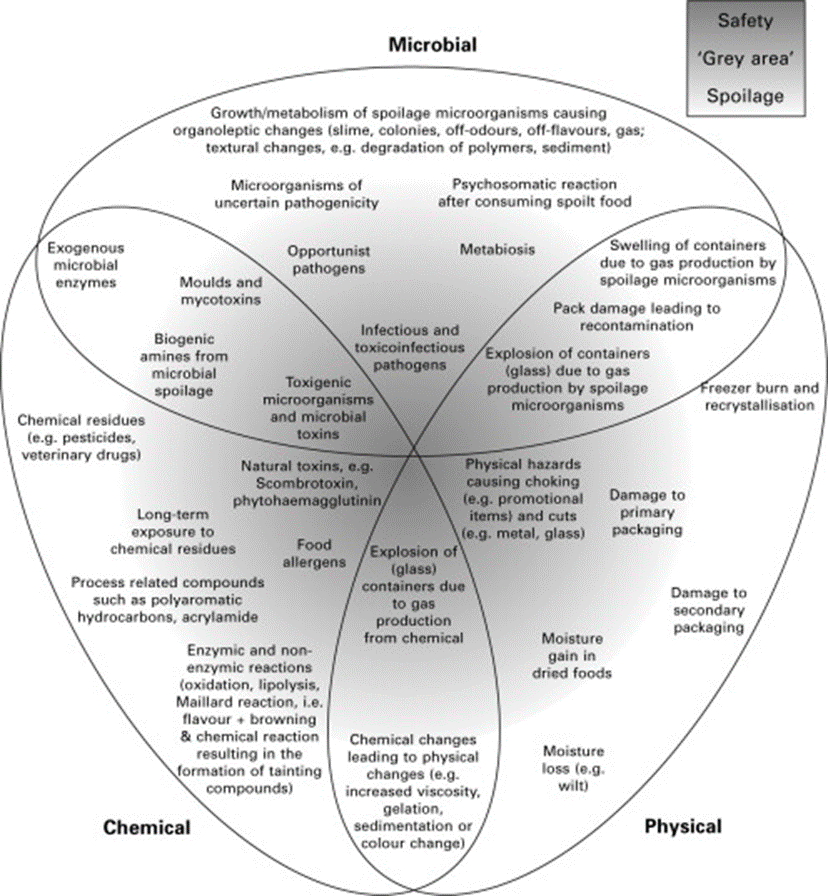
Continuum of potential food-related hazards and their consequences for consumers.
Source: Blackburn. Food Spoilage Microrganisms, 2004
BIOLOGICAL HAZARDS _ Microorganisms
-
Microorganisms are the most common type of food biological contamination and the agents involved in outbreaks of food-borne illness.
-
Some microorganisms simply cause spoilage of food (spoilage microorganisms), while others can cause illness and even death if consumed (pathogen microorganisms).
-
It should be stand out is that many types of microbial contamination can cause illness without changing the appearance or flavour of the food.
-
Microorganisms are microscopically living organisms that multiply rapidly in the right environment (nutrients, pH and temperature).
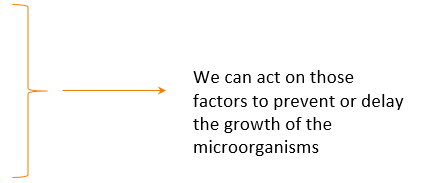
The factors that affect the growing of the microorganisms in the food are:
-
Nutrients
-
Water activity
-
pH
-
Temperature
-
Oxygen availability
-
Presence of antimicrobial agents
Food products may be contaminated at the farm or field, at processing, packaging, distribution or during food preparation.
The microorganisms are classified into three major groups: bacteria, viruses and fungi (molds and yeasts).
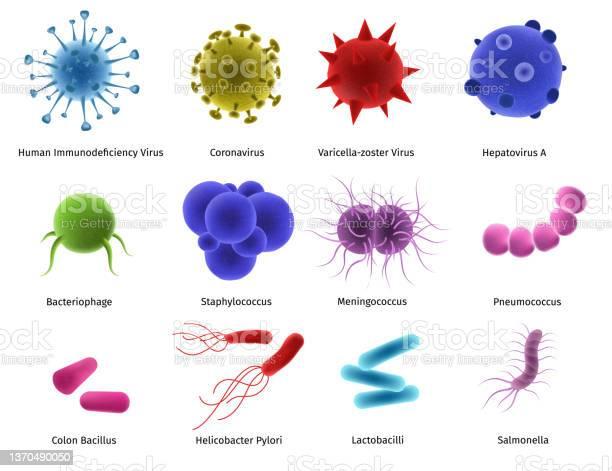
(Source: https://www.istockphoto.com)
Microorganisms _ Bacteria
-
Bacteria are the most common cause of food-borne illness.
-
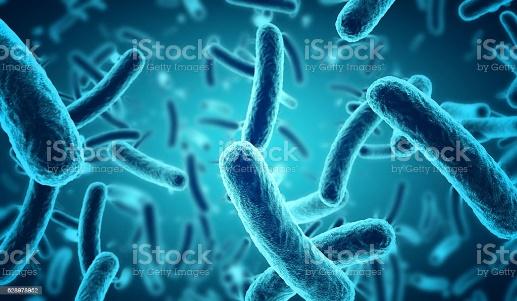
Bacteria are single-celled organisms that can be round, rod, or spiral in shape.
-
Bacteria that can cause foodborne illness include Escherichia coli O157:H7, Bacillus cereus, Salmonella spp, Campylobacter jejuni, Clostridium spp., Lysteria monocytogenes and Vibrio spp., among others.
(Source: https://www.istockphoto.com)
Bacteria act in two ways: as pathogens or as toxins released by the bacteria.-
Pathogen bacteria causes infectious diseases, obtaining their nutrients from food (meat, eggs, dairy) and reproduce rapidly when proper conditions (temperature, pH).
-
Some other bacteria release toxins into food products and can cause illness when eaten.
Bacteria growth and reproduction is affected by temperature, moisture level, available nutrient sources, oxygen levels, pH of the environment (acidity or alkalinity), presence or absence of inhibitors (such as preservatives) and the length of time (see table).
Table. Bacterial growth needs
|
Needs |
Description and examples |
|
Food characteristics |
Protein rich food Unwashed fruit and vegetables Food with a high moisture content |
|
pH of the media (acidity) |
Most bacteria prefer a neutral environment of pH 7 but may grow in a pH range of 4,6 to 9.0 |
|
Temperature |
Bacteria grow rapidly between 15 and 50 ºC, but can multiply even at lower and higher temperature |
|
Time |
Most bacteria multiply and increase in number by simple cell division and can |
|
Oxygen |
Most bacteria need air. Some others are anaerobic (such as Clostridium botulinum) |
|
Water activity (moisture) |
High Aw favours microbial growth rate and low Aw reduces microbial growth rate |
Bacteria that we should “know”
Salmonella, Campylobacter, and
Enterohaemorrhagic Escherichia coli
are among the most common foodborne
pathogens that affect millions of people annually – sometimes with
severe and fatal outcomes. Symptoms are fever, headache, nausea,
vomiting, abdominal pain and diarrhea.
Examples of foods involved in outbreaks of salmonellosis are eggs,
poultry and other products of animal origin. Foodborne cases with
Campylobacter are mainly caused by raw milk, raw or undercooked
poultry and drinking water. Enterohaemorrhagic Escherichia coli is
associated with unpasteurized milk, undercooked meat and fresh fruits
and vegetables.
Listeria
infection leads to miscarriage in pregnant women or death of newborn
babies. Although disease occurrence is relatively low, listeria’s
severe and sometimes fatal health consequences, particularly among
infants, children and the elderly, count them among the most serious
foodborne infections. Listeria is found in unpasteurised dairy
products and various ready-to-eat foods and can grow at refrigeration
temperatures.
Vibrio cholerae
infects people through contaminated water or food. Symptoms include
abdominal pain, vomiting and profuse watery diarrhoea, which may lead
to severe dehydration and possibly death. Rice, vegetables, millet
gruel and various types of seafood have been implicated in cholera
outbreaks.
Microorganisms _ Viruses
-
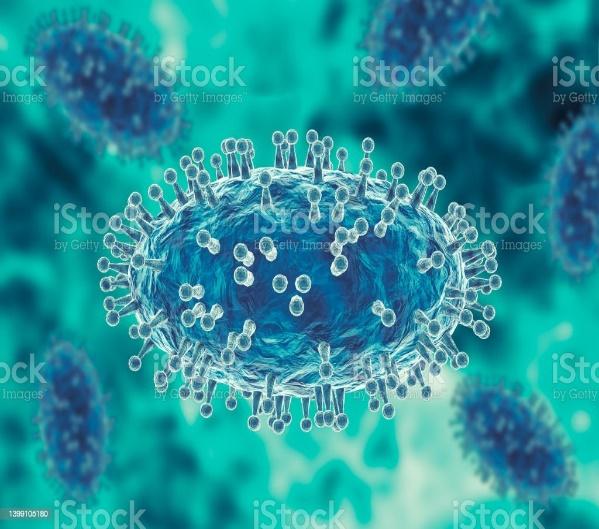
Viruses are much smaller microorganisms than bacteria that can grow and reproduce inside living cells.
-
Viruses cannot grow in food products, but may survive in the food.
- They may be present in the food or enter the food by contamination from polluted water, animals or food handled by an infected employee who failed to follow correct hygiene practices.
-
(Source: https://www.istockphoto.com)
Virus that we should “know”
Viruses responsible for foodborne illness include Hepatitis A, Norwalk virus, rotavirus, among others.
-
Norovirus infections are characterized by nausea, explosive vomiting, watery diarrhoea and abdominal pain.
-
Hepatitis A virus can cause long-lasting liver disease and spreads typically through raw or undercooked seafood or contaminated raw produce. Infected food handlers are often the source of food contamination.
Microorganisms _ 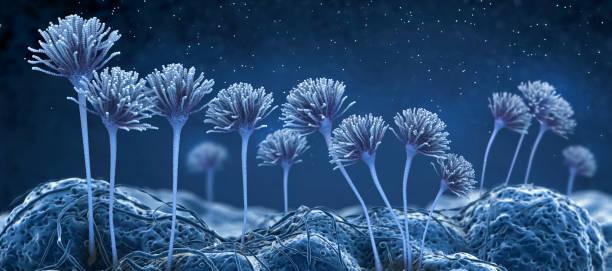
Molds are microorganisms with larger cell size that form chains and branches.
-
Important molds that cause spoilage of food products include Aspergillus spp, Fusarim spp, Penicillium spp., Rhizopus spp.
- Some species may cause illness, through the production of metabolites called aflatoxins.
- Yeasts are microorganisms that can cause spoilage of food, but they are also used in fermentation processes.
(Source: https://www.istockphoto.com)
2. CHEMICAL HAZARDS
-
There are a number of chemicals that are not allowed in food and some others should be below safe limits.
-
Some chemical contaminants appear naturally in food and some others added during the processing.
-
Chemical contamination can lead to acute poisoning or long-term diseases, such as cancer.
-
Naturally occurring and environmental pollutants chemical hazards include the following:
mycotoxins, marine biotoxins, grain aflatoxins, compounds from undercooked legumes, agricultural chemicals (pesticides, fungicides, antibiotics). A long-term exposure can affect the immune system and normal development, or cause cancer.
-
Persistent organic pollutants (POPs), Dioxins are highly toxic and can cause reproductive and developmental problems, damage the immune system, interfere with hormones and cause cancer
-
Heavy toxic metals (lead, copper, mercury…) can cause neurological and kidney damage.
-
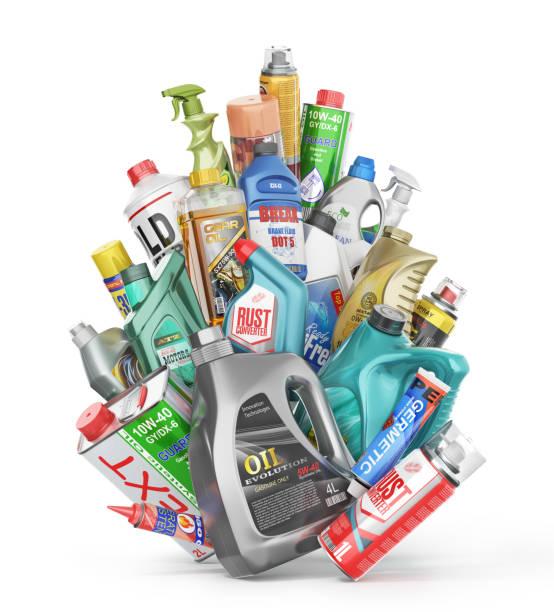
Housekeeping products are also chemical hazards.
-
They can contaminate the food if they are not properly labelled, stored and used.
-
Food must be stored apart from housekeeping products.
-
Food packages should not be used to keep cleaning or chemical products.
(Source: https://www.istockphoto.com)
3. PHYSICAL HAZARDSPhysical contamination occurs when objects such as stones, bones, wood, plastic, needles, human or animal hair, dirt, metal, glass, jewelery, fingernails are found in food.
-
Finding this objects may cause illness or injury to the person.
-
Food handlers training is essential to avoid physical hazards. They should use hair restraints and avoid wearing jewelry, artificial nails, nail polish.