Unit 4 - Food preparation
4.3. Levels, descriptors and measurement methods in dysphagia oriented products
4.3.2. Levels, descriptors and methods for solid-like food


Description/Characteristics
-
Usually eaten with a spoon (a fork is possible)
-
Cannot be drunk from a cup because it does not flow easily
-
Cannot be sucked through a straw
-
Does not require chewing
-
Can be piped, layered or molded because it retains its shape, but should not require chewing if presented in this form
-
Shows some very slow movement under gravity but cannot be poured
-
Falls off spoon in a single spoonful when tilted and continues to hold shape on a plate
-
No lumps
-
Not sticky
-
Liquid must not separate from solid
Physiological rationale for this level of thickness
-
If tongue control is significantly reduced, this category may be easiest to control
-
Requires less propulsion effort than Minced & Moist (level 5), Soft & Bite-Sized (Level 6) and Regular and Regular Easy to Chew (Level 7) but more than Liquidized/Moderately thick (Level 3)
-
No biting or chewing is required
-
Increased oral and/or pharyngeal residue is a risk if too sticky
-
Any food that requires chewing, controlled manipulation or bolus formation are not suitable
-
Pain on chewing or swallowing
-
Missing teeth, poorly fitting dentures
Testing method

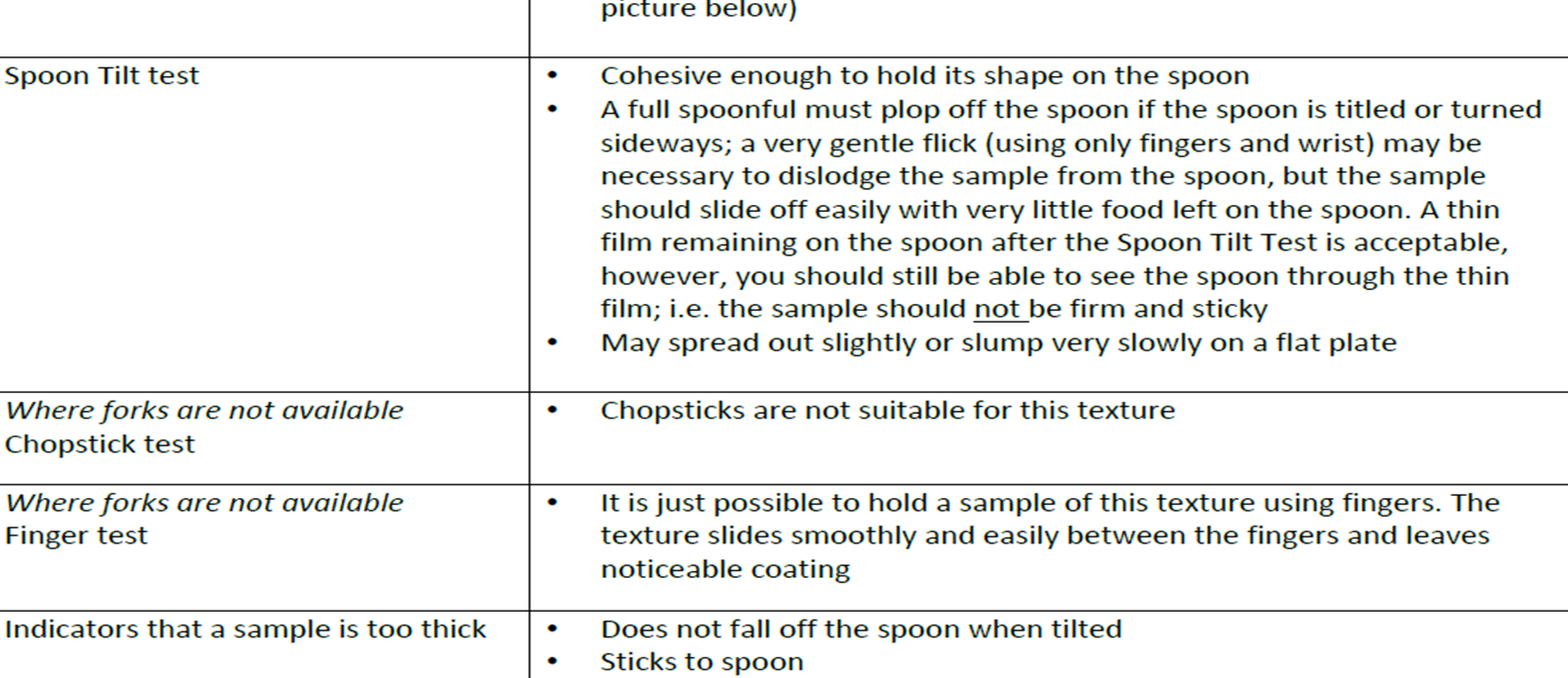
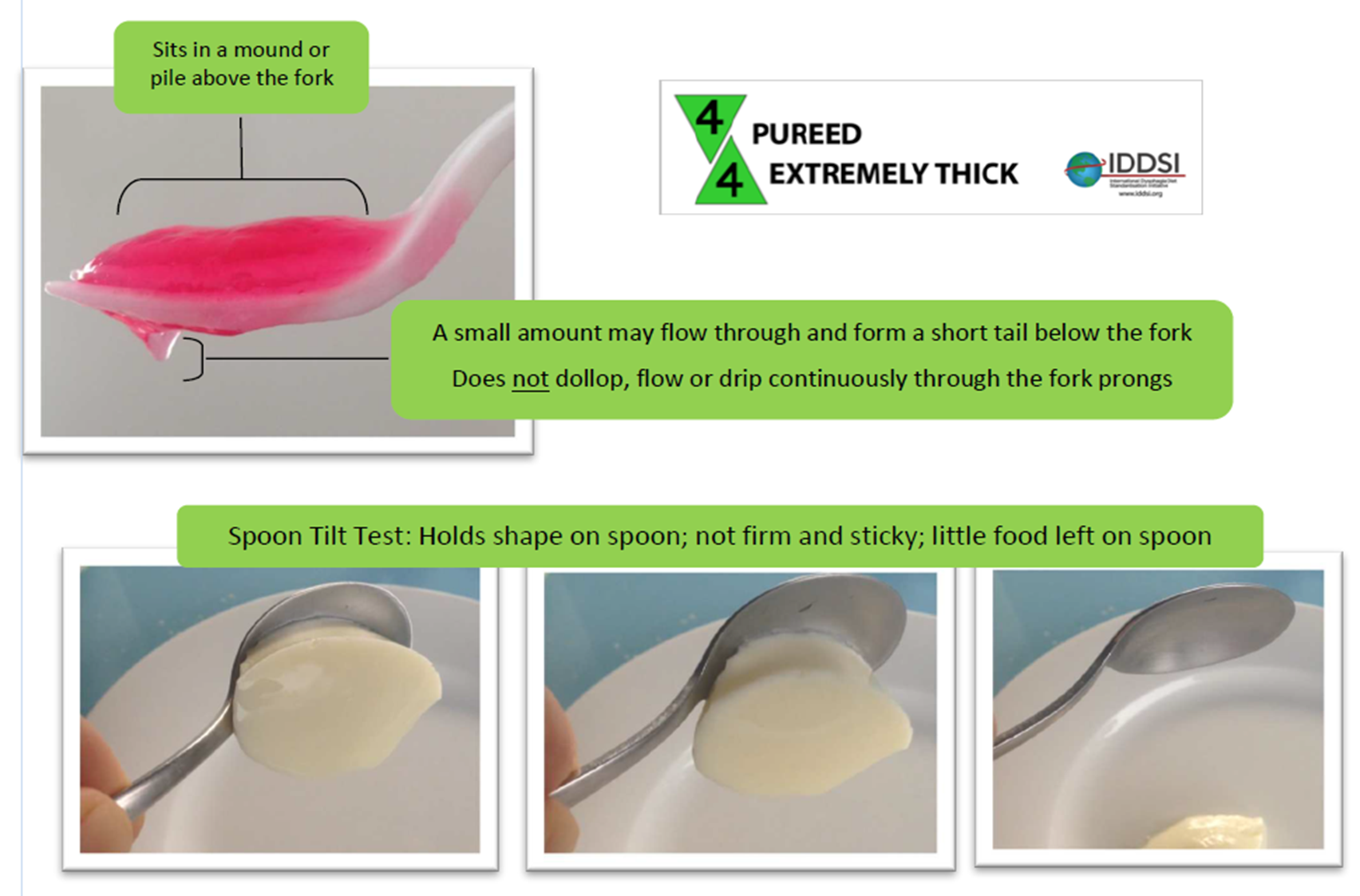
Fork Drip Test and Spoon Tilt Test
(Source: https://www.iddsi.org)
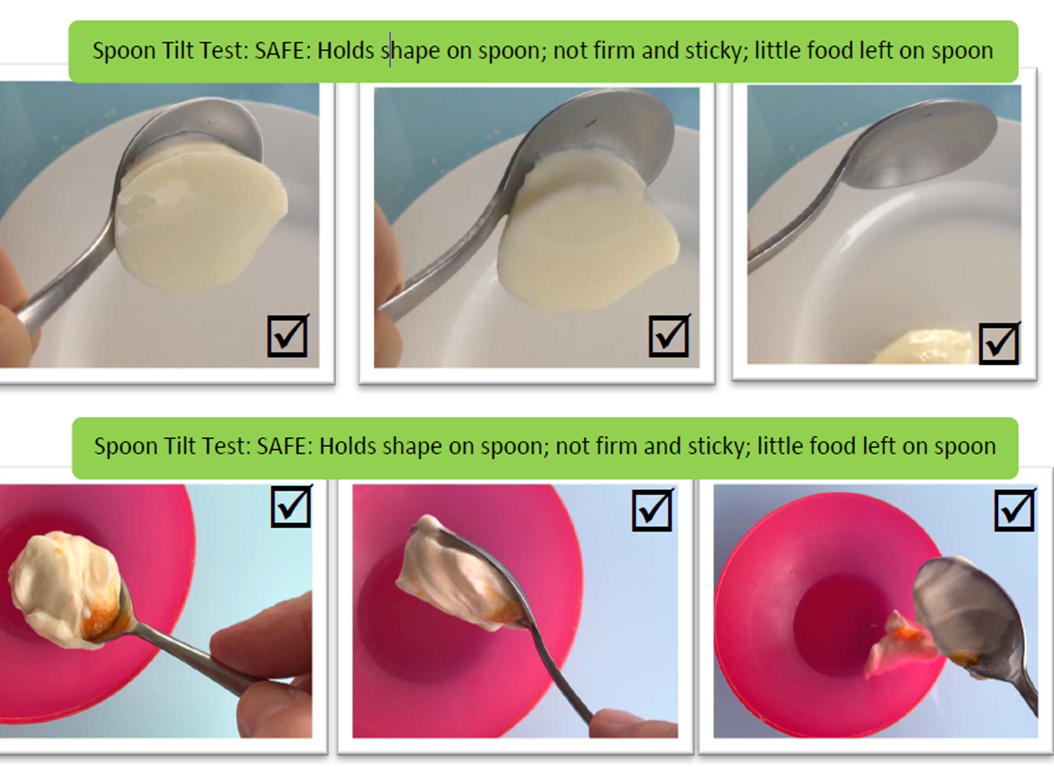
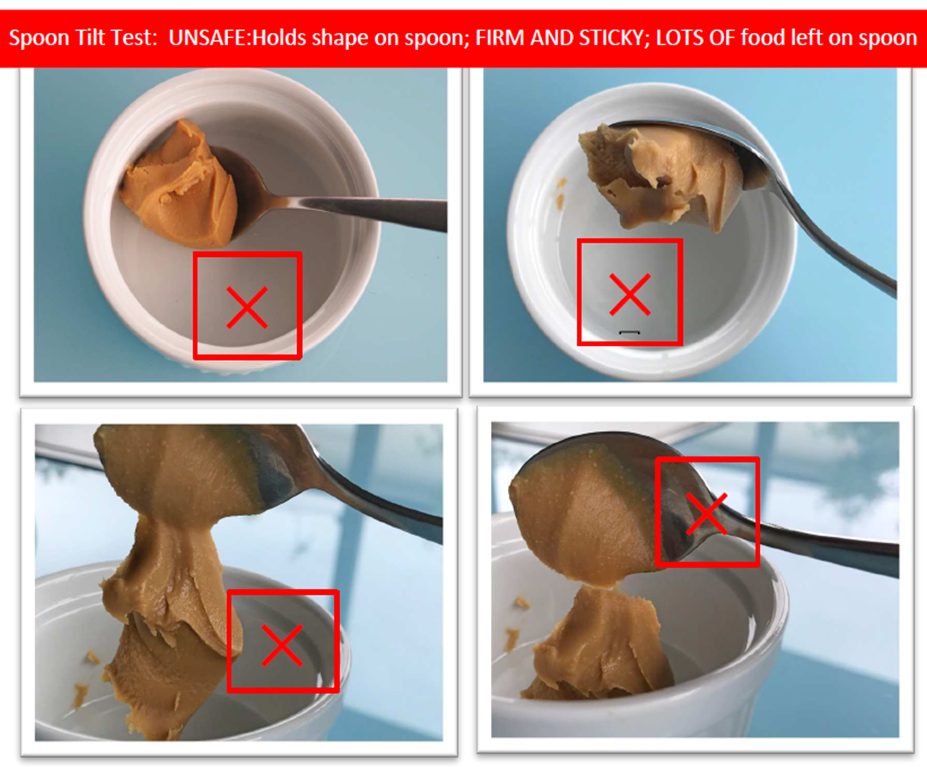
The following images show examples of foods that would be suitable or unsuitable for Level 4 according to the IDDSI Spoon Tilt Test
(Source: https://www.iddsi.org)

Description/Characteristics
-
Can be eaten with a fork or spoon
-
Could be eaten with chopsticks in some cases, if the individual has very good hand control
-
Can be scooped and shaped (e.g. into a ball shape) on a plate
-
Soft and moist with no separate thin liquid
-
Small lumps visible within the food
-
Pediatric, equal to or less than 2 mm width and no longer than 8mm in length
-
Adult, equal to or less than 4mm width and no longer than 15mm in length
-
Lumps are easy to squash with tongue
Physiological rationale for this level of thickness
-
Biting is not required
-
Minimal chewing is required
-
Tongue force alone can be used to separate the soft small particles in this texture
-
Tongue force is required to move the bolus
-
Pain or fatigue on chewing
-
Missing teeth, poorly fitting dentures
Testing methods
Fork Pressure test
-
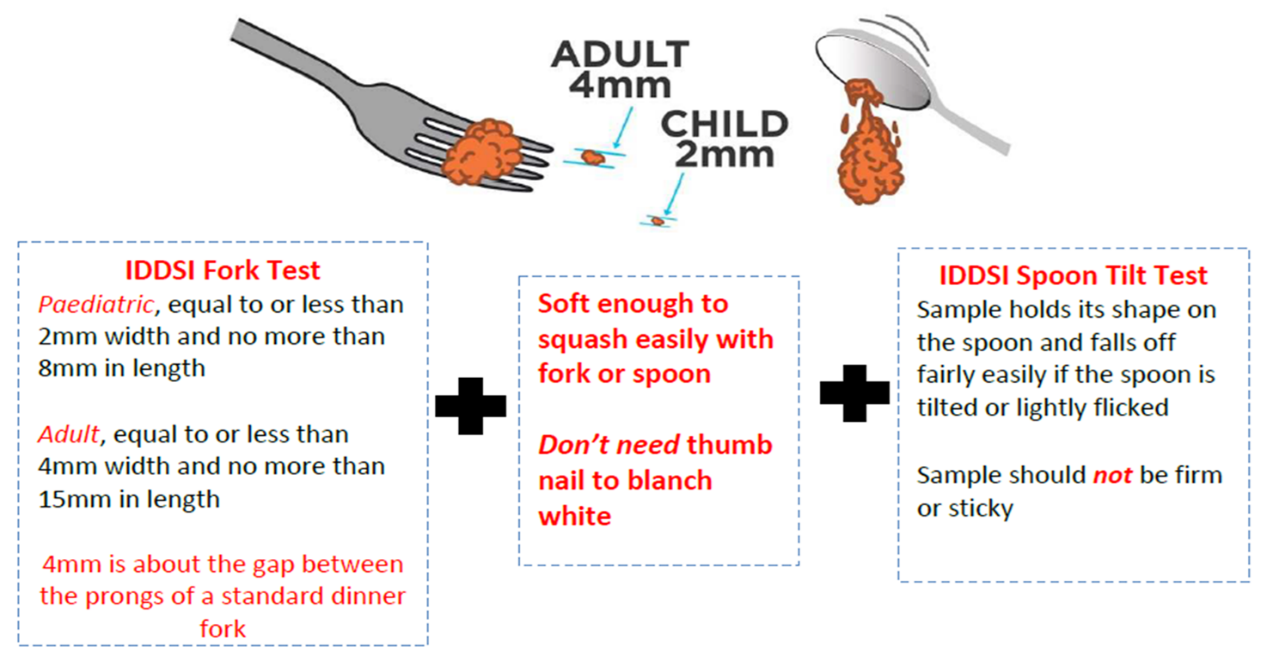
When pressed with a fork the particles should easily be separated between and come through the tines/prongs of a fork
-
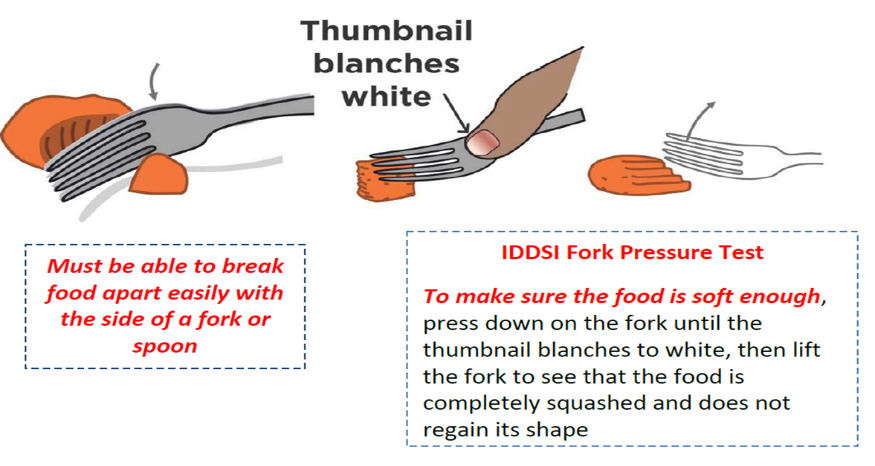
Can be easily mashed with little pressure from a fork [pressure should not make the thumb nail blanch to white]
Fork Drip test
-
When a sample is scooped with a fork it sits in a pile or can mound on the fork and does not easily or completely flow or fall through the tines/prongs of a fork
Spoon Tilt test
-
Cohesive enough to hold its shape on the spoon
-
A full spoonful must slide/pour off/fall off the spoon if the spoon is tilted or turned sideways or shaken lightly; the sample should slide off easily with very little food left on the spoon; i.e. the sample should not be sticky
-
A scooped mound may spread or slump very slightly on a plate
FOOD SPECIFIC OR OTHER EXAMPLES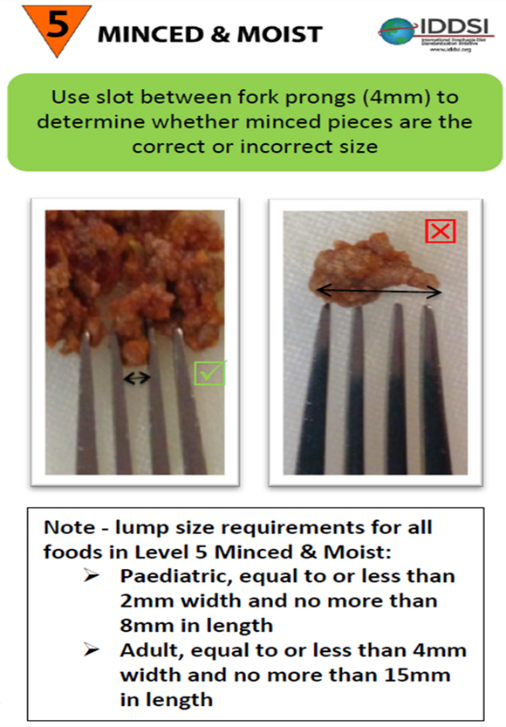
MEAT
-
Finely minced* or chopped*, soft mince
-
Pediatric, equal to or less than 2mm width and no longer than 8mm in length
-
Adult, equal to or less than 4mm width and no more than 15mm in length
-
Serve in mildly, moderately or extremely thick, smooth, sauce or gravy, draining excess
*If texture cannot be finely minced it should be pureed
(Source: https://www.iddsi.org)
FISH
-
Finely mashed in mildly, moderately or extremely thick smooth, sauce or gravy, draining excess
-
Pediatric, equal to or less than 2mm width and no longer than 8mm in length
-
Adult, equal to or less than 4mm width and no more than 15mm in length
FRUIT
-
• Serve finely minced or chopped or mashed
-
• Drain excess juice
-
• If needed, serve in mildly, moderately or extremely thick smooth sauce or gravy AND drain excess liquid. No thin liquid should separate from food
-
Pediatric, equal to or less than 2mm width and no longer than 8mm in length
-
Adult, equal to or less than 4mm width and no more than 15mm in length
VEGETABLES
-
Serve finely minced or chopped or mashed
-
Drain any liquid
-
If needed, serve in mildly, moderately or extremely thick smooth sauce or gravy and drain excess liquid. No thin liquid should separate from food
-
Pediatric, equal to or less than 2mm width and no longer than 8mm in length
-
Adult, equal to or less than 4mm width and no more than 15mm in length
CEREAL
-
ž Thick and smooth with small soft lumps
-
Pediatric, equal to or less than 2mm width and no longer than 8mm in length
-
Adult, equal to or less than 4mm width and no more than 15mm in length
-
Texture fully softened
-
Any milk/fluid must not separate away from cereal. Drain any excess fluid before serving
RICE, COUSCOUS, QUINOA (and similar food textures)
-
Not sticky or glutinous
-
Should not be particulate or separate into individual grains when cooked and served
-
Serve with smooth mildly, moderately or extremely thick sauce AND Sauce must not separate away from rice, couscous, quinoa (and similar food textures). Drain excess fluid before serving
BREAD
-
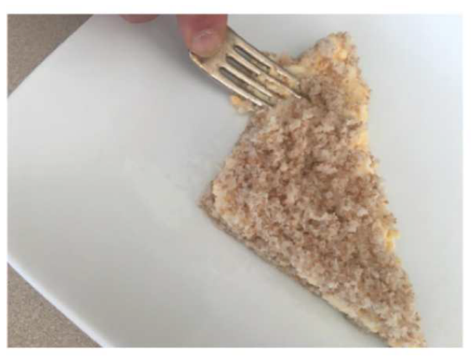
No regular, dry bread, sandwiches or toast of any kind
-
Use IDDSI Level 5 Minced & Moist sandwich recipe video
-
Pre-gelled ‘soaked’ breads that are very moist and gelled through the entire thickness
Minced & Moist food must pass all three tests:
(Source: https://www.iddsi.org)

Description/Characteristics
-
Can be eaten with a fork, spoon or chopsticks
-
Can be mashed/broken down with pressure from fork, spoon or chopsticks
-
A knife is not required to cut this food, but may be used to help load a fork or spoon
-
Soft, tender and moist throughout but with no separate thin liquid
-
Chewing is required before swallowing
-
‘Bite-sized’ pieces as appropriate for size and oral processing skills
-
Pediatric, 8mm pieces (no larger than)
-
Adults, 15 mm = 1.5 cm pieces (no larger than)
Physiological rationale for this level of thickness
-
Biting is not required
-
Chewing is required
-
Food piece sizes designed to minimize choking risk
-
Tongue force and control is required to move the food and keep it within the mouth for chewing and oral processing
-
Tongue force is required to move the bolus for swallowing
-
Pain or fatigue on chewing
-
Missing teeth, poorly fitting dentures
Testing methods
Fork Pressure test
-
Pressure from a fork held on its side can be used to ‘cut’ or break apart or flake this texture into smaller pieces
-
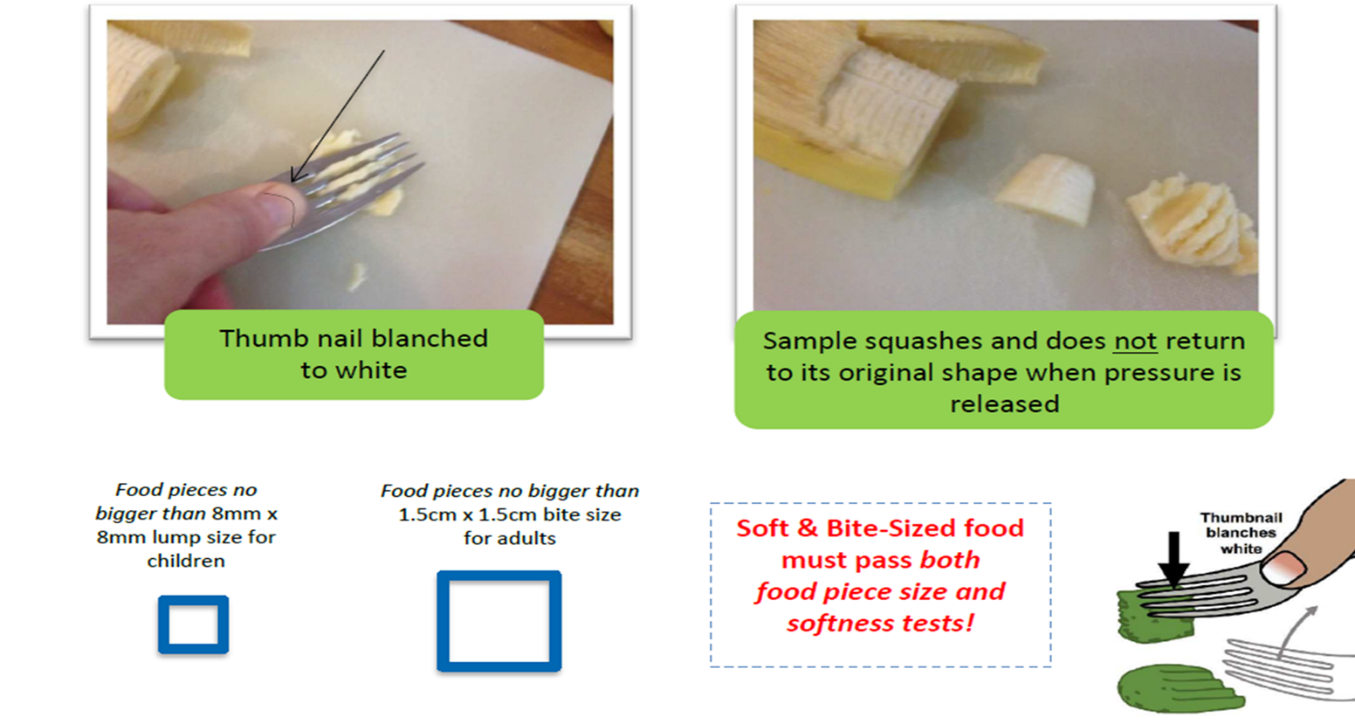
When a sample the size of a thumb nail (1.5x1.5 cm) is pressed with the tines of a fork to a pressure where the thumb nail blanches to white, the sample squashes, breaks apart, changes shape, and does not return to its original shape when the fork is removed.
Spoon Pressure test
-
Pressure from a spoon held on its side can be used to ‘cut’ or break this texture into smaller pieces.
-
When a sample the size of a thumb nail (1.5 cm x1.5 cm) is pressed with the base of a spoon, the sample squashes, breaks apart, changes shape, and does not return to its original shape when the spoon is removed.
Where forks are not available - Chopstick test
-
Chopsticks can be used to break this texture into smaller pieces or puncture food
Where forks are not available - Finger test
-
Use a sample the size of a thumb nail (1.5 cm x 1.5 cm). It is possible to squash a sample of this texture using finger pressure such that the thumb and index finger nails blanch to white. The sample breaks apart and will not return to its initial shape once pressure is released.
EXAMPLES:
https://iddsi.org/framework/food-testing-methods/
FOOD SPECIFIC OR OTHER EXAMPLES
MEAT
-
Cooked, tender meat no bigger than:
-
Pediatric, 8mm pieces
-
Adults, 15 mm = 1.5 x 1.5 cm pieces
-
If texture cannot be served soft and tender at 1.5 cm x 1.5 cm (as confirmed with fork/ spoon pressure test), serve minced and moist
FISH
-
Soft enough cooked fish to break into small pieces with fork, spoon or chopsticks no larger than
-
Pediatric, 8mm pieces
-
Adults, 15 mm = 1.5 cm pieces
-
No bones or tough skins
CASSEROLE/STEW/CURRY
-
Liquid portion (e.g. sauce) must be thick (as per clinician recommendations)
-
Can contain meat, fish or vegetables if final cooked pieces are soft and tender and no larger than
-
Pediatric, 8mm pieces
-
Adults, 15 mm = 1.5 cm pieces
-
No hard lumps
FRUIT
-
Serve minced or mashed if cannot be cut to soft & bite-sized pieces
-
Pediatric, 8mm pieces
-
Adults, 15 mm = 1.5 cm pieces
-
Fibrous parts of fruit are not suitable
-
Drain excess juice
-
Assess individual ability to manage fruit with high water content (e.g. watermelon) where juice separates from solid in the mouth during chewing
VEGETABLES
-
Steamed or boiled vegetables with final cooked size of
-
Pediatric, 8mm pieces
-
Adults, 15 mm = 1.5 cm pieces
-
Stir fried vegetables may be too firm and are not soft or tender. Check softness with fork/spoon pressure test
CEREAL
-
Smooth with soft tender lumps no bigger than
-
Pediatric, 8mm pieces
-
Adults, 15 mm = 1.5 cm pieces
-
Texture fully softened
-
Any excess milk or liquid must be drained and/or thickened to thickness level recommended by clinician
BREAD
-
No regular dry bread, sandwiches or toast of any kind
-
Use IDDSI Level 5 Minced & Moist sandwich recipe video to prepare bread and add to filling that meets Level 6 Soft & Bite sized requirements
-
Pre-gelled ‘soaked’ breads that are very moist and gelled through the entire thickness
RICE, COUCOUS, QUINOA (and similar food textures)
-
Not particulate/grainy, sticky or glutinous
(Source: https://www.iddsi.org)

Description/Characteristics
-
Normal, everyday foods of soft/tender textures that are developmentally and age appropriate
-
Any method may be used to eat these foods
-
Sample size is not restricted at Level 7, therefore, foods may be of a range of sizes
-
Smaller or greater than 8 mm pieces (Pediatric)
-
Smaller or greater than 15 mm = 1.5 cm pieces (Adults)
-
Does not include: hard, tough, chewy, fibrous, stringy, crunchy, or crumbly bits, pips, seeds, fibrous parts of fruit, husks or bones
-
May include ‘dual consistency’ or ‘mixed consistency’ foods and liquids if also safe for Level 0, and at clinician discretion. If unsafe for Level 0
-
Thin, liquid portion can be thickened to clinician’s recommended thickness level
Physiological rationale for this level of thickness
-
Requires the ability to bite soft foods and chew and orally process food for long enough that the person forms a soft cohesive ball/bolus that is ‘swallow ready’. Does not necessarily require teeth.
-
Requires the ability to chew and orally process soft/tender foods without tiring easily
-
May be suitable for people who find hard and/or chewy foods difficult or painful to chew and swallow
-
This level could present a choking risk for people with clinically identified increased risk of choking, because food pieces can be of any size. Restricting food piece sizes aims to minimize choking risk (e.g. Level 4 Pureed, Level 5 Minced & Moist, Level 6 Soft & Bite-sized have food piece size restrictions to minimize choking risk)
-
This level may be used by qualified clinicians for developmental teaching, or progression to foods that need more advanced chewing skills
-
If the person needs supervision to eat safely, before using this texture level consult a qualified clinician to determine the person’s food texture needs, and meal time plan for safety
-
People can be unsafe to eat without supervision due to chewing and swallowing problems and/or unsafe mealtime behaviors. Examples of unsafe mealtime behaviors include: not chewing very well, putting too much food into the mouth, eating too fast or swallowing large mouthfuls of food, inability to self-monitor chewing ability.
-
Clinicians should be consulted for specific advice for patient needs, requests and requirements for supervision.
-
Where mealtime supervision is needed, this level should only be used under the strict recommendation and written guidance of a qualified clinician
Testing methods
Fork Pressure test
-
Pressure from a fork held on its side can be used to ‘cut’ or break apart or flake this texture into smaller pieces
-
When a sample the size of a thumb nail (1.5x1.5cm) is pressed with the tines of a fork to a pressure where the thumb nail blanches to white, the sample squashes, breaks apart, changes shape and does not return to its original shape when the fork is removed.
Spoon Pressure test
-
Pressure from a spoon held on its side can be used to ‘cut’ or break or flake this texture into smaller pieces
-
When a sample the size of a thumb nail (1.5x1.5cm) is pressed with the base of a spoon to a pressure where the thumb nail blanches to white, the sample squashes, breaks apart, changes shape and does not return to its original shape when the spoon is removed.
Where forks are not available - Chopstick test
-
Chopsticks can be used to puncture this texture
Where forks are not available - Finger test
-
Use a sample the size of a thumb nail (1.5x1.5cm). It is possible to squash a sample of this texture using finger pressure such that the thumb and index finger nails blanch to white. The sample squashes and breaks apart and will not return to its initial shape once pressure is released.
EXAMPLES: https://iddsi.org/framework/food-testing-methods/
FOOD SPECIFIC OR OTHER EXAMPLES
MEAT
-
Cooked until tender
-
If texture cannot be served soft and tender, serve minced and moist
FISH
-
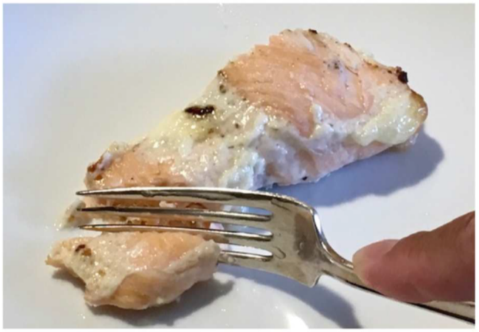
Soft enough cooked fish to break into small pieces with the side fork, spoon or chopsticks
CASSEROLE/STEW/CURRY
-
Can contain meat, fish, vegetables, or combinations of these if final cooked pieces are soft and tender
-
Serve in mildly, moderately of extremely thick sauce AND drain excess liquid
-
No hard lumps
FRUIT
-
Soft enough to be cut broken apart into smaller pieces with the side of a fork or spoon. Do not use the fibrous parts of fruit (e.g. the white part of an orange).
VEGETABLES
-
Steam or boil vegetables until tender. Stir fried vegetables may be too firm for this level. Check softness with fork/spoon pressure test
CEREAL
-
Served with texture softened
-
Drain excess milk or liquid and/or thicken to thickness level recommended by clinician
BREAD
-
Bread, sandwiches and toast that can be cut or broken apart into smaller pieces with the side of a fork or spoon can be provided at clinician discretion
RICE, COUSCOUS, QUINOA (and similar food textures)
-
No special instructions
Easy to Chew foods must break apart easily with the side of a fork or spoon and pass Fork Pressure Test:
(Source: https://www.iddsi.org)

Description/Characteristics
-
Normal, everyday foods of various textures that are developmentally and age appropriate
-
Any method may be used to eat these foods
-
Foods may be hard and crunchy or naturally soft
-
Sample size is not restricted at Level 7, therefore, foods may be of a
-
range of sizes
-
Smaller or greater than 8mm pieces (Pediatric)
-
Smaller or greater than 15 mm = 1.5 cm pieces (Adults)
-
Includes hard, tough, chewy, fibrous, stringy, dry, crispy, crunchy, or crumbly bits
-
Includes food that contains pips, seeds, pith inside skin, husks or bones
-
Includes ‘dual consistency’ or ‘mixed consistency’ foods and liquids
Physiological rationale for this level of thickness
-
Ability to bite hard or soft foods and chew them for long enough that they form a soft cohesive ball/bolus that is ‘swallow ready’
-
An ability to chew all food textures without tiring easily
-
An ability to remove bone or gristle that cannot be swallowed safely from the mouth
Testing methods
-
Not Applicable