Unit 4 - Food preparation
4.2. Tools to modify the thickness of liquids and the texture of solid foods
4.2.4. Thickening agents
Functions
-
Improvement in moisture binding capacity, structural modification and modifying bolus flow behavior properties are the major functions of food thickeners.
Mechanism of thickening
-
Most commercial thickeners available are polysaccharides and the thickening properties are due to the expanding nature of these high-molecular-weight molecules in solution, even when used at relatively low concentrations.
-
Generally, these long-chain polysaccharide molecules exist as conformationally disordered ‘random coils' in solution, whose shape fluctuates continuously under Brownian motion, increasing the viscosity.
-
Each thickener has different rheological behaviour and characteristics when mixed with fluids
-
The addition of thickeners to fluid affects the perception of flavours.
Sources of food thickeners
-
Food thickeners are obtained from different natural raw material sources which include vegetables, marine plants, microorganisms, and animal connective tissues.
-
They can be classified into four broad categories: gum based, protein based, plant based, and microbe based (Himashree et al., 2022).
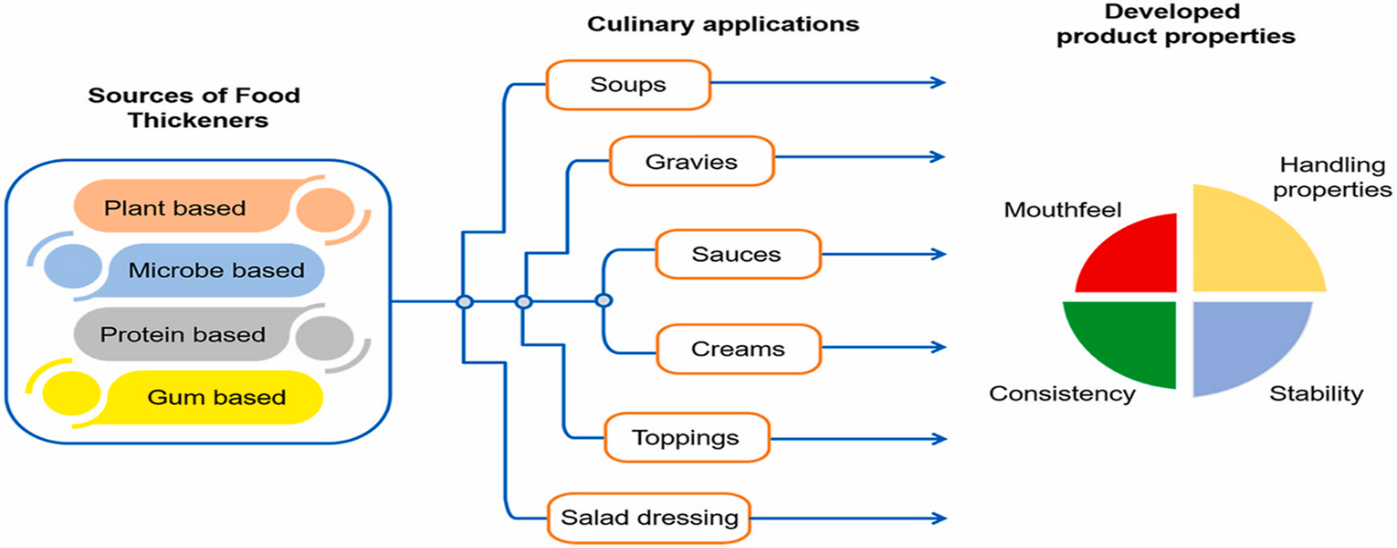
(Source: Himashree et al., 2022)
Thickeners used in dysphagia
Thickeners for dysphagia management are categorized as Food for Special Medical Purposes (FSMP) which is a group of products intended for the dietary management of specific groups of patients with deficits that need to be medically and regulated by EU No 609/2013 and the supplementing (EU) 2016/128.
Thickeners used in dysphagia diets can be classified into two categories: starch-based thickeners and gum thickeners.
-
Starch-based thickeners are the most common thickeners used in commercial foods for dysphagia and in food preparations in puree consistency (Cichero, 2013). This may be because they are inexpensive and easily available.
-
Gum-based thickeners or hydrocolloids have emerged as an alternative to dysphagia by promoting an increase in viscosity and shear properties in watery media. The name comes from “Hydro” which means water and “colloids” that means glue. They are macromolecules that can form viscous dispersions and/or gels with water.
-
In commercial products, combinations of both types may appear (See Table 2).
In some types of fluids, gum-based thickeners are preferred for the treatment of patients with dysphagia, since gums are not influenced by saliva during consumption of fluid foods and starch-based are.
Table 2. Commercial thickening products and their composition. Adapted from Bolivar Prados et al. (2022).
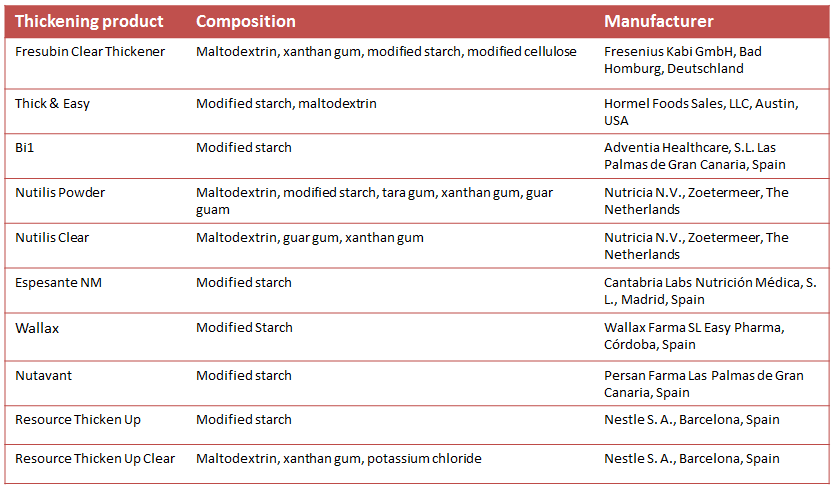
Table 3. Starch Based Thickener Characteristics and examples of use (adapted from Giura et al., 2021)
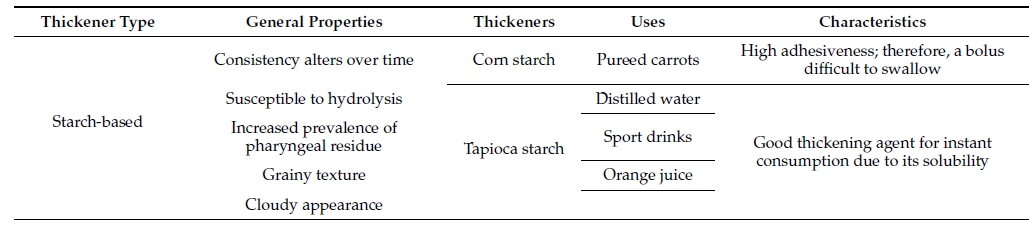
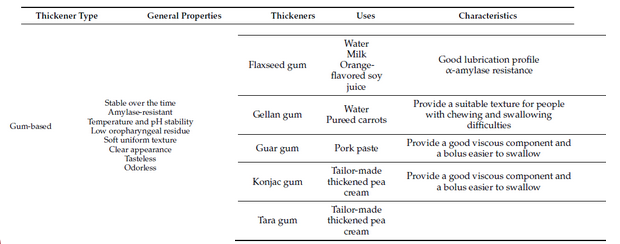
Table 4. Gum-Based Thickeners: Characteristics and examples of use
(adapted from Giura et al., 2021)
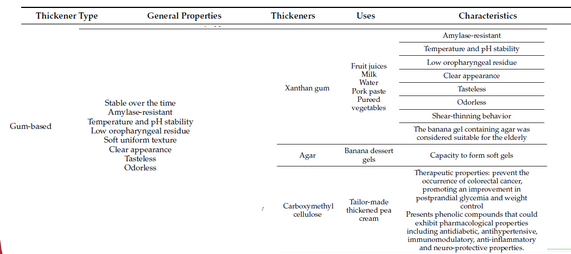
Table 4 (cont.). Gum-Based Thickeners: Characteristics and examples of use (adapted from Giura et al., 2021)
Starch
-
Starch is a soft, white, tasteless powder that is insoluble in cold water, alcohol, or other solvents.
-
Starch is a polysaccharide comprising glucose monomers joined in α 1,4 linkages.
-
Starch is composed by two components: the linear polymer is named amylose and amylopectin, is the branched form.
 Amylose
 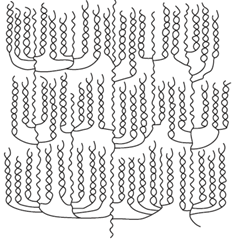 Amylopectin
-
Starch (as potato starch, cornstarch, or starch from other origin) becomes more easily adsorbed and viscous as it cools.
-
The longer the time taken to eat a meal, the colder it becomes and the more likely it is to stick to the pharynx; therefore, caution is required.
-
A large amount must be added.
-
Thickens immediately.
-
Provides stable viscosity irrespective of the type of food or drink.
-
Uses: Good for making molded dishes such as blended foods or mousses.
Modified starches
-
Modified starch is the starch extracted from grains and vegetables which has been treated to improve its ability to keep the texture and structure of the food.
-
“Modified starch” does not mean that it has been genetically modified or produced from genetically modified organisms.
-
All modified starches are safe to use in the EU – they are independently tested by the European Food Safety Authority in order to guarantee their safety. They are labelled either by their name (e.g. modified starch) and/or their E number (e.g. E1404) on a product pack.
-
Modified starches are used in food products that need to be microwaved, freeze-dried, cooked at high temperatures (for example, a ready-made pizza, instant soup, sauces) or baked and fried so that the texture of such food does not change during the cooking process.
-
There are three different ways of modifying starch – it can be heated with water (which is called physical modification), treated with enzymes (enzymatic modification) or with various chemicals (chemical modification).
Physically modified starches are the ones used as food thickeners in dysphagia oriented products. The thermal treatment of starch (physiscal modification) makes it able to form a paste even in cold liquids, so it swells and behaves as an instant thickener.
Guar gum
Guar
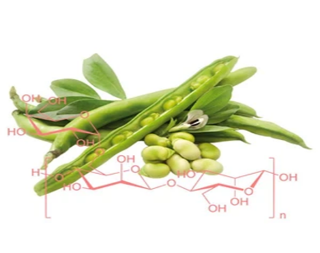
gum, also called guaran, is a galactomannan polysaccharide extracted
from guar beans that has thickening and stabilizing properties useful
in food, feed, and industrial applications. The guar seeds are
mechanically dehusked, hydrated, milled and screened according to
application.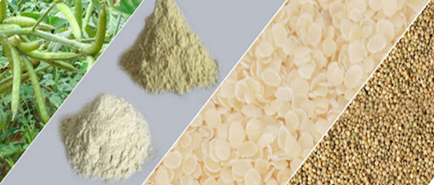
It is typically produced as a free-flowing, off-white powder.
(Source: https://www.plantmedia.com/products/guar-gum
Only a small amount is needed for thickening, but it takes time for stable viscosity to be obtained. Changes the smell of food (to the smell of guar gum). One feature is that it also thickens milk.
Uses: Good for thickening soups and adding to blended foods and purées to make molded dishes.
Xanthan gum
Xanthan gum is the most studied hydrocolloid in diets for dysphagia along with starch. It is a high molecular weight heteropolysaccharide that has residues of 1,4 linked β-D-glucan as the primary structure and trisaccharide side chains with two mannose molecules and a glucuronic acid linked to a D-glucose in the structure.
It is well accepted in relation to the viscosity and texture attributes by patients with dysphagia when incorporated into drinks.
Xanthan
gum is usually dosed in concentrations between 0.88 and 11.5% (De OS
Schmidt et al., 2021). 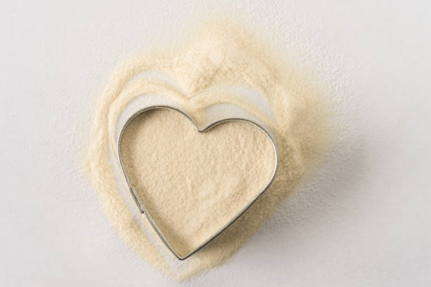
Highly transparent, colorless and odorless, and of low adhesiveness. Suitable for thickening clear liquids and the like. It is not good for thickening milk or high-density liquid diets, although it has recently been improved. It is currently the most popular thickening agent.
Uses: Ideal for thickening to a low viscosity.
(Source: https://www.istockphoto.com)
Characteristics, types, and methods of use of thickening-gelling agents
-
Gelling agents have the property of solidifying liquid components, and are used in foods such as jellies and puddings.
-
A small amount can solidify liquids, and their hardness can be adjusted by varying the amount used.
-
Gelling agents include gelatin (derived from animal skin and bones), agar (Gelidium divaricatum), carrageenan, and pectin.
-
These all have different properties, and are used for different purposes.
-
In recent years, gelling agents for making warm jellies have also come onto the market.
Proteins
-
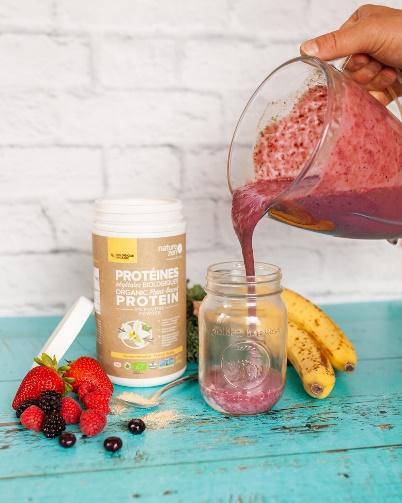
Some proteins from animal origin are used in some food preparations due to their gelling properties.
-
Proteins from bones, skins and tendons of animals (gelatin), skins of fish (gelatin), milk (caseinates and whey proteins), eggs (egg white proteins.
-
Some proteins from plant origin: chickpea, faba beans and others.
(Source: https://www.istockphoto.com)
Gelatin-
Gelatin jelly (1.6% gelatin concentration, made from 80 g juice and 1.3 g gelatin) is the best-known food that meets dysphagia conditions.
-
Gelatin melts at 20ºC–30ºC. It melts at the temperature of the inside of the mouth. Moreover, as it retains water well, meaning that it flows while the interior remains as a gel and changes shape, it has a pleasant texture when eaten, it is able to flow smoothly through the narrow pharynx.
-
Temperature management must be taken into account because gelatin melts at room temperature.
-
The appropriate concentration of gelatin jelly for use at the start of swallowing training is 1.6% (5 g of gelatin per 300 ml of liquid). The jelly should be soft enough to obble when shaken.
-
The normal gelling agent concentration is 1.5% – 3.0%.
-
Because the surface melts slightly and becomes covered in liquid, this phenomenon is seen in gelatin because at the structural level, its surface possesses hydrophilic groups while its interior possesses hydrophobic groups.
-
The affinity between the oral and pharyngeal mucosa and food is important, and the characteristics of gelatin can be utilized effectively in this area (De OS Schmidt et al., 2021).
-
Care should be taken as it melts in mouth and generate a food with two phases
Agar
-
Other similar ingredients include agar* and starch; however, although they do form food boluses, the physical properties of these materials still pose problems.
-
Agar breaks up inside the mouth when chewed, meaning it is susceptible to aspiration and thus unsuitable for a dysphagia diet.
-
Agar forms a gel at a temperature of 30ºC–40ºC and melts at 70ºC–85ºC. It thus solidifies at room temperature. It is characterized by high cohesiveness and a tendency for water to separate out; it does not dissolve in the mouth; and when it is crushed, it does not change shape while passing through the pharynx, which means caution is required.
-
When making agar jelly, the agar is boiled to dissolve it.
-
*The raw ingredient for agar is a complex polysaccharide obtained from Gelidium divaricatum and other types of red algae. It is a gel that dissolves when heated and solidifies when cooled. It is also used as a coagulating agent in culture medium.
Carrageenan
-
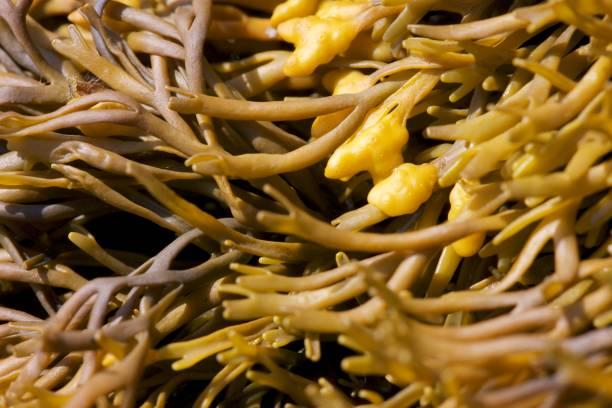
Carrageenan is a gelling agent derived from red algae (Gigartina tenella, Chondrus crispus).
-
Its physical properties are similar to those of gelatin and agar: it solidifies at room temperature, and is stable enough not to leak out.
-
As it is tasteless and odorless, it has no effect on the flavor of other ingredients, and is extremely soft and slightly elastic.
-
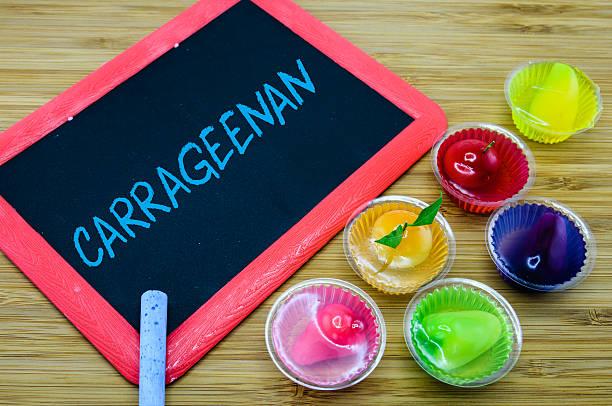
Carrageenan is nutritionally neutral and has an extremely high content of fibre, making it indigestible by the human body.
-
A group of similar sulphated polysaccharides, its ability to bind to protein is what makes it useful in meat and dairy products.
-
There are three basic types: Iota Carrageenan, Kappa Carrageenan and Lambda Carrageenan,
(Source: https://www.istockphoto.com)
Read more at: https://www.boldsky.com/health/wellness/2019/carrageenan-uses-benefits-side-effects-128665.html
Pectin
-
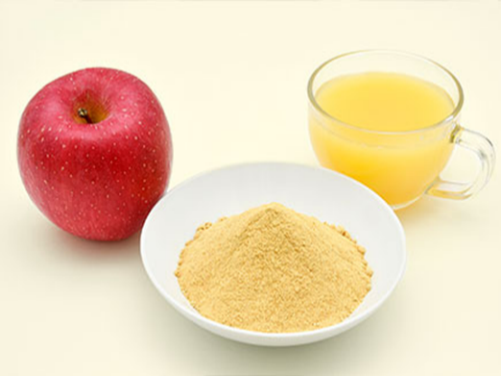
Pectin is a polysaccharide found in citrus fruits and apple skin that can be extracted in water.
-
It is used for gelling jams, jellies, yogurt, and other foods.
-
Pectins with a high methyl ester content turn into gel in the presence of sugars and other solutes (at least 60%) and at low pH (<3). The strength of the gel and the regulating temperature depend on the concentration and type of sugar, the cooling rate, and the pH.
-
There are other types of pectin which form gels at different conditions.
-
Pectin shares similarities with carrageenan in conditions of low strain but exhibits quite different characteristics when subjected to conditions of high strain (Sharma et al., 2017).
(Source: https://www.istockphoto.com)
Glucomannan and galactomannan
-
Glucomannan is a dietary fiber usually made from the root of the konjac plant. It's historically been used as food and medicine in Asian cultures.
-
Glucomannan is a water-soluble polysaccharide that is considered a dietary fiber.
-
It is a hemicellulose component in the cell walls of some plant species. Glucomannan is a food additive used as an emulsifier and thickener.
-
It is a major source of mannan oligosaccharide (MOS) found in nature, the other being galactomannan, which is insoluble.
-
Its role as a thickening agent in dysphagia products has been recently investigated.
Other fibers of plant origin
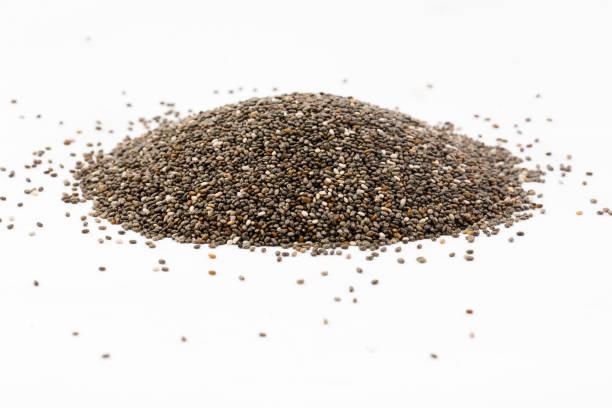 The chia (Salvia
Hispanica L.) seeds will gel and
thicken the drink. Chia seeds don't always have to be soaked in
liquid - they can be added to baked goods like muffins, scones, and
the like. Because chia seeds form a gel in liquid, they can be added
to soups, stews, sauces, and marinades to help thicken the liquid in
place of corn starch or flour. Chia seeds can also be blended into
juice smoothies to add the thicker texture normally provided by
whole fruits or yogurt.
The chia (Salvia
Hispanica L.) seeds will gel and
thicken the drink. Chia seeds don't always have to be soaked in
liquid - they can be added to baked goods like muffins, scones, and
the like. Because chia seeds form a gel in liquid, they can be added
to soups, stews, sauces, and marinades to help thicken the liquid in
place of corn starch or flour. Chia seeds can also be blended into
juice smoothies to add the thicker texture normally provided by
whole fruits or yogurt.-
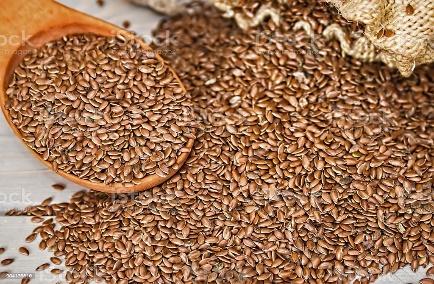 Ground flax seed (Linum
usitatissimum) can also be used to
thicken soups and stews. It can be used as an egg replacement in
quick bread recipes (1 tablespoon ground flaxseed combined with 3
tablespoons water is equivalent to one medium egg).
Ground flax seed (Linum
usitatissimum) can also be used to
thicken soups and stews. It can be used as an egg replacement in
quick bread recipes (1 tablespoon ground flaxseed combined with 3
tablespoons water is equivalent to one medium egg).
(Source:
https://www.istockphoto.com)
To be used in dysphagia oriented products, the
mucilage must be extracted from the seeds and used in the form of
chia gum or flaxseed gum. See Ribes et al. (2022) or Viera et al.,
(2021) for more information.
Commercial thickening agents
-
Food thickeners are commercially available as powders that can be added to any drink or pureed food.
-
Modified maize starch (pre-gelatinised) and gums (such as xanthan gum or galactomannans) are the polysaccharides normally used in commercially available thickeners. In some cases, they are used in combination.
-
Viscosities of starch-based thickened beverages are different from those of gum-based thickened beverages, mainly due to this different thickening process. They also differ in to what extent they modify the taste and the appearance of the food or beverages.
-
Some studies show that gum-based thickeners are safer because they are not affected by salivary enzymes (amylase).
-
Their thickening properties may change in different food matrices and should be studied.
-
The composition of the thickeners could influence hydration and absorption of medication.
-
It is also convenient to check the instructions given in the labels.
-
Some examples of commercial products and uses are the following:
-
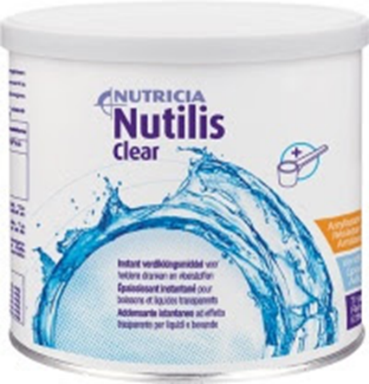
By adding Resource® ThickenUp™ Clear (Nestle), Nutlis Clear (Nutricia) into foods such as puréed vegetables you can achieve the correct consistency, without changing the taste or look of the food.
-
PreciseR have developed a liquid thickener also useful for drink and medication trollies which gives instructions for level 1-4 fluids and thickens a wide range of beverages, supplements and laxatives. Free online training is available on the website: https://elearning.precisethickn.com.au
-
Nutricia also have a thickener called ‘Nutilis’ powder. This has a table of levels of scoops for thickening levels 1-4 (given as a guide only). Support is available from: nccl@nutricia.com.
 (Source:nccl@nutricia.com.)
 (Source:https://www.nestlehealthscience.com)
 Source:https://www.flavourcreations.com.au)
Example: How to thicken drinks
-
Add the recommended number of flat scoops of resource Thicken Up Clear™ to a dry empty cup/glass;
-
No. of level scoops: mildly=2; moderately=4; extremely=8 per 200 mls;
-
Pour in 200 mls of your chosen drink;
-
Immediately stir briskly with a spoon until the powder is dissolved;
-
Leave to stand for 2 minutes until the drink has thickened;
-
Check consistency is correct - if it is not right you will have to pour the drink away and start again.
Other commercially available thickened products
A large range of prethickened fluids as waters, juices or supplements are available from different pharmaceutical companies.
In some cases, they provide the IDDSI levels of thickness. These are labelled with the colours which represent the thickness level. Other companies may also be able to supply products with the levels evaluated.
Thickeners and bowels disorders
-
Most gums are polysaccharides (soluble fibre and/or insoluble fibre eg xanthan gum). Some mostly soluble gums such as guar and pectin, can have a laxative effect if used in large quantities (>12g per day).
-
Xanthan gum is not recommended in quantities greater than 10g per day. This is worth noting for patients on thickened fluids, who may need to be supplied with a variation of thickened fluids made with varied ingredients to suit their individual needs.
-
Nursing staff should check products used if bowel issues occur.
Practical exercise: Guide to prepare thickened drinks
-
The goal of the activity are to learn thickening methods of liquids and foods
-
To do this activity we need a glass 200ml, spoon, fork or whisk, syringe, thickeners, water or drinks.
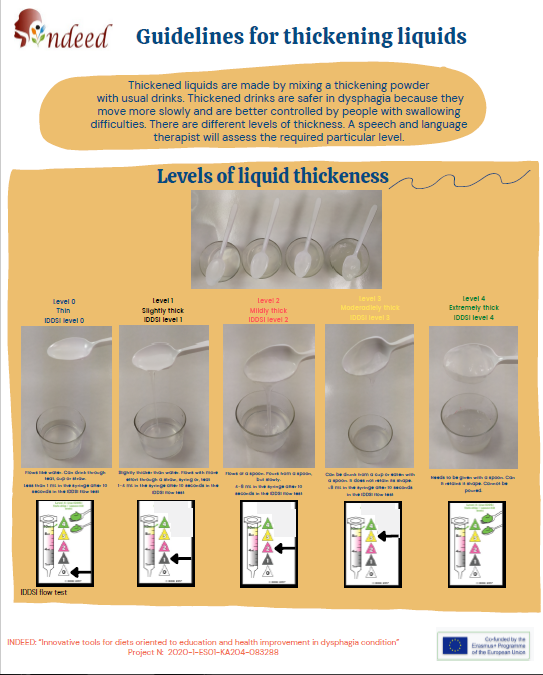
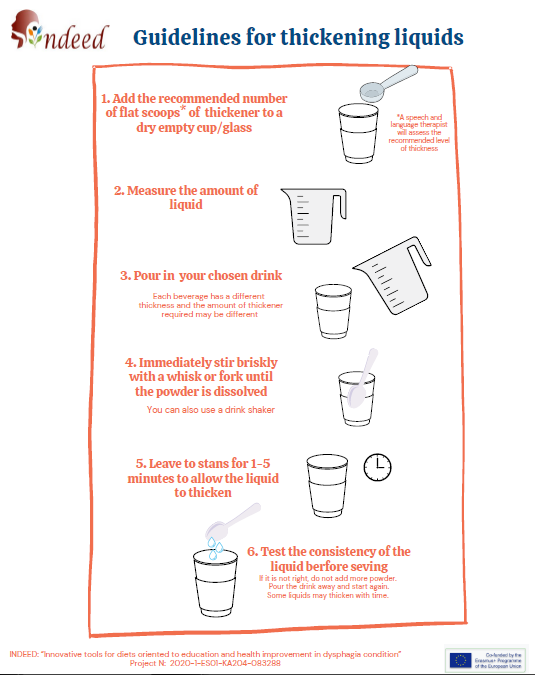
(See Unit 4.3. For more information about thickening levels)