Unit 4 - Food preparation
4.1. Introduction to texture‐modified foods and beverages for dysphagia diets
4.1.3.Texture-modified food and beverages: Grades, scales and need of standardization texture modified food
As seen, food and liquid textures play important roles in the care of patients with dysphagia.
A general understanding of the parameters defining texture-modified (TM) food for dysphagia patients worldwide is mandatory to ensure safe eating.
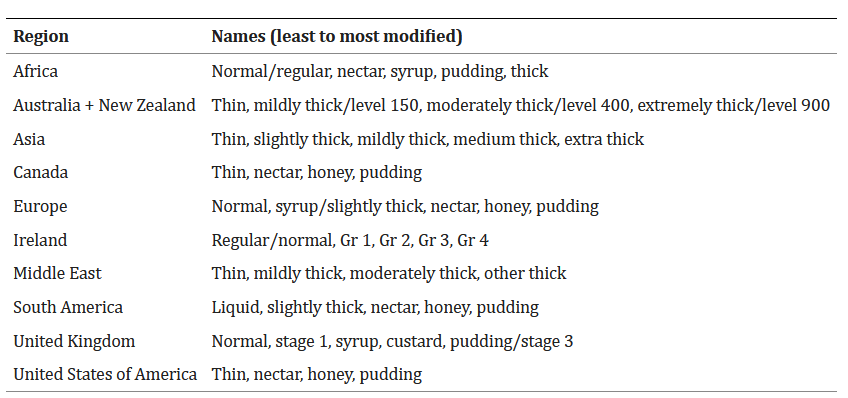
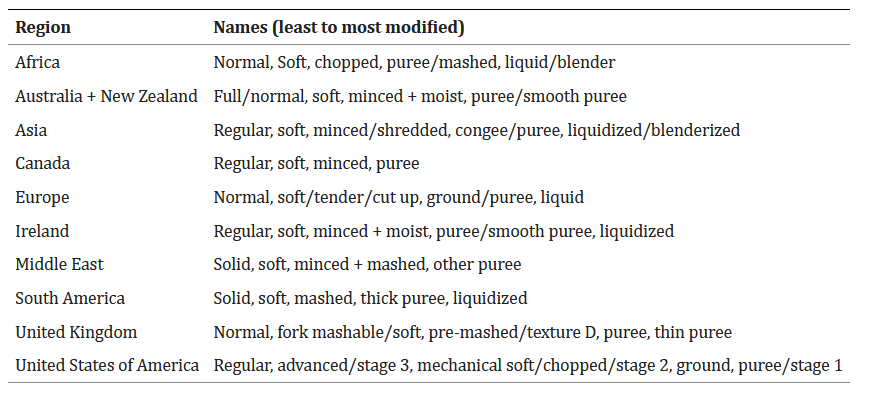
However, and as it is shown in Tables 1&2, different grades and scales were used in different countries during the last years.
Table 1. Thickened drink names and number of levels by world region.
Source: Cichero et al. (2017)
Table 2. Texture-modified food names and number of levels by world region.
Source: Cichero et al. (2017)1
In consequence, there was a gap in communicating and collaborating among experts in food services and clinical staff, and a classification system for food viscosity and texture based on sound empirical evidence to help with dysphagia management was necessary.
To bridge this gap, in 2012, the International Dysphagia Diet Standardization Initiative (IDDSI) 2 was founded to provide a globally standardized terminology and definitions for TM food and liquids that are applicable to dysphagia individuals of all ages, in all care settings, and for all cultures.
Ensuring the correct consistencies of food and drink implies the use of common levels of modification and descriptors