Unit 3 - Diet and nutritional treatment approach for dysphagia
3.1. Basics of nutrition on dysphagia condition
3.1.3.2. Identifying malnutrition in patients with dysphagia
 Early referral to the clinical
nutritionist has a pivotal importance in halting the progressive
nature of malnutrition and allowing close monitoring of patients’
weight and oral intake and the tolerability of the prescribed diet.
Early referral to the clinical
nutritionist has a pivotal importance in halting the progressive
nature of malnutrition and allowing close monitoring of patients’
weight and oral intake and the tolerability of the prescribed diet.
Health professionals must do nutrition screening to detect patients at risk of malnutrition.
The clinical nutritionist carries out a full nutritional status assessment and the results determine the dietary counselling and/or treatment.
Source: obtained from Canva Pro
-
Nutritional status screening:
Nutritional status screening ...
-
is a process to identify an individual who is malnourished or at risk of being malnourished.
-
is used to determine whether a full nutrition assessment is indicated.
-
is generally completed by someone other than the nutrition provider.
Malnutrition risk screening (MNRS) tools …
-
should be quick, simple, and easy to use
-
a certain degree of validity, agreement, and inter-rater reability in identifying malnutrition risk is necessary
-
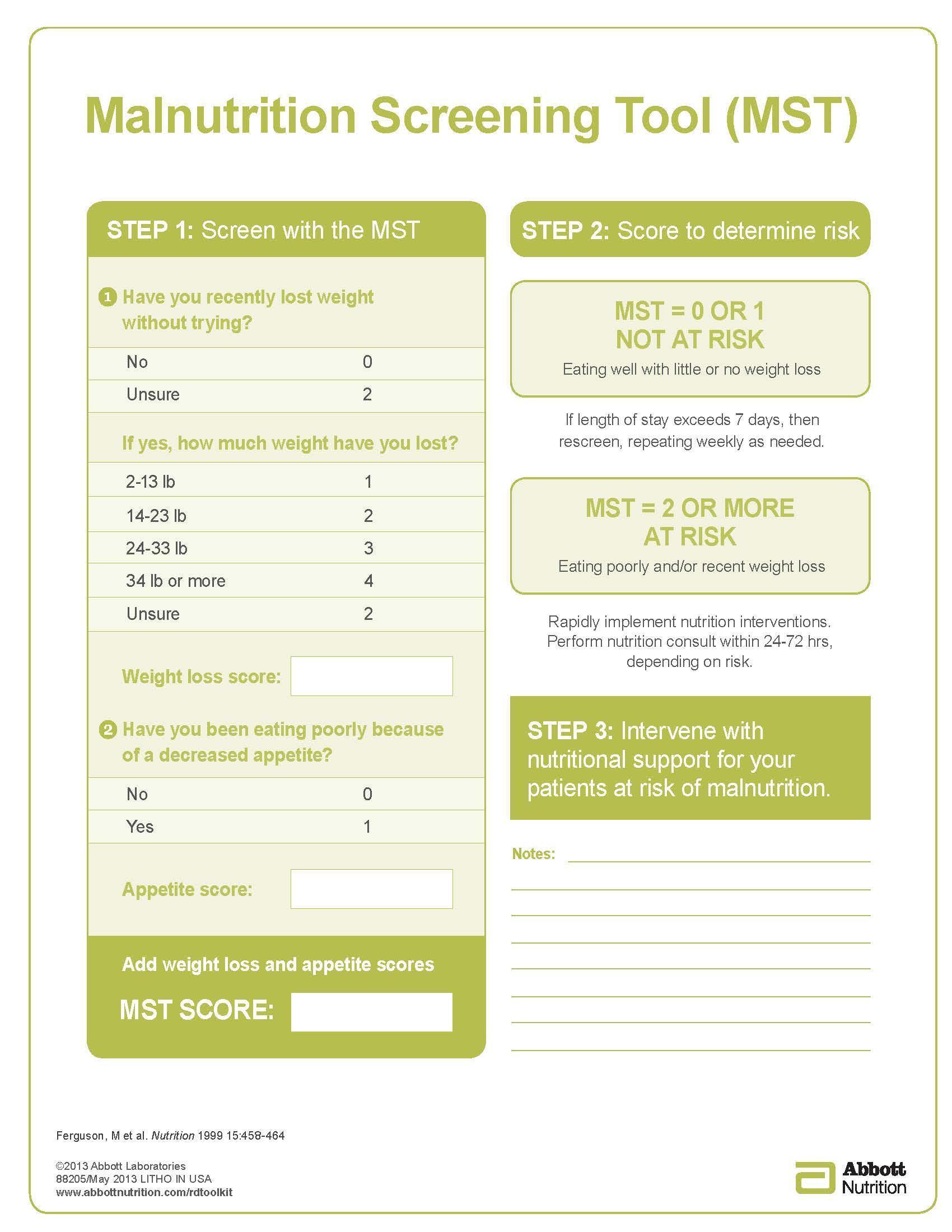
MNRS for adults:

-
MST – Malnutrition Screening Tool
-
MUST – Malnutrition Universal Screening Tool


-
MNRS for elderly:

-
MNA – Mini Nutritional Assessment

Source: https://pixabay.com/


-
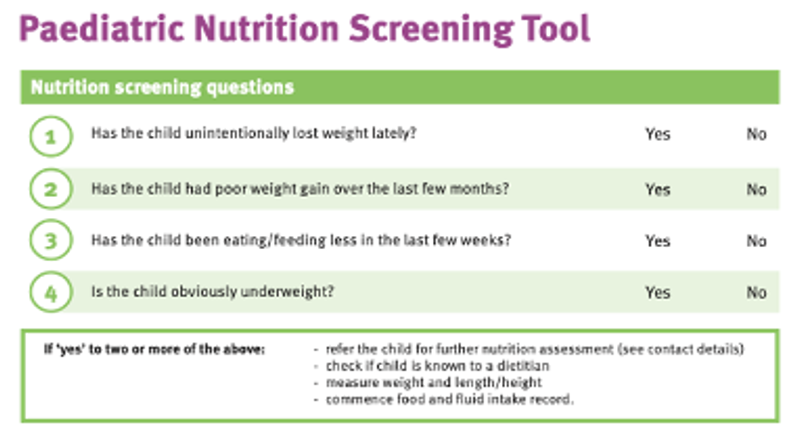
Paediatric MNRS:

-
STAMP – Screening Tool for Assessment of Malnutrition in Paediatrics.
-
PNST – Paediatric Nutrition Screening Tool.
Source: https://www.pngegg.com/

Nutritional status assessment:
Nutritional status assessment ...
-
is used to determine the nutritional status of individual or population groups as influenced by the intake and utilization of nutrients
-
can be defined as the interpretation from dietary, laboratory, anthropometric, and clinical studies.
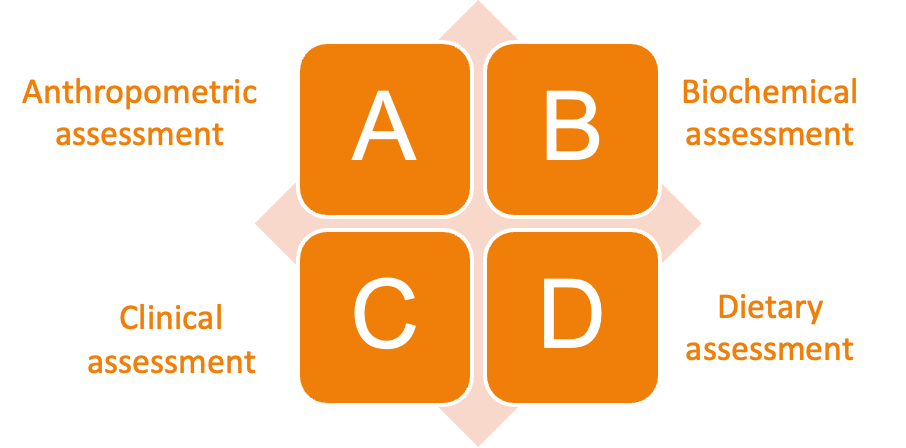
An easy way to remember the components of the nutritional status assessment is:

-
ANTHROPOMETRIC ASSESSMENT:
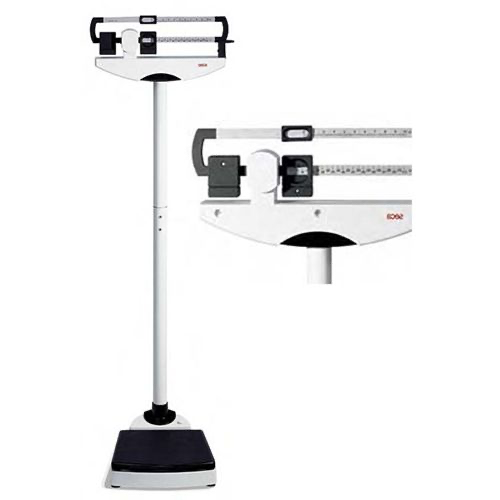
Consists in the measurement of the size, weight and proportions of the body.
Source: https://medicaltrain.es/
The most common measurements are weight,
height, perimeters and skin folds.

-
BIOCHEMICAL ASSESSMENT:
Uses laboratory
measurements of serum protein, serum micronutrient levels, serum
lipids, and immunological parameters to assess general nutritional
status and to identify specific nutritional deficiencies. Urine and
stools samples may also be analysed.
Source: https://pixabay.com/
-
CLINICAL ASSESSMENT:
The estimation of
nutritional status on the basis of recording a medical history and
conducting a physical examination to detect signs (observations made
by a qualified observer) and symptoms (manifestations reported by the
patient) associated with malnutrition. Some sociodemographic and
psychological factors related to nutritional status are also
collected.
Source: https://pixabay.com/
-
DIETARY ASSESSMENT:
It provides information on dietary
quantity and quality and the results are compared with recommended
intake.
Several common methods to assess dietary intake exist: 24h-recall, food-frequency questionnaires and food weighted records
Source: https://pixabay.com/
