Unit 3 - Diet and nutritional treatment approach for dysphagia
3.1. Basics of nutrition on dysphagia condition
3.1.3.1. Malnutrition in patients with dysphagia
Malnutrition refers to deficiencies, excesses, or imbalances in a person’s intake of energy and/or nutrients:
Undernutrition, which includes wasting (low weight-for-height), stunting (low height-for-age) and underweight (low weight-for-age);
Micronutrient-related malnutrition, which includes micronutrient deficiencies (a lack of important vitamins and minerals) or micronutrient excess; and
Overweight and obesity.
It is known that various pathological conditions may cause malnutrition, but many, even healthy, dysphagic people may fail to adequately consume food and experience any type of malnutrition.
Dysphagia and malnutrition are apparently associated. Several studies have focused on dysphagia as a prevalent risk factor for malnutrition during recent years.
Untreated dysphagia patients who are malnourished sustain a longer hospital stay, higher risk of complications, and higher mortality rate than those who are properly nourished.
Did you know ...?
The prevalence of concurrent malnutrition and dysphagia has been estimated between 3% and 29% in the elderly. Vitamin B12, C, D, folate, zinc and iron are the micronutrients to pay most attention to.
The prevalence of oropharyngeal dysphagia in children with cerebral palsy is estimated to be between 19% and 99%. A recent review found a high rate of malnutrition in children with cerebral palsy and several nutrient deficiencies were detected such as hypocalcemia and reduced serum concentrations of zinc, copper, and vitamin D.
The presence of dysphagia is a major risk factor for developing malnutrition in stroke patients.
It is difficult to accurately ascertain the prevalence of malnutrition in dysphagic people due to discrepancies in the measurement methods used.
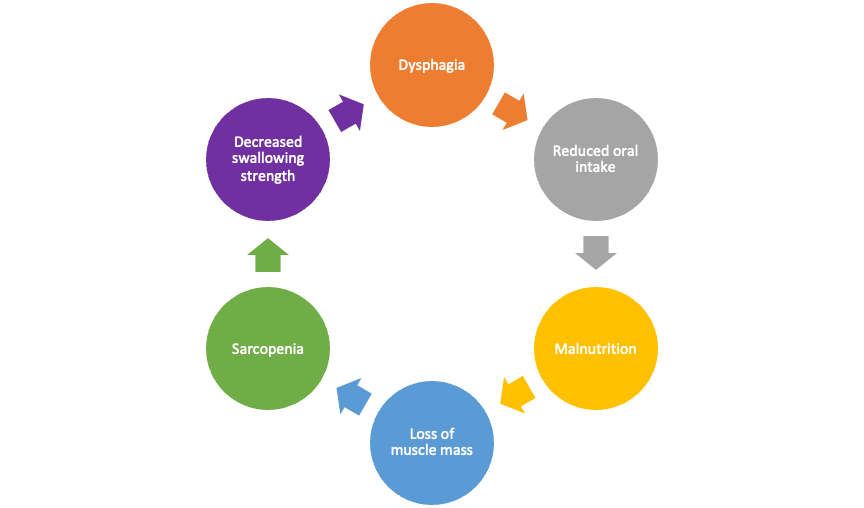
Reduced oral intake due to dysphagia leads to weight loss and disrupted synthesis of skeletal muscles, which consequently result in further development of sarcopenia. Therefore, a vicious cycle between dysphagia, malnutrition, and sarcopenia eventually becomes inevitable.