Unit 3 - Diet and nutritional treatment approach for dysphagia
3.1. Basics of nutrition on dysphagia condition
3.1.2.3. Dietary Reference Intake for vitamins and minerals
-
Micronutrients are:
-
Vitamins:
- Water-soluble vitamins
- Fat-soluble vitamins
-
Vitamins:
-
Minerals
- Macrominerals
- Microminerals or trace elements
- Micronutrients are non-energetic nutrients but they are essential for healthy development, disease prevention, and wellbeing due to their functions as, mainly, regulatory compounds.
- The organism needs micronutrients in small quantities (milligrams or, even, micrograms), but it is essential to provide them in the diet because the human organism is not able to synthesise them (or only in insufficient quantities).
- There is no single food that contains all the essential vitamins and minerals for human beings.
- Visit https://multimedia.efsa.europa.eu/drvs/index.htm to consult the Dietary Reference Values for the EU.
Vitamins:
-
13 organic substances, with lots of different regulatory functions, are
considered vitamins. Vitamins play a vital role in many biochemical
functions in the human body and are essential components for
maintaining optimal health.
-
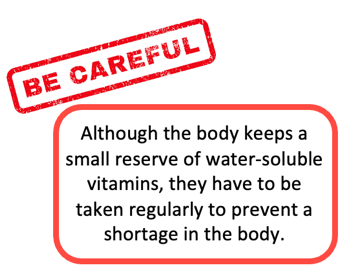
Water-soluble vitamins: They are characterised by their ability to dissolve in
water. Therefore, in general, their absorption in the small
intestine is easier, their storage in the body is very limited and unused amounts and/or their metabolites are eliminated in the
urine.
There are 9 water-soluble vitamins: the B-complex vitamins, thiamine, riboflavin, niacin, pantothenic acid, biotin, vitamin B6, folate, and vitamin B12, and vitamin C.

-
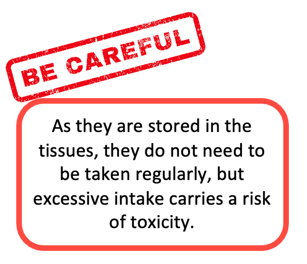
Fat-soluble vitamins: There are 4 fat-soluble vitamins: vitamins A - retinol,
D - cholecalciferol, E - tocopherol, and K.
They dissolve in fat. Due to their low solubility in hydrophilic media, the body absorbs them into newly forming micelles in the small intestine. Besides, they need specific ways of transport in the body and tend to accumulate in the tissues.
Retinol is present in animal-based food, but carotenoids from plant-based food can be converted by the body into retinol.
Cholecalciferol can be synthesised in the skin by the action of ultraviolet rays.
Vitamin K synthesised by intestinal bacteria can be used by the organism.
-
Water-soluble vitamins: They are characterised by their ability to dissolve in
water. Therefore, in general, their absorption in the small
intestine is easier, their storage in the body is very limited and unused amounts and/or their metabolites are eliminated in the
urine.

Minerals:
-
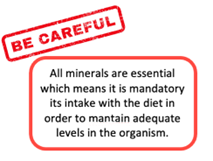
They are inorganic substances that are responsible for structural functions
involving the skeleton and soft tissues and for regulatory
functions including neuromuscular transmission, blood clotting,
oxygen transport, and enzymatic activity.
- Macrominerals: Calcium, magnesium, phosphorus and the electrolytes, sodium, potassium and chloride, are considered essential macrominerals
- Microminerals or trace elements: Iron, zinc, copper, iodine, selenium are considered essential the most important trace elements.
Did you know ...?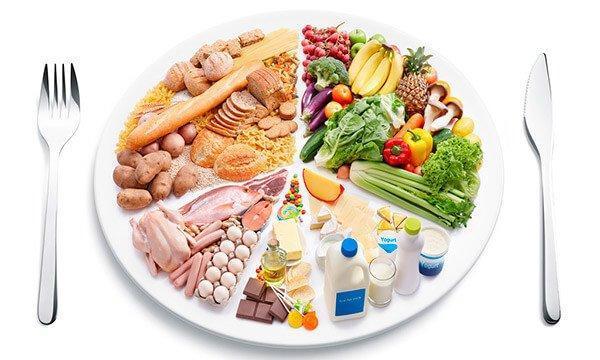
- Eating a wide variety of foods is the best way to get the necessary amounts of vitamins and minerals.
- Some micronutrients are present in a small number of foods i.e. foods from animals, but not plants, naturally have vitamin B12.
Source: https://www.clinicabaviera.com/

ACTIVITY ABOUT MICRONUTRIENTS: