Unit 1 - Dysphagia
Lesson 1.2. Detection, diagnosis and treatment
1.2.2.3 Instrumental assessment
The instrumental assessment looks at functional and structural aspects of swallowing that aren’t visible upon physical examination. It can answer specific questions about the presence and extent of swallow dysfunction, safety for feeding, and the effectiveness of therapeutic strategies.
Health care professionals in most hospitals understand the need for instrumental swallowing assessments. For physicians concerned about further testing, I discuss all the benefits of the information they provide, such as identifying the “why” behind the feeding and swallowing problem and determining effective strategies for safe feeding.
-
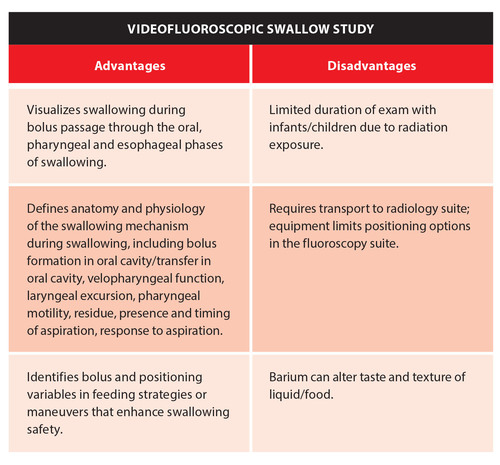
Videofluoroscopic swallow study (VFSS).
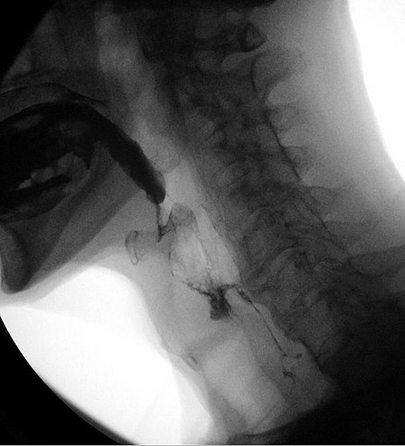
A videofluoroscopic swallow study (VFSS), also known as a modified barium swallow, is a dynamic x-ray examination of the oral cavity, pharynx and cervical esophagus. VFSS permits evaluation of the patient’s swallowing function through the administration of liquids and solids of varying consistencies to assess swallowing fluoroscopically.
-
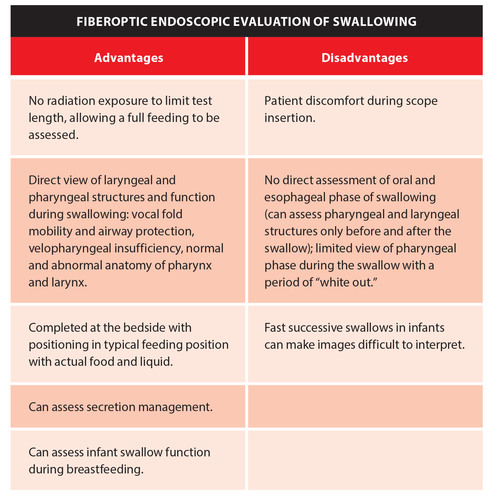
Fiberoptic endoscopic evaluation of swallowing (FEES).
FEES uses a transnasal endoscope to view the upper aerodigestive tract during swallowing, providing information specific to the pharyngeal phase of swallowing.
-
Cervical auscultation (CA).
It is the use of a listening device, typically a stethoscope in clinical practice, to assess swallow sounds and by some definitions airway sounds. Judgments are then made on the normality or degree of impairment of the sounds.
-
24-hour pH impedance testing.
It is one method your doctor can use to evaluate acid and nonacid reflux from your stomach into your esophagus (the passageway between your mouth and stomach) over the course of a day.
A thin, noodle-like, flexible catheter (tube) inserted into your nose, and guided into the opening of your stomach. The catheter can pick up changes in acidity along its entire length. The catheter conveys information about your acid reflux activity to a computer about the size of a smartphone that you wear on a belt.
Importance of correct treatment in dysphagia
Study of swallowing should be performed by specialized and trained health professionals using specific tools. It allows not only the diagnosis of dysphagia, but also to determine the most appropriate treatment to promote correct oral feeding, reduce the presence of nutritional and respiratory complications as well as the risk of morbidity and mortality, improving the quality of life.