Unit 1 - Dysphagia
Lesson 1.1 Dysphagia
1.1.6. Signs
The most common signs of dysphagia are:
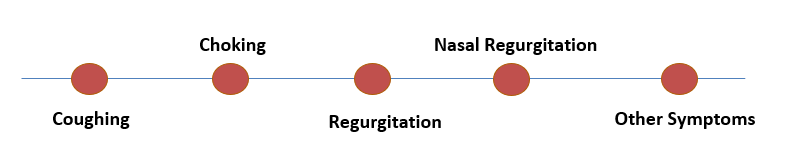
Coughing
Coughing is a generic reaction to a wide range of stimuli that usually originates in the pharynx, larynx, or lungs. Coughing that happens during or shortly after swallowing is a clear indicator of a swallowing difficulty.
Patients may not perceive the timing association between coughing and swallowing since humans swallow throughout the day. Coughing may be caused by early leaking of oral contents into the pharynx, insufficient clearing of the bolus from the pharynx, or regurgitation of esophageal contents back to the pharynx, all of which obfuscate this link (Figure 3). Rather than coughing, the phrase "choking" is frequently used to refer to a sensation of food clinging to the throat.
Choking
Patients (and clinicians) frequently use the term "choking" to describe the sensation of food stuck in the esophagus or coughing. Both symptoms are common in people with swallowing difficulties, but they indicate different sources of malfunction. As a result, it's critical to pinpoint exactly what's causing the symptoms when examining them.
Regurgitation
The swallowing process is designed to ensure that the swallowed bolus moves in a single direction. The term "regurgitation" refers to the return of food or fluids to the mouth or pharynx after it has appeared to have passed through.
Regurgitation is the effortless return of material to the mouth or throat. This is in contrast to vomiting, which is characterized by nausea and retching, as well as the contraction of the abdominal muscles and diaphragm.
A swallowing issue is frequently seen when patients say the regurgitated material tastes like eaten food.
Nasal Regurgitation
The nasopharynx shuts by elevating the soft palate and contracting the upper pharyngeal constrictor muscles (superior pharyngeal constrictors). Nasal regurgitation can be caused by a failure of this closure mechanism, pharyngeal retention, or esophagogastric regurgitation.
Other Symptoms
Patients may experience a scratchy throat, hoarseness, shortness of breath, and chest discomfort or pain, depending on the type of swallowing dysfunction. It's possible that the link between swallowing and these symptoms isn't clear. None of these symptoms are particular to swallowing difficulties and could develop from a variety of other causes.
All signs
Signs and symptoms associated with dysphagia may include:
Difficulty picking up food from the cutlery
Storage food in the mouth
Increased time chewing and oral handle
Inability to keep the bolus in the oral cavity
Difficulty performing and coordinating oral movements with the facial, oral and lingual muscles
Loss of strength during chewing.
Excessive chewing pattern.
Lack or decrease in the perception of the food in the mouth.
Difficulty gathering the bolus at the back of the tongue
Hesitation or inability to initiate swallow
Frequent repetitive swallows
Drooling
Rejection of food or beverages that they previously consumed
Delayed or absent laryngeal elevation
Food residue in the mouth after swallowing
Frequent throat clearing Swallow-related cough or gagging: before, during, and after swallowing
Feeling of residue or compaction in the mouth or pharynx
Pain, discomfort or a feeling of stuck in the throat
Sweating, watery eyes and discomfort
Nasal or oral regurgitation
Changes in tone of voice, hoarseness or "wet voice" or nasal
Frequent choking
Airway obstructions
Feeling of choking when swallowing
Changes in breathing during eating
Signs of esophageal dysphagia:
Nausea or vomiting
Nasal, oral or tracheotomy regurgitation
Reflux
Sensation of food getting stuck in the throat or chest, or behind the breastbone.
Retrosternum pain related to swallowing.
Other frequently signs:
Recurrent respiratory infections
Cough during meals or up to 20 minutes later
Recurrent fever or low-grade fever
Color change in the fingers or lips
Low oxygen saturation in the blood
Weight loss
Dehydration
Others.