Unit 1 - Dysphagia
Lesson 1.1 Dysphagia
1.1.3. Prevalence
Overview
-
Occasional difficulty swallowing, which may occur when you eat too fast or don't chew your food well enough, usually isn't cause for concern. But persistent dysphagia may indicate a serious medical condition requiring treatment.
-
Dysphagia can occur at any age or it may also be associated with pain, disability, chronic diseases and other medical situations. The causes of swallowing problems vary and treatment depends on the cause.
-
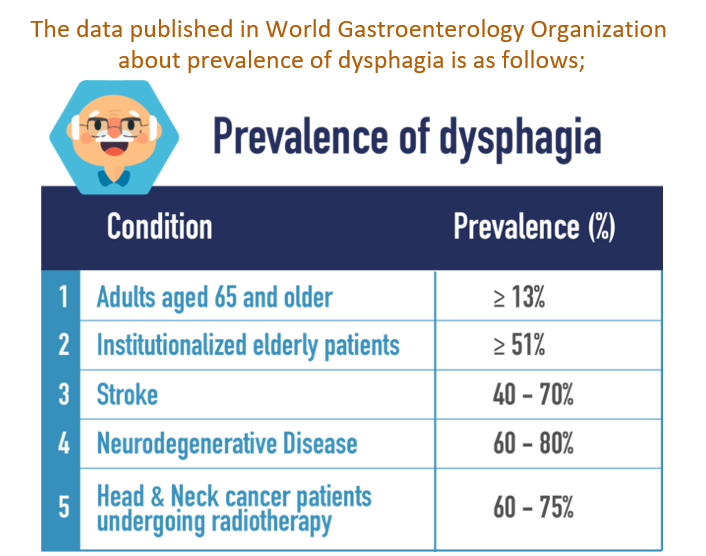
The prevalence of dysphagia is about 8% among the world's adult population. This prevalence is even higher in certain cases; 20-60% in people over the age of 55 and between 35-84% in neurological disease (CP, Alzheimer, ELA …) and other medical situations (surgery, cancer and so on).

Dysphagia is a prevalent difficulty among aging adults. Though increasing age facilitates subtle physiologic changes in swallow function, age-related diseases are significant factors in the presence and severity of dysphagia. Among elderly diseases and health complications, stroke and dementia reflect high rates of dysphagia.
In both conditions, dysphagia is associated with nutritional deficits and increased risk of pneumonia. Recent efforts have suggested that elderly community dwellers are also at risk for dysphagia and associated deficits in nutritional status and increased pneumonia risk.
Dysphagia is projected to become more common in the near future, it is critical to acknowledge it as a national health concern.
The prevalence of dysphagia is about 8% among the world's adult population. This prevalence is even higher in certain cases; 20-60% in people over the age of 55 and between 35-84% in neurological disease (CP, Alzheimer, ELA …) and other medical situations (surgery, cancer and so on)
Disease
prevalence rises with age, and dysphagia is a typical co-occurrence
of many disease processes or therapies. 
The prevalence of dysphagia was found to be 11.4 percent in this ‘healthy' older population, which is significant given the demographics.
(Source: obtained from Canva Pro)
-
Oropharyngeal dysphagia is a condition that causes difficulty eating and drinking. The personal, social, and economic costs of the situation are not reflected in this sympathetic statement.
-
Dysphagia is a hidden disorder because it can't be seen like hemiplegia or a broken leg. It is frequently a concomitant condition with various neurodegenerative conditions, most notably stroke.
-
Dysphagia prevalence has been reported as a function of care setting, disease condition, and country of inquiry, making it difficult to identify the true prevalence.

Prevalence of oropharyngeal dysphagia has been well-documented as a result of neurologic disorders. Dysphagia in the ‘healthy' population, on the other hand, few research have evaluated the prevalence of dysphagia in European populations.
(Source: obtained from Canva Pro)