Unit 2 - Care and nutrition (e-book)
Lesson 2.2. Management of oropharyngeal dysphagia. Physiotherapy a Speech-language therapy
2.2.2. Alternate techniques of swallowing
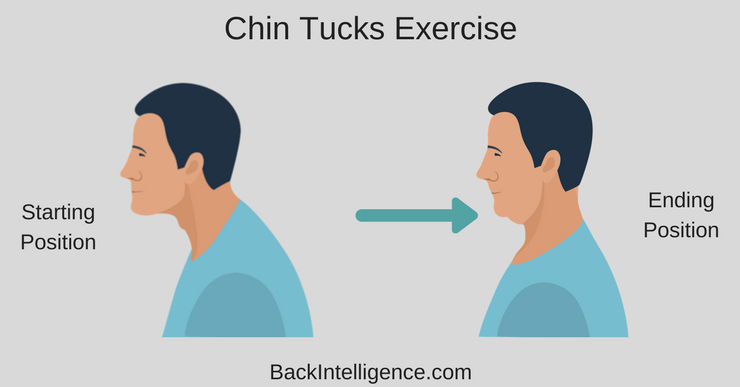
Chin Tuck
To shift the bolus anterior, lower your chin. It reduces early spilling by widening the valleculae, which causes spillage to pause, giving the VFs more time to close, minimizing the likelihood of aspiration.
Source: https://backintelligence.com
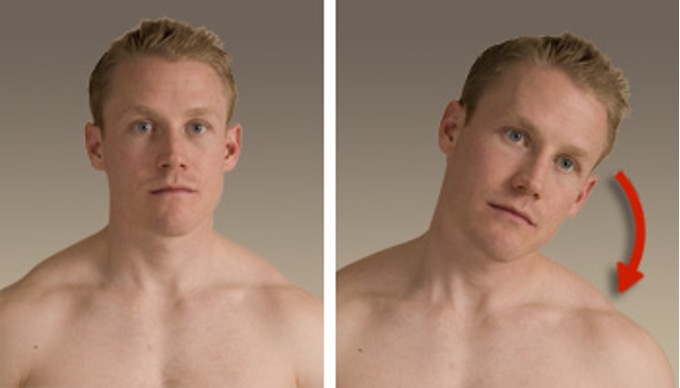
Head tilt
When you turn your head to the better side, the bolus is redirected through the oral canal, which improves oral bolus transport.
Source: https://www.vhdissector.com
Head Rotation
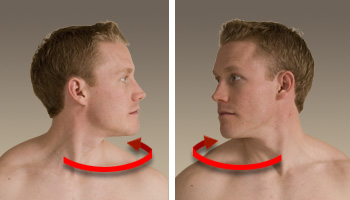
Twist the head to the weaker side, closing off the weaker side and allowing the bolus to pass to the stronger side. Pocketing is also avoided.
Rotating the head to the left or right increased pharyngeal contraction pressure at the level of the valleculae and pyriform sinuses on the side of rotation, decreased UES resting pressure on the side opposite rotation, and increased the duration from peak pharyngeal pressure in the pyriform sinuses to the end of UES relaxation when compared to a neutral head position and The anterior-posterior opening diameter of the UES has been enlarged.
Source: https://www.vhdissector.com
Side Lying
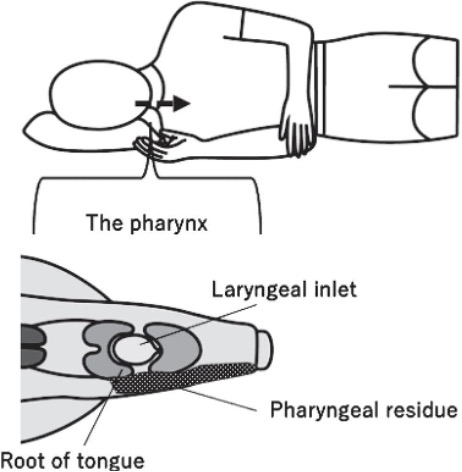
The prevailing rationale for using the side-lying approach is that lying down will keep remaining bolus material attached to the pharyngeal walls rather than allowing it to fall into the airway, which could happen more easily in an upright position due to gravity.
Source: Kaneoka A, Inokuchi H, Sakai T, Saito Y, Haga N. Utility of Side-lying Posture in a Patient with Severe Dysphagia Secondary to Oropharyngeal Cancer Surgery: A Single Case Report. ACS. 2022;25(1): 29-36. doi: 10.3233/ACS-210039
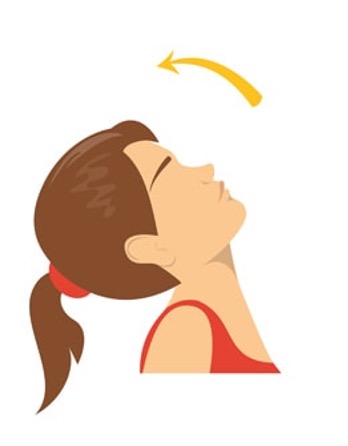 Head Back
Utilize gravity to cleanse the oral cavity and bypass the oral stage.
Source: https://northernmyotherapy.com.au/
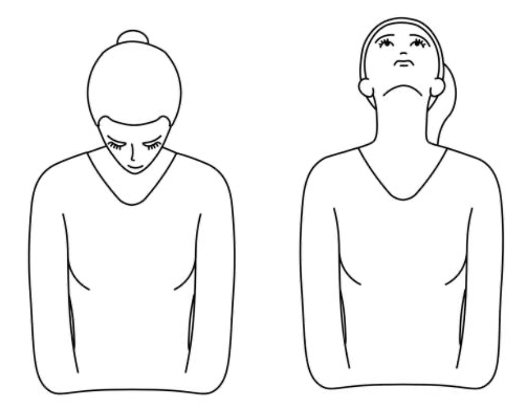
Neck extension
The individual is encouraged to sit or stand erect in the neck extension posture and to extend the neck backwards and elevate the chin upwards when transferring the bolus from the oral cavity to the pharynx.
Source: https://www.istockphoto.com
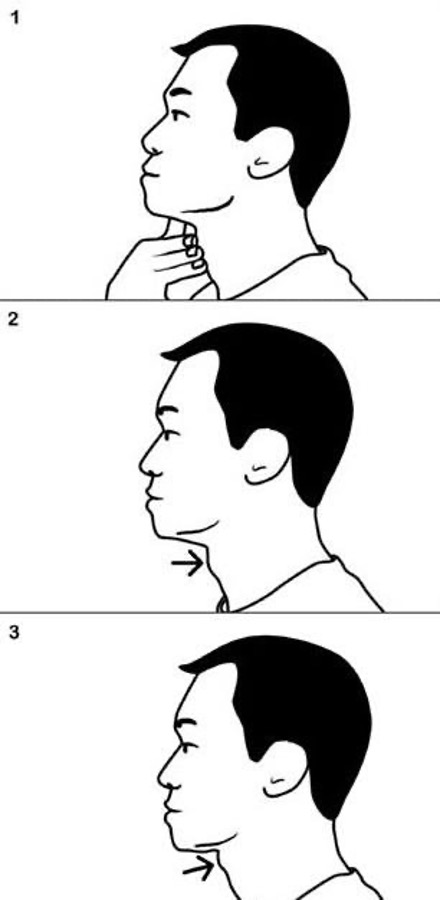
Mendelsohn manoeuvre
The Mendelsohn manoeuvre is used to treat laryngeal melevation during swallowing. This maneuver necessitates a person with excellent cognitive talents. The individual is told to keep the swallow at the height of vertical larynx movement.
Source: Григус, І & Mykola, R. Clinical review of physical therapy intervention of swallowing disorder after stroke. 2013.