Unit 2 - Care and nutrition (e-book)
Lesson 2.1. Nursing and feeding techniques and equipment
2.1.6. Medicine-taking
Pharmacological treatment, as with the ingestion of food and beverages, requires proper handling in the mouth and coordination during swallowing.
Texture adaptation drugs is not recommended because it could be interfering with their activity, producing an overdose or limiting their effect. It is always recommended to look for other presentations of the drug before handling it.
On many occasions, it is not possible to prepare magistral formulas with other forms due to the instability of the preparation, difficulty in finding the active ingredient, etc, so in these situations the package insert should be read or the pharmacist should be asked for the best way to adapt it.
(Source: https://www.freepik.com)
To select the most appropriate pharmaceutical form will be made according to the type of dysphagia:
- Dysphagia to liquids. Choice of medication in tablet or capsule form. They can be administered together with thickened liquids with the appropriate texture.
- Dysphagia to liquid and solid food. Semi-solid textures are recommended, and depending on the person's capabilities, they can be administered together with a small part of the food or not.
Take precautions when administering and choose the most appropriate one. Modification of its texture should be avoided. In case it is not possible, find out if it is possible to crush it without alteration.
- Semi-solid textures are recommended and depending on the person's capabilities. They can be administered together with a small part of the food or not.
- The medicine has to be included in the first spoonfuls of the food. It is not recommended to mix with all food content because it modifies the taste and may not be completely consumed, diminishing its effect.
- It is not recommended to administer
together with citric juices or yogurts because they increase salivation,
increasing the risk of aspiration.
- An alternative to medicines that cannot be administered with food is the use of gelatines and thickeners.
- Hight fluid drugs are recommended to
dilute them first in a small amount of water (10-15ml) and then add a
thickener.
- Laxatives are recommended to thicken them with a new generation thickener with food gums.
- Rectal route is a valid procedure to
administer medication in suppositories or enemas.
- The dosed transdermal patches are also rapidly absorbed and they are not recommended in case of skin problems.
● Dysphagia to solid meals. The options are:
- Liquid forms: oral solutions, syrups, drops, sachets for reconstitution and in some situations injectables that can be administered orally.
- Effervescent tablets: they should be dissolved in little water (20 ml approx.). It is necessary to wait for the effervescence to disappear as it can be irritating and cause coughing, which is a risk during swallowing.
- Orodispersible tablets: called "Flas, Liotabs or dispersible". They dissolve on contact with saliva and do not require the use of external liquids for dissolution.
- Sublingual tablets: they should not be swallowed but allowed to dissolve under the tongue.
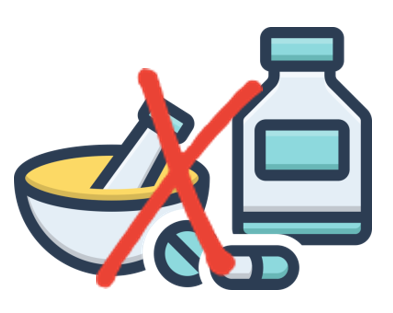
Non-crushable medicines
Not all tablets can be crushed without alterations. In general only uncoated tablets should be crushed and only uncoated hard gelatin capsules should be opened. Once crushed or opened, the dosage form should be mixed with a small amount of soft food or gelled water and administered immediately. The capsules are formulated so that the gelatin capsule facilitates swallowing and masks the unpleasant taste of the drug, including laxative substances.
Source: designed by Canva Pro
Modified release dosage forms:
They are formulations where the rate and/or site of release of the active ingredient(s) are different from that of the immediate release dosage form administered by the same route. Modified release dosage forms covered by this guideline include orally, intramuscularly, subcutaneously administered modified release and transdermal dosage forms.
Prolonged release dosage forms: prolonged release dosage forms are modified release dosage forms showing a sustained release compared to that of an immediate release dosage form administered by the same route.
Delayed release dosage form: The release of the active substance from such modified release dosage forms is delayed for a certain period after administration or application of the dosage. The subsequent release is similar to that of an immediate release dosage form.
Multiphasic release dosage forms:
- Biphasic Release: the first phase of drug release is determined by a fast release dose fraction providing a therapeutic drug level shortly after administration. The second extended release phase provides the dose fraction required to maintain an effective therapeutic level for a prolonged period.
- Pulsatile Release: Pulsatile drug release is intended to deliver a burst of drug release at specific time intervals.
Multiple-unit: A multiple unit dosage form contains a plurality of units e.g. pellets or beads each containing release controlling excipients, e.g. in a gelatine capsule or compressed in a tablet.
Single-unit: The single-unit dosage forms consist of only one unit, e.g. Osmotic tablet.
Intramuscular/subcutaneous depot formulations: A depot injection is usually a subcutaneous or intramuscular product which releases its active compound continuously over a certain period of time. Subcutaneous depot formulations include implants.
Transdermal drug delivery systems (TDDS): A TDDS or transdermal patch is a flexible pharmaceutical preparation of varying size containing one or more active substance(s) to be applied on the intact skin for systemic availability.
Keep in mind
Mainly drugs are administered during lunch and/or dinner, so it is important to know:
When it is essential to crush a drug, the final product must be homogeneous. In addition, the use of spoons and mortars should be avoided or cleaned thoroughly after each trituration.
Medications, as well as food and beverages, can also give rise to aspirations leading to choking, respiratory infections and even cardiorespiratory or other arrests.
To include the medication in the first spoonful of the food or drink to consume it all and that it does not contribute strange or unpleasant flavors.
Do not use citrus juices or yogurts with the medication since salivation is increased and the risk of aspiration is accentuated.
Use gelatins, thickeners or starches for medications that cannot be administered with food.
Drugs with a high fluidity should be diluted in a small amount of water (10-15ml) and then a thickener should be added until the appropriate texture is obtained.
Sedatives can thicken the saliva and may hinder the swallowing process.
Laxatives can be administered by dissolving in water and with new generation thickeners.
Rectal and transdermal routes are a valid way of administering drugs by means of suppositories or enemas. Rectal absorption is good as it is a very vascularized area.
Transdermal patches are also rapidly absorbed. They are not recommended when skin problems exist.

Source: designed by Canva Pro
Therefore, people with dysphagia should avoid any drug not indispensable and choose the correct form when it is. Moreover, oral solution, rectal or transdermal, should be considered.