Unit 2 - Care and nutrition (e-book)
Lesson 2.1. Nursing and feeding techniques and equipment
2.1.5. Feeding equipment and adapted utensils
The use of support products (instruments, equipment or technical systems that facilitate the daily activity of people with some kind of difficulty or functional limitation) during feeding to prepare, serve, eat or drink, facilitates the development of these activities but also allows the normalization of the feeding process by providing the person with greater autonomy. This has a positive impact on the establishment of social relationships, increases daily activity and improves their quality of life and therefore their self-esteem.
Cutlery
-
Good Grips Utensils /Built-Up Handle Utensils.
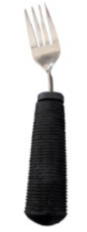
Enabled to assist those with limited or weakened grasping strength, the coated built-up handles help improve grasping ability and holding patterns. These non-slip utensils allow maximum control with minimum effort during mealtimes.
-
Angle cutlery with moldable handle.
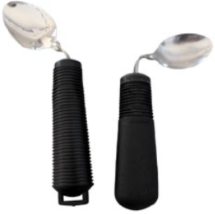
For people with limited movement due to postural and other problems. The molding of the utensil allows the person to adopt the desired angle to facilitate the feeding process of the person.
-
Special cutlery.
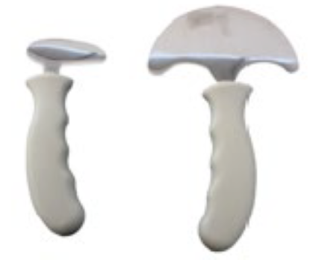
Utensils with different shapes, designed to meet the needs of a specific population: rocking type knife, Nelson type fork or fork-spoon, ect.
-
Cutlery with soft PVC coating.
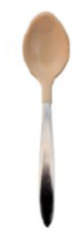
Made of aluminum but coated with food-grade PVC to make them softer, reducing the suffering of teeth for people with involuntary bite.
-
Plastic cutlery
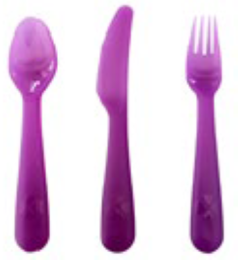
Made of food-grade plastic, they are lighter and softer, thus reducing dental suffering in the event of bite alterations. They are light tools, can have different designs and are economically accessible.
-
Cutlery with handle and strap.
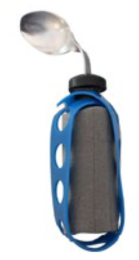
The handle has an easily adjustable strap made of cloth, plastic or other material to provide a secure grip on the utensil being used.
-
Nose Cut-Out Beaker “Nosey cup”.
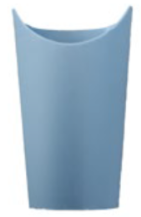
This design, with its generous cut out on one side, enables drinking without tilting the head. Nose Cut Out Cup offers an easier way of drinking for anyone who struggles to tip their head back or extend their neck.
-
Two Handled Mug
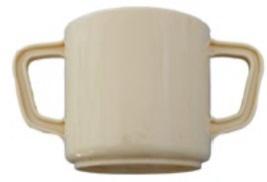
Featuring two handles to be held easily increase security when you're lifting and holding your mug. The Mug also benefits from a wider base for stability and reduces the risk of spillage and prevents tipping. The mug has two handles that can be held easily o assist control. Easier to sit down and helps prevent tipping.
Reduces the risk of spillage when you are drinking from it.
-
Double-handled tumbler with spout.

Similar to the previous tumbler but with a lid to prevent the liquid from spilling completely when tipped over. It has a spout with a hole usually of about 4 mm through which the liquid falls.
-
Transparent cup with nozzle lid or without lid.
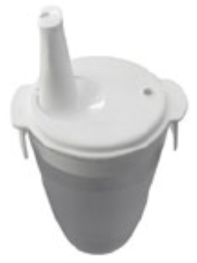
Transparent plastic cup for food use to which a lid can be fitted, which may or may not have an anti-spill system when tipped over.
-
Medela cup.

Small capacity graduated cup made of transparent plastic, with a cutout on the outside. Used for the administration of liquids to infants and babies.
Plates
-
Plates made from durable polycarbonate plastic.
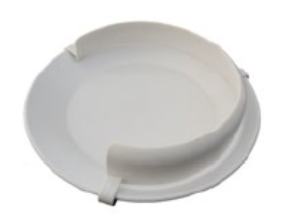
Made of food-grade plastic to be light, manageability and impact resistance. A plate rim could be attached to the side of the plate to prevent food from spilling and allows the user to pick up food against the rim with one hand.
-
Manoy sloped plate.

Made from plastic, with a high back and low front, this sloped plate lets food slide towards the front, making it much easier to see and scoop up.
-
Partitioned Plate.
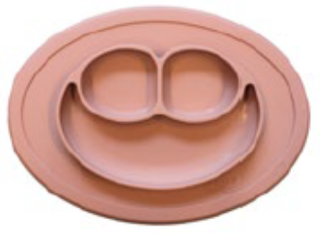
Made of plastic. It has features sections so that meals can be divided up. The shape of each section allows for easy scooping and makes food easier to eat.
Non-slip mat
Non-slip mats are placed under plates, cups,
cutting boards, etc. to prevent these items from slipping. Non-slip
mats are a very simple piece of equipment that can be adapted and
used in a variety of ways.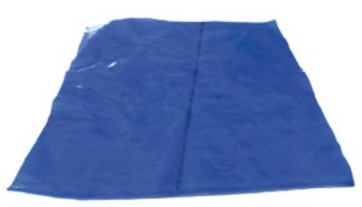
(Images source: CADIS Huesca)
There are hundreds of technical aids available on the market to facilitate any of the processes performed during feeding. Those described above are those commonly used in associations or other entities that serve people with disabilities and / or dependence.