Unit 4 - Food preparation (e-book)
4.3 Ingredients and thickeners to modify the texture of food
Changes in food textures and viscosity (thickness) of liquids can be achieved by reducing particle size and/or using different ingredients known as thickeners.
Thickeners used in diets for dysphagia can be obtained from different sources.
Hydrocolloids
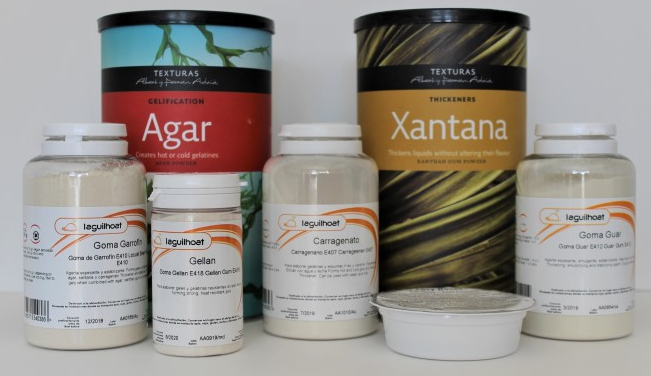
The name comes from “Hydro” which means water and “colloids” that means glue.
Hydrocolloids are used in the diets of people with dysphagia because they have characteristics that allow them to easily modify the texture, increasing the viscosity, fluidity, water retention, firmness and softness of foods and beverages. For example: gum arabic, guar gum, konjac glucomannan, agar, carrageenan.
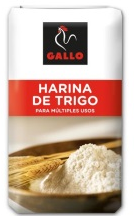
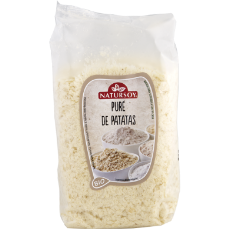
Figure 5. Starch-based thickeners (Source: CADIS Huesca)

 Starch-based
thickeners
Starch-based
thickeners
Starches are obtained from tubers and cereals and have the ability to thicken foods. They are cheap and readily available, but have some disadvantages. They must be used in large quantities, which affect the flavor (starchy taste), color and nutritional value of the food.
Figure 6. Thickeners agents
Commercial thickeners
Commercial thickeners may contain starch or starch derivatives, gum hydrocolloids or combinations of different type of hydrocolloids.
It is useful to follow the manufacturer's instructions, but it should be noted that their behavior is different in each food/drink. Different types of hydrocolloids and concentrations will result in different textures and viscosities.

Figure 7. Commercialized modified starches jars (Source: CADIS Huesca)
Proteins
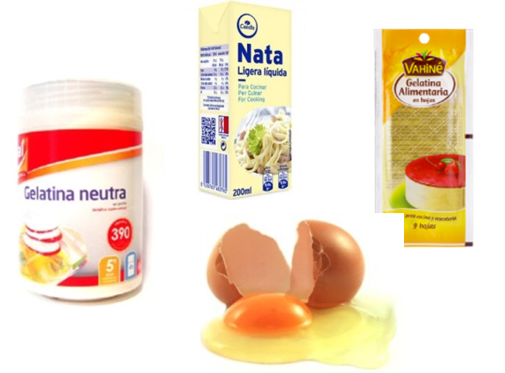
Some proteins from animal origin are gelling properties (ability to increase their thickness).
 Proteins
with this gelling capacity can be found in bones, skins and tendons
of animals (gelatin), skins of fish (gelatin), milk (caseinates and
whey proteins), eggs (egg white proteins) and chitin shells of
Crustaceans (chitosan).
Proteins
with this gelling capacity can be found in bones, skins and tendons
of animals (gelatin), skins of fish (gelatin), milk (caseinates and
whey proteins), eggs (egg white proteins) and chitin shells of
Crustaceans (chitosan).
Egg proteins (white egg proteins) are used due to their gelling and emulsifying properties. They modify the nutritional value, taste, color and texture of the products.
Figure 8. Proteins food with gelling properties
(Source:
CADIS Huesca and Canva Pro)
Practical exercises to apply the theory.
In this exercise we will become aware of the importance and characteristics of different thickeners.
Materials: Cooked green beans, cooked potato, wheat flour, hard-boiled egg.
Exercise: We will prepare four crushed products using a blender:
- Green beans.
- Green beans and potato.
- Green beans and a spoonful of wheat flour.
- Green beans and hard-boiled egg.
Try the different preparations separately and answer the following
questions:
Is the texture the same or different between them? Which one do you like and dislike the most?
Do you notice different flavors between the elaborations? Reflect on each of them.
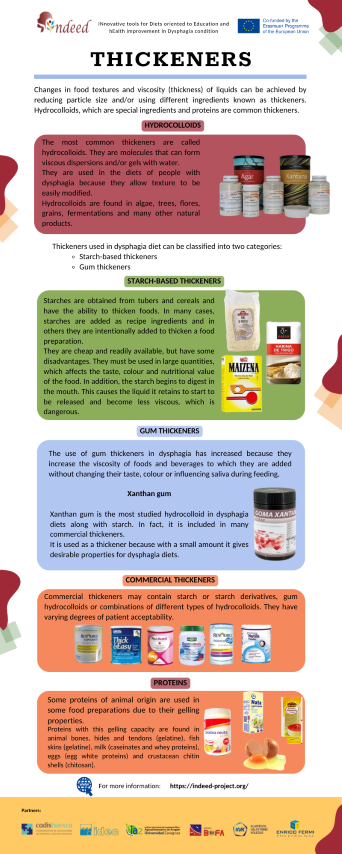
Figure 9. Infographic about thickeners (Source: designed by
Canva Pro)
Infographics available for download on the training platform (https://indeed-project.org/