Unit 4 - Food preparation (e-book)
| Site: | IDEC TrainingCentre elearning |
| Course: | MODULE 2: CAREGIVERS, FAMILIES AND PEOPLE WITH DYSPHAGIA |
| Book: | Unit 4 - Food preparation (e-book) |
| Printed by: | Guest user |
| Date: | Monday, 28 September 2026, 12:12 AM |
Description
Table of contents
- 4.1 General characteristics of the texture modified diets
- 4.2. Classifications and levels of standardization texture modified food
- 4.3 Ingredients and thickeners to modify the texture of food
- 4.4 Modification of the viscosity of liquids
- 4.5 Modification of the texture of solid foods
- 4.6 Techniques and equipment
- 4.7 Hygiene and food safety in dysphagia
- 4.8 Preparation of texture modified recipes
- 4.9 Texture adapted recipes
- Resources
4.1 General characteristics of the texture modified diets
The preparation and adaptation of the ingredients and texture of the food consumed daily is essential in the case of people with dysphagia. This process is essential for the improvement of their nutritional and health status.
The extent to which the food and beverages should be adapted depends on the grade of difficulty of dysphagia, as well as the ability for mastication and oral processing.
The diet recommended by SLT is the safest to eat based on the current swallowing ability and should be followed at all times.
4.1.1 Dangerous textures of food
There are some types of food that can pose a particular risk to people with swallowing difficulties if not processed correctly. There are also other foods that are particularly difficult to modify in texture and should therefore be avoided.
- Mixed consistency foods
- Food that contains husks
- Foods with a fibrous or ‘stringy’ texture
- Fruit or vegetables with thick skins, seeds or pips
- Crunchy and crumbly items
- Hard foods
- Bread
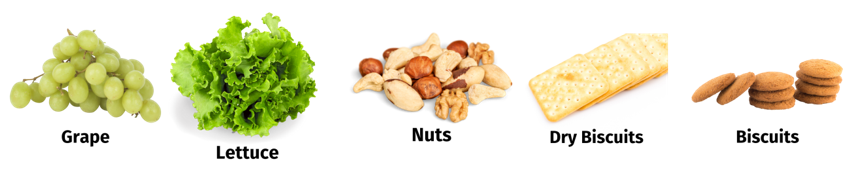
Figure 1. Food that can pose a particular risk to those with swallowing difficulties (Source: designed by Canva Pro).
4.1.2 Texture modified food
Texture modification is done to improve the quality and safety of foods for people with dysphagia. The term texture-modified foods (TMF) refers to foods with a texture that is softer, softer or smaller in size than it would normally be. It is obtained by physical or chemical modification to reduce the risk of choking.
The level of food texture adaptation depends on the severity of dysphagia.
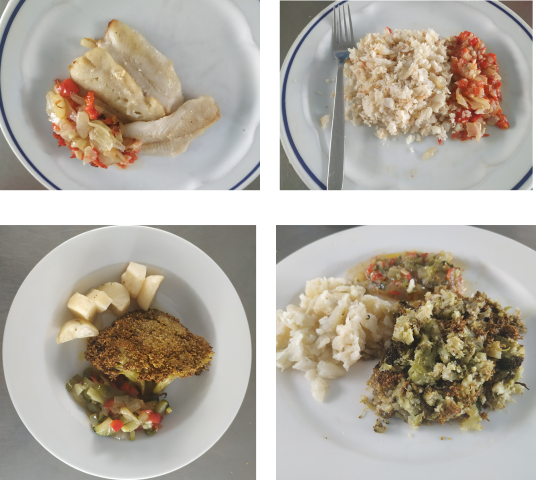
Figure 2. Modified Textured (Source: obtained from ASPACE Huesca)
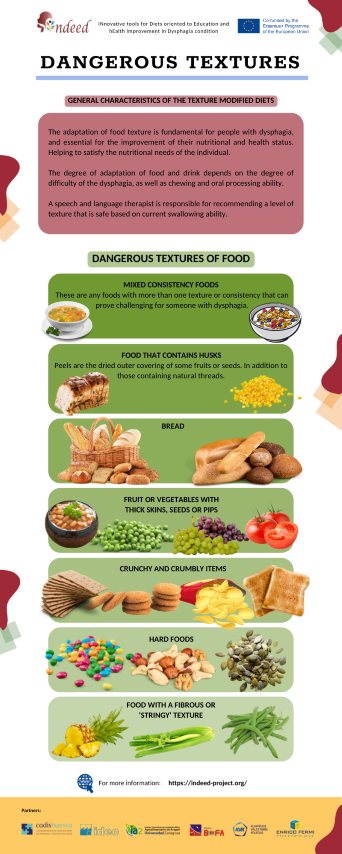
Figure 3. Infographic
about dangerous textures in dysphagia (Source: designed by Canva
Pro)
Infographics available for download on the training platform (https://indeed-project.org/)
4.2. Classifications and levels of standardization texture modified food
Modification of food texture and liquid thickness, without compromising the nutrient supply to ensure good health, is essential in the treatment of dysphagia.
The International Dysphagia Diet Standardization Initiative (IDDSI) Framework
The IDDSI framework consists of a continuum of 8 levels (0 - 7), where drinks are measured from Levels 0 – 4, while foods are measured from Levels 3 – 7. The IDDSI Framework provides a common terminology to describe food textures and drink thickness.
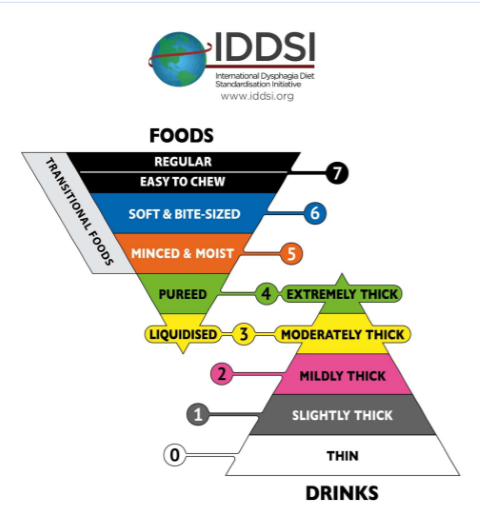
Figure 4. IDDSI classification of Foods and Drinks in 8 levels (https://iddsi.org/framework/)
Level 0: Thin
-
Flows like water
Level 1: Slightly Thick
-
Thicker than water
-
Requires a little more effort to drink than thin liquids
Level 2: Mildly Thick
-
Flows off a spoon
Level 3: Liquidiz ed/ Moderately Thick
-
Cannot be piped
-
Cannot be eaten with a fork because it drips slowly
Level 4: Pureed/ Extremely Thick
-
Cannot be drunk from a cup because it does not flow easily
-
Does not require chewing
-
Falls off spoon in a single spoonful
Level 5: Minced and Moist
-
Can be eaten with a fork or spoon
-
Can be scooped and shaped
-
Adult, equal to or less than 4mm width and no longer than 15mm in length
Go video: IDDSI Food Level Testing (Level 5 Minced and Moist)
(Source: Dorset HealthCare University NHS Foundation Trust, 2020)
Level 6: Soft and Bite-Sized
-
Can be eaten with a fork, spoon or chopsticks
-
Can be mashed/broken down with pressure from fork, spoon or chopsticks
-
Paediatric, 8mm pieces (no larger than)
-
Adults, 15 mm = 1.5 cm pieces (no larger than)
Go
video: IDDSI Food Level Testing (Level 6 Soft and Bite-sized)
(Source: Dorset HealthCare University NHS Foundation Trust, 2020)
Level 7: Easy to chew or Regular : Normal
Go
video: IDDSI Food Level Testing (Level 7 Easy to Chew)
(Source: Dorset HealthCare University NHS Foundation Trust, 2020)
4.3 Ingredients and thickeners to modify the texture of food
Changes in food textures and viscosity (thickness) of liquids can be achieved by reducing particle size and/or using different ingredients known as thickeners.
Thickeners used in diets for dysphagia can be obtained from different sources.
Hydrocolloids
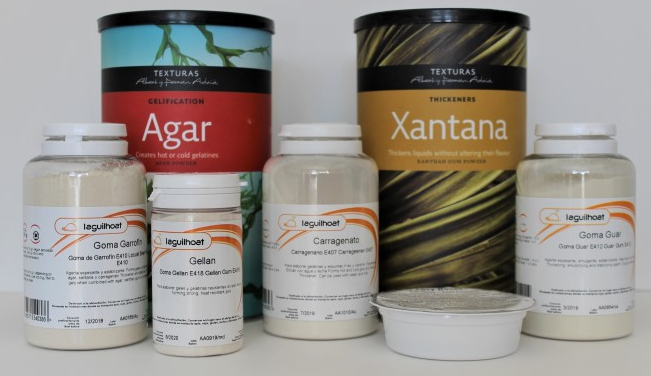
The name comes from “Hydro” which means water and “colloids” that means glue.
Hydrocolloids are used in the diets of people with dysphagia because they have characteristics that allow them to easily modify the texture, increasing the viscosity, fluidity, water retention, firmness and softness of foods and beverages. For example: gum arabic, guar gum, konjac glucomannan, agar, carrageenan.
Figure 5. Starch-based thickeners (Source: CADIS Huesca)
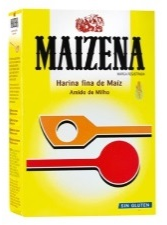
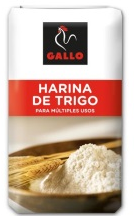
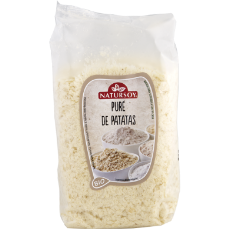 Starch-based
thickeners
Starch-based
thickeners
Starches are obtained from tubers and cereals and have the ability to thicken foods. They are cheap and readily available, but have some disadvantages. They must be used in large quantities, which affect the flavor (starchy taste), color and nutritional value of the food.
Figure 6. Thickeners agents
Commercial thickeners
Commercial thickeners may contain starch or starch derivatives, gum hydrocolloids or combinations of different type of hydrocolloids.
It is useful to follow the manufacturer's instructions, but it should be noted that their behavior is different in each food/drink. Different types of hydrocolloids and concentrations will result in different textures and viscosities.

Figure 7. Commercialized modified starches jars (Source: CADIS Huesca)
Proteins
Some proteins from animal origin are gelling properties (ability to increase their thickness).
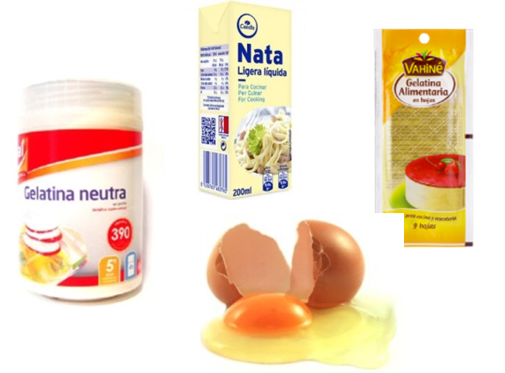 Proteins
with this gelling capacity can be found in bones, skins and tendons
of animals (gelatin), skins of fish (gelatin), milk (caseinates and
whey proteins), eggs (egg white proteins) and chitin shells of
Crustaceans (chitosan).
Proteins
with this gelling capacity can be found in bones, skins and tendons
of animals (gelatin), skins of fish (gelatin), milk (caseinates and
whey proteins), eggs (egg white proteins) and chitin shells of
Crustaceans (chitosan).
Egg proteins (white egg proteins) are used due to their gelling and emulsifying properties. They modify the nutritional value, taste, color and texture of the products.
Figure 8. Proteins food with gelling properties
(Source:
CADIS Huesca and Canva Pro)
Practical exercises to apply the theory.
In this exercise we will become aware of the importance and characteristics of different thickeners.
Materials: Cooked green beans, cooked potato, wheat flour, hard-boiled egg.
Exercise: We will prepare four crushed products using a blender:
- Green beans.
- Green beans and potato.
- Green beans and a spoonful of wheat flour.
- Green beans and hard-boiled egg.
Try the different preparations separately and answer the following
questions:
Is the texture the same or different between them? Which one do you like and dislike the most?
Do you notice different flavors between the elaborations? Reflect on each of them.
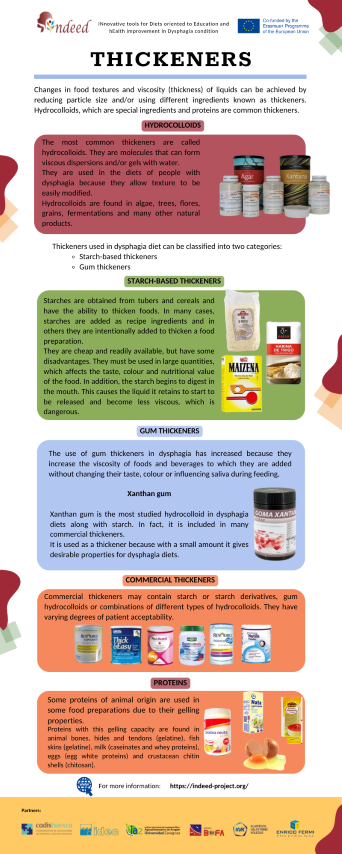
Figure 9. Infographic about thickeners (Source: designed by
Canva Pro)
Infographics available for download on the training platform (https://indeed-project.org/
4.4 Modification of the viscosity of liquids
4.4.1 To learn how to thicken liquids
Thin liquids are those that move very fast in the mouth such as:
-
Water
-
Milk
-
Fruit juice
-
Soft drinks
-
Tea
-
Coffee

Figure 10. Liquids with different viscosities (Source: designed by Canva Pro)
This makes them more complicated to handle in the mouth and, therefore, they are often associated with choking episodes in dysphagia giving more health problems for people with dysphagia. In these cases, it is necessary to use thickening agents to aid safe consumption.
4.4.2 What can you use to thicken liquids?
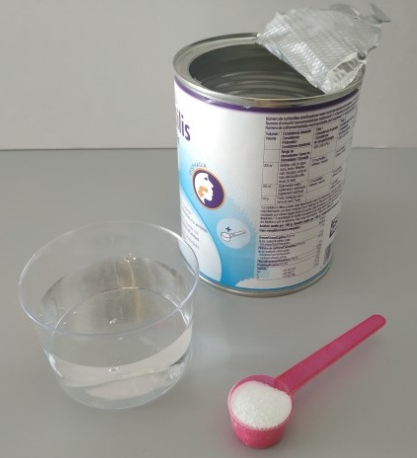 Modified corn starch,
xanthan gum, guar gum and Tara gum (alone or combined) are common
thickeners to increase the viscosity of the fluids.
Modified corn starch,
xanthan gum, guar gum and Tara gum (alone or combined) are common
thickeners to increase the viscosity of the fluids.
Figure 11. Commercial food thickeners (Source: CADIS Huesca)
How to thicken liquids
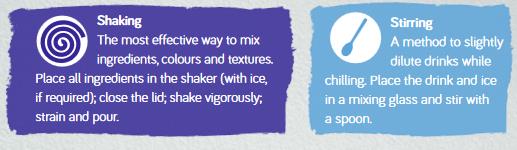
Figures 12. Tips to prepare thickened beverages. (Source: Nutricia)
I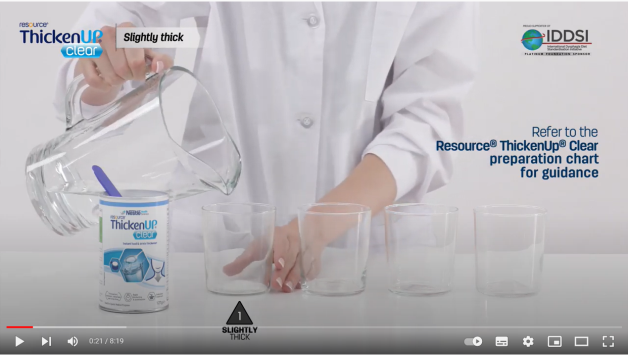 t
is useful to follow the manufacturer's instructions for the
commercial thickener used. However, it should be noted that the final
thickness and characteristics are different depending on the beverage
used.
t
is useful to follow the manufacturer's instructions for the
commercial thickener used. However, it should be noted that the final
thickness and characteristics are different depending on the beverage
used.
(Nestlé Health Science UK,
2020)
Some tips for preparing thickened beverages:
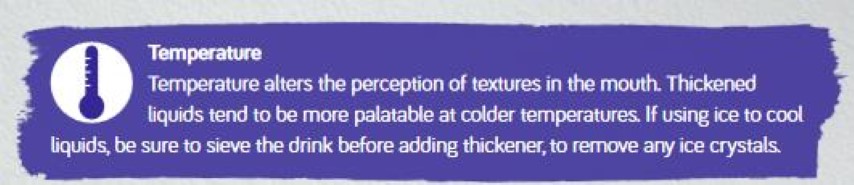

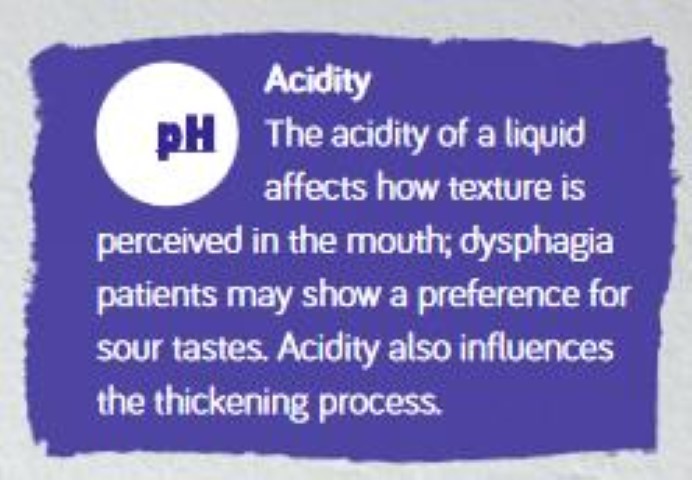
Figures 13, 14, and 15. Tips to prepare thickened beverages (Source: Nutricia)
Testing Methods for use with the IDDSI Framework
Drinks and other liquids
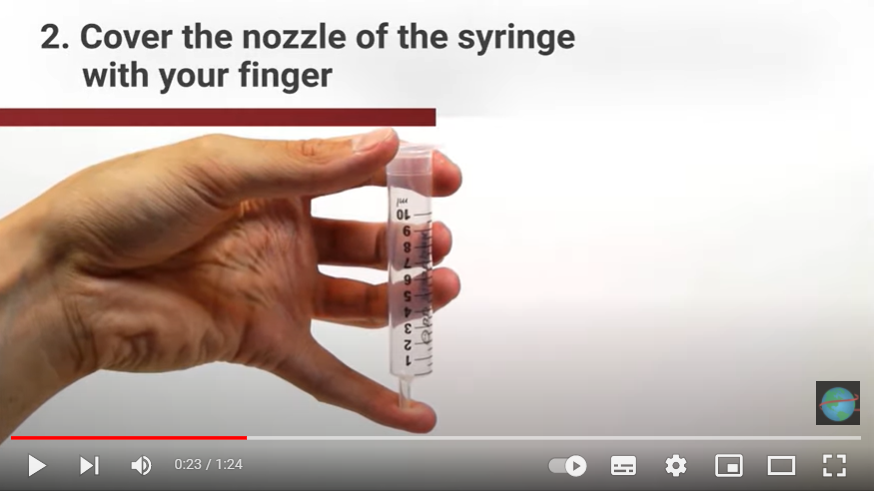
(Source: IDDSI, 2020)
4.5 Modification of the texture of solid foods
Introduction to texture modification of solid foods
The degree of modification of the textural characteristics of solid foods will depend on the characteristics and specific requirement of each person. They will be established by a speech therapist.
To assure optimal nutrition and safety when adapting solid foods, two approaches can be done:
-
Reduction of the portion size but with increased caloric and nutrient density. Applying specific techniques and equipment for food preparation (cutting, chopping, mincing, mixing with liquids, pureeing, ….).
-
Modification of the consistency or texture through the reduction of the particle size and pureeing and/ or with the use of specific thickeners. Mixing the food with different thickening agents (starches, gums, flour, proteins….) and flavouring agents.
Testing methods for identifying levels in the IDDSI framework
Fork Drip Test
Go video: IDDSI Flow Test and Fork Drip Test - IDDSI Level 3
(Source: IDDSI, 2020)
Spoon Tilt Test
Go video: Video IDDSI Spoon Tilt Test. Level 4 Extremely Thick
(Source: IDDSI, 2020)
Fork Pressure Test and Spoon Pressure Test
Go video:
Video IDDSI IDDSI Fork Pressure, Fork Drip, Spoon Tilt, Chopstick, and Finger
Tests - Level 5 Minced & Moist
(Source: IDDSI, 2020)
Chopstick test and Finger test
Go video: IDDSI Fork Pressure, Chopstick, and Finger Tests - IDDSI Level 6 Soft & Bite Sized
(Source: IDDSI, 2020)
4.6 Techniques and equipment
4.6.1 Cooking techniques
Boiling. It consists of placing food in a pot of very hot (boiling) water and holding it for a period of time until it is fully cooked.
Stewing. It is a form of boiling, but the difference is that the liquid does not need to boil during cooking, so it needs a cooking time of even hours.
B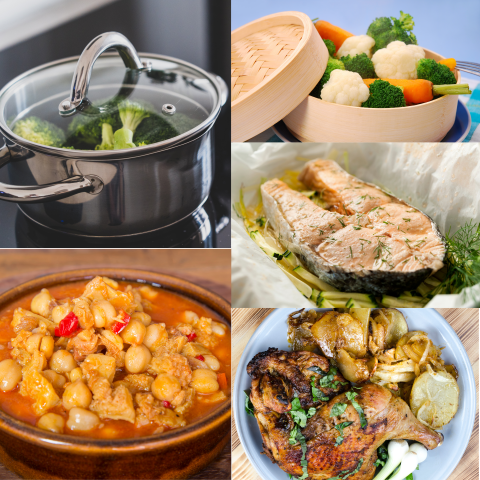 raising.
It shares the same type of cooking in liquid as the stewing but
before the stew the ingredients are fried a little with oil.
raising.
It shares the same type of cooking in liquid as the stewing but
before the stew the ingredients are fried a little with oil.
Roasting. Roasting or baking. It consists of introducing food into an oven and cooking it at high temperatures with dry heat.
Steaming. One of the best culinary techniques you can learn is the art of steaming. It preserves flavor and nutrients.
Gelation. Cooking procedure where a food or liquid is converted into a gel by adding an ingredient with this capacity, some of these ingredients are gelatin, agar agar, xanthan gum or others.
Figure 16. Cooking techniques (Source: designed by Canva Pro)
4.6.2 Equipment
The elaboration of texture-adapted foods can be done at home with basic tools.
Pots, pressure cookers, steam cookers and frying pans
Microwaves and ovens
The refrigerator and the freezer
Cutlery
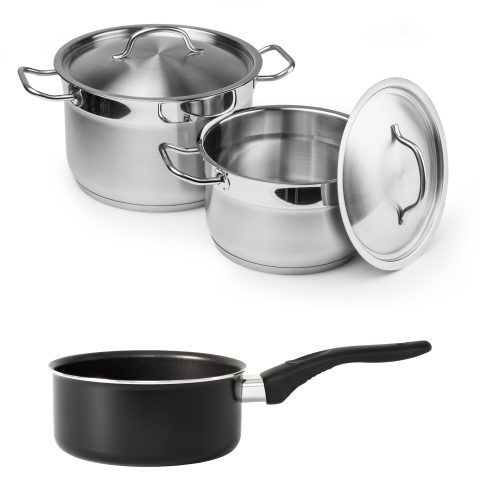
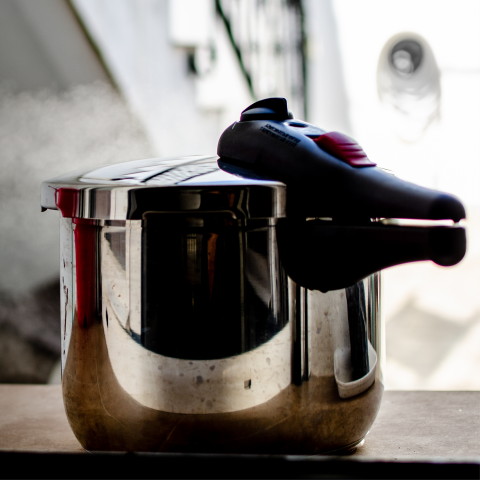
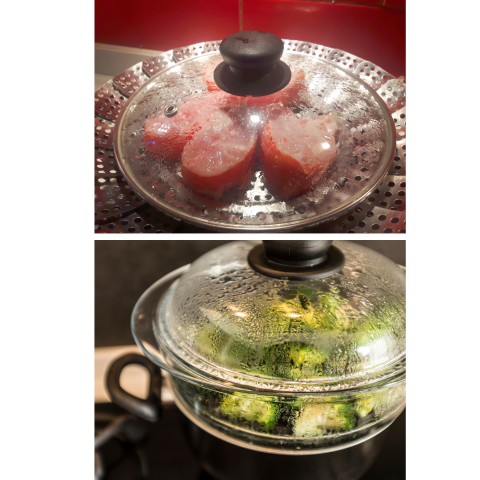
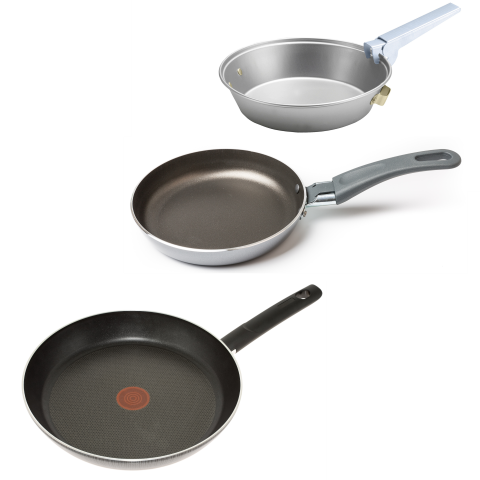
Figures 17 to 20. Pot, Pressure cooker, Steam cooker and Frying pans (Source: designed by Canva Pro)

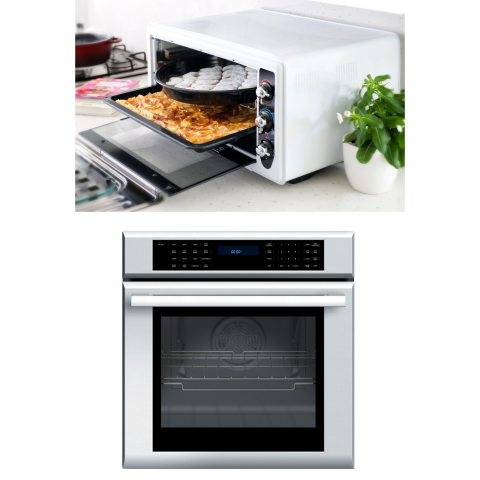


Figures 21 to 24. Microwave, oven, Refrigerator and Cutlery (Source: designed by Canva Pro)
To adapt the texture.
Blender, food processor and Thermomix.They are the most economical, have an adequate capacity to grind a few portions of food and are simple to use.

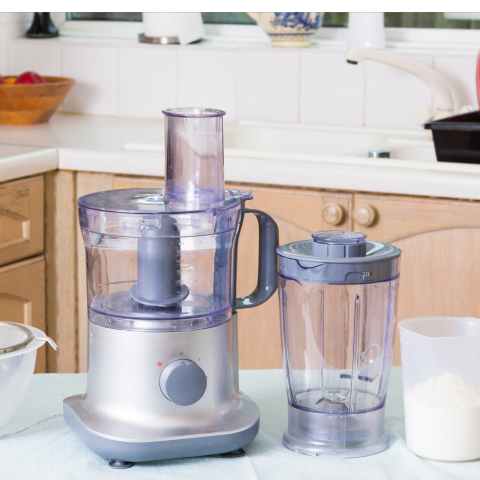
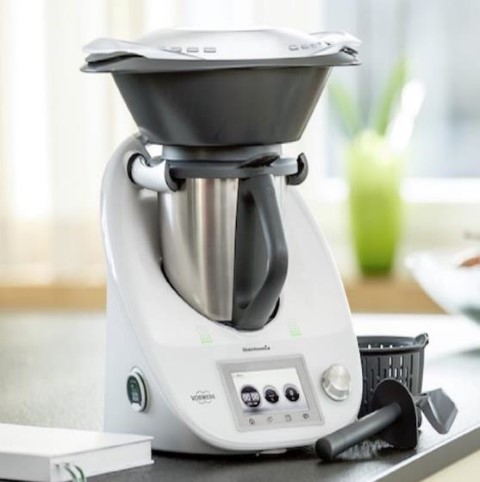
Figures 25 to 27. Arm blender, Food processor and Thermomix (Source: designed by Canva Pro)
Cooking tools, moulds and other accessories: piping bag, stainless steel piping nozzles, measuring spoons, moulds, Sieve, scoop, squeeze Bottle, scale and other culinary utensils
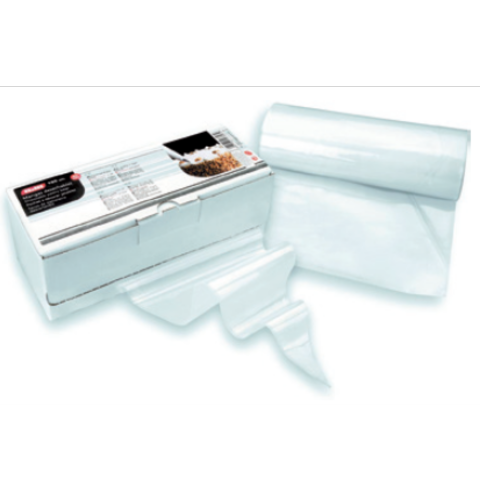
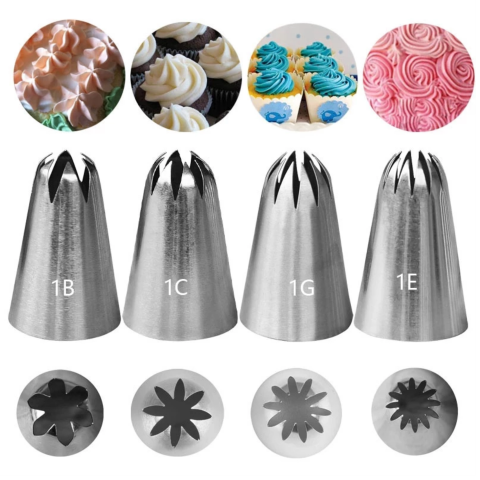
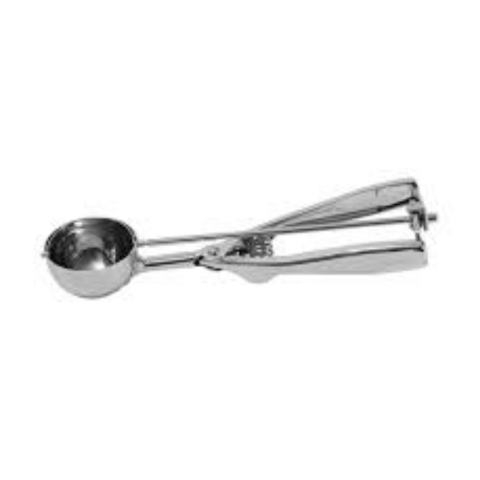
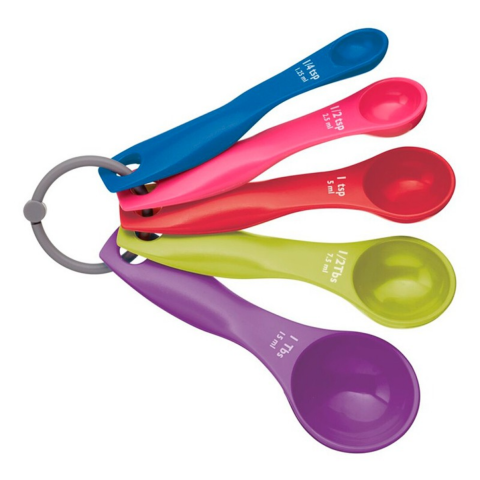
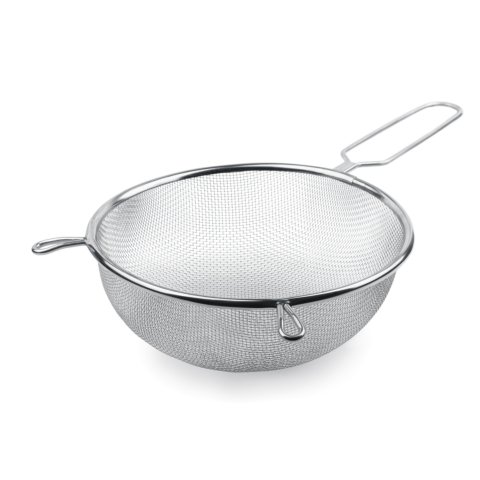

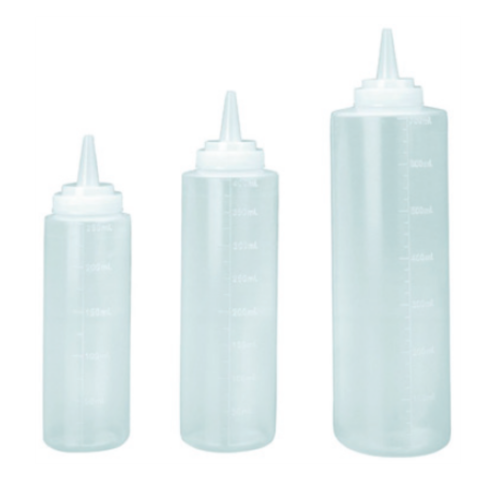
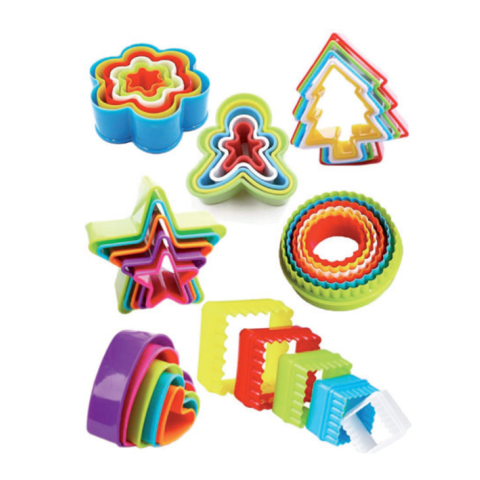
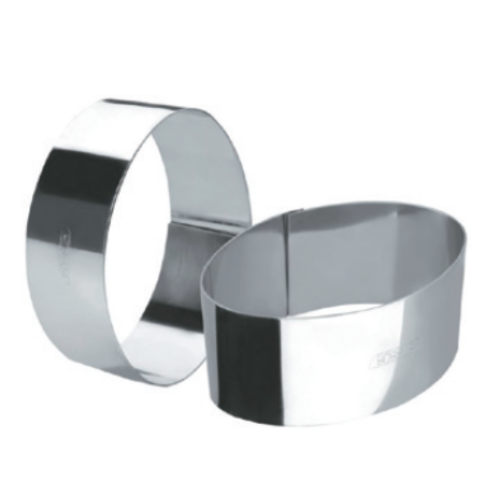
Figures 28 to 36. Piping bag, stainless steel piping nozzles, scoop, measuring spoons, Sieve, scale, squeeze Bottle and moulds (Source: designed by Canva Pro)
4.7 Hygiene and food safety in dysphagia
4.7.1 Importance of hygienic preparation of food
Hygienic preparation and serving of food is especially important for those people suffering from dysphagia. Unsafe food affects particularly infants, young children, elderly and the sick.
All actions applied to food preparation must take special care to avoid foodborne illnesses caused by biological, chemical or physical hazards.
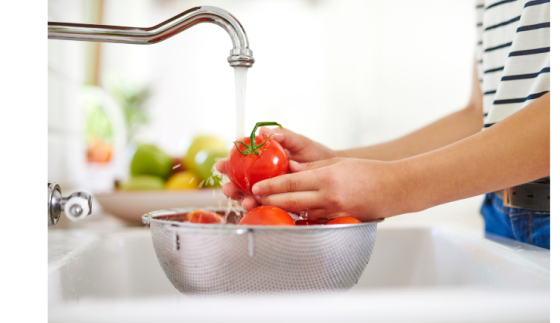
Figures 37. Hygienic preparation of food (Source: obtained from Canva Pro)
4.7.2 Food Health hazards (Types of contamination)
A food hazard is agent in a food with the potential to cause adverse health effects. There are 3 types of hazards in food: biological, chemical or physical.
Biological hazards
Microorganisms such as bacteria and viruses are the most common type of food contamination and the agents involved in outbreaks of food-borne illness.

Chemical
hazards
There are chemical contaminants that appear naturally in food and some others added during the processing. Chemical contamination can lead to acute poisoning or long-term diseases, such as cancer.
Figure
38. Chemical
hazards (Source: obtained from Canva Pro)
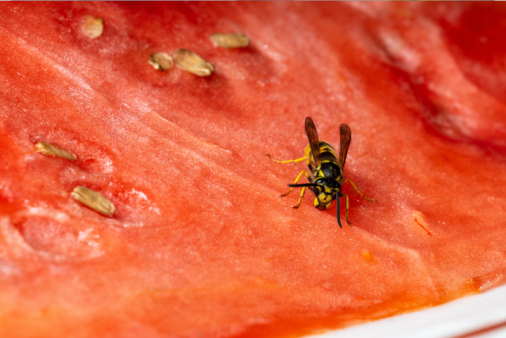
Physical hazards
Physical contamination occurs when objects such as stones, bones, wood, plastic, needles, human or animal hair, dirt, metal, glass, jewelry, fingernails are found in food. Finding this objects may cause illness or injury to the person.
Figure
39. Physical
hazards (Source: obtained from
Canva Pro)
4.7.3 Correct food hygiene
Personal hygiene
A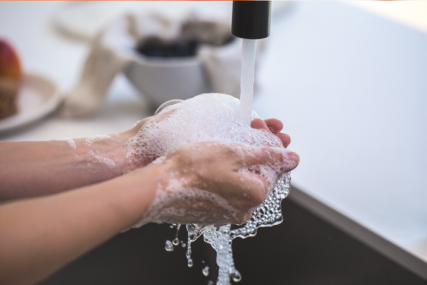 ll
food handlers must be aware that high standards of personal hygiene
are important.
ll
food handlers must be aware that high standards of personal hygiene
are important.
-
Wear clean outer clothing and hair and beard restraints
-
keep their fingernails short and not wear any jewellery
-
Food handlers should use gloves of food handling utensils or papers to handle ready-to eat-food.
Figure 40. Wash hands (Source: obtained from Canva Pro)
Safe food handling
(Source: Ministerio de sanidad, 2012)
These are “Five keys to safer food”, which were developed by WHO to educate safe food handling behaviors to all consumers and food handlers.
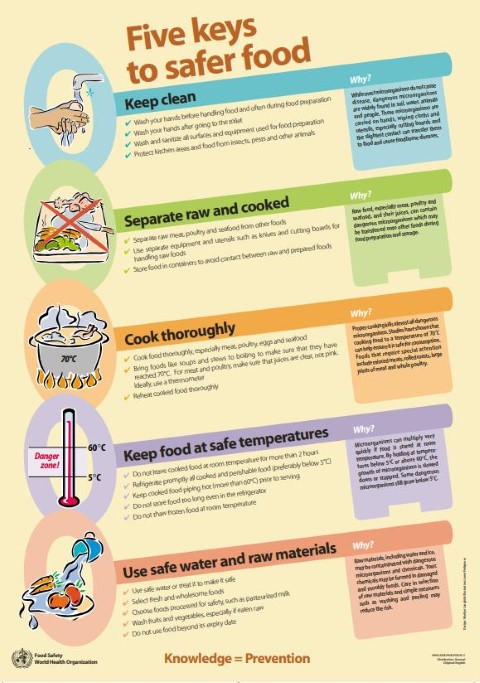
Figure 41. Keys to safer food (Source: Food Safety - World Health Organization (WHO))
Storing food
Food storage should be aimed to keeping nutritional, sensory and hygienic quality.
A use-by date on food is about safety. This is the most important date to remember. After the use-by date, don't eat, cook or freeze your food.
The best before date, sometimes shown as BBE (best before end), is about quality and not safety. The food will be safe to eat after this date but may not be at its best.

Go video: Correct storage of food (Source: Ministerio de sanidad, 2012)
Go
video: Correct storage of food
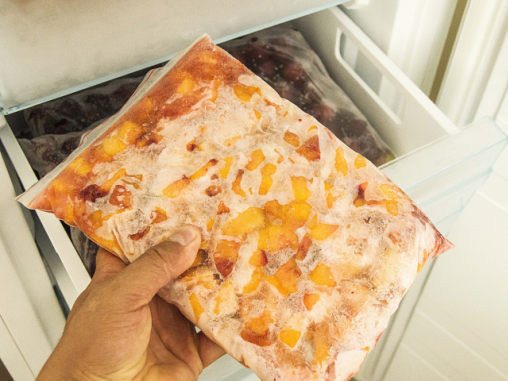
Chilling food
Chilling food properly helps stop harmful bacteria from growing.
Figure 42. Chilling food (Source: obtained from Canva Pro)
Freezing food
A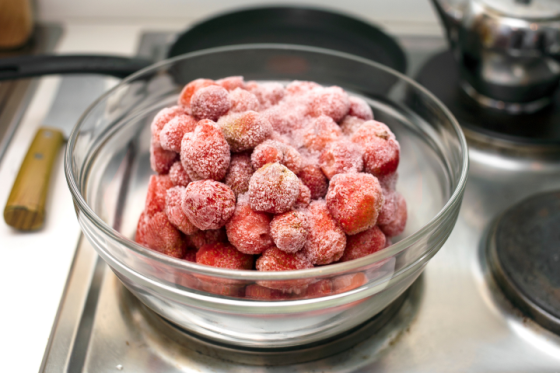 freezer acts as a pause button - food in a freezer won't deteriorate
and most bacteria cannot grow in it.
freezer acts as a pause button - food in a freezer won't deteriorate
and most bacteria cannot grow in it.
Defrosting your food
When you take your food out of the freezer, it's important to defrost it safely before cooking or eating it. Don't defrost food at room temperature.
Figure 43. Defrosting your food (Source: obtained from Canva Pro)
A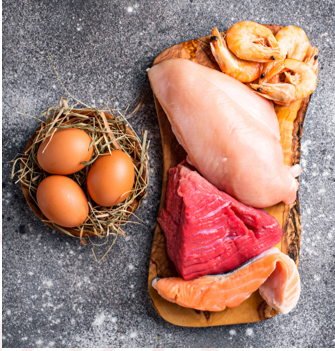 void
cross-contamination
void
cross-contamination
Cross-contamination is the transfer of harmful bacteria to food from other foods, cutting boards, and utensils if they are not handled properly.
Figure 44. Avoid cross-contamination (Source: obtained from Canva Pro)
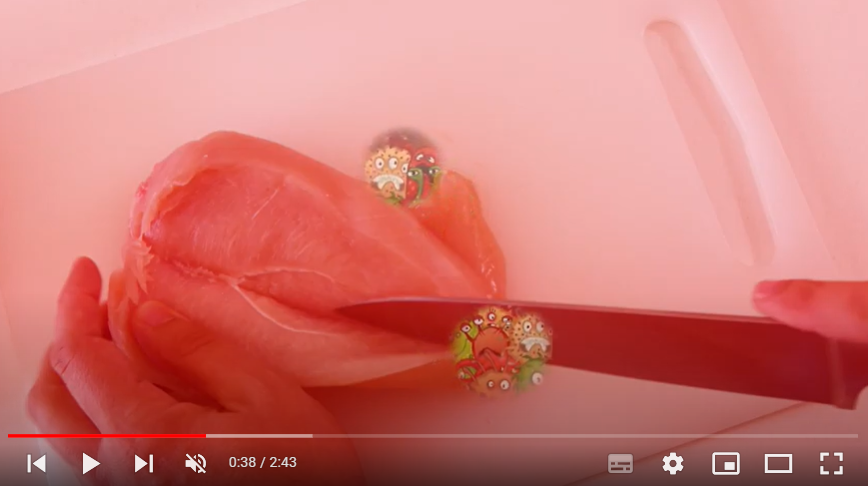
Go video: avoid cross-contamination
(Source: Ministerio de sanidad, 2018)
4.8 Preparation of texture modified recipes
The procedure for the preparation of texture-adapted foods is, in most cases, the same as for non-adapted foods. The main differences in this procedure usually occur once cooked and before serving. It is at this moment, when most of the elaborations must undergo a texture modification process using some type of food processor.
Steps to develop texture adapted recipes:
-
To know the characteristics of the food
-
Cook the food with the usual procedure of the recipe
-
Separation of the parts of the preparation for its adaptation in texture and subsequent plating.
-
Texture modification. Use of robots or knives/scissors to modify food texture.
-
Validation of the particle size and characteristics of the dish.
-
Plating process.
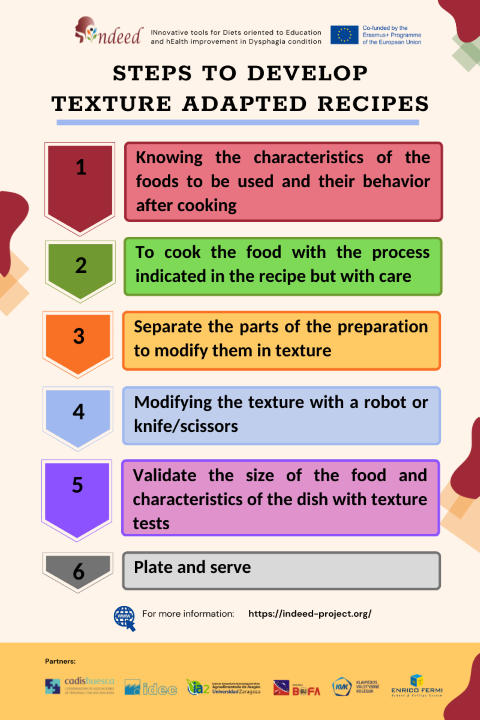
Figure
45. Infographic
about Steps to develop texture adapted recipes (Source: designed by Canva Pro)
4.9 Texture adapted recipes
Muhlama

2-4 People
Ingredients
2 spoonful butter
2 tablespoons of cornmeal
One finger missing from 1 glass of hot water
2 pieces of string cheese (Cecil cheese or cheddar cheese)
Figure 46. Muhlama. Web nefis
How
to prepare.
-
Start by heating a frying pan and melting the butter.
-
Add the corn flour and fry it for 2-3 minutes over high heat.
-
Add the boiling hot water and stir until it comes back to a boil and the mixture has a pudding texture.
-
Add the cheese cut in small pieces and mix until melted.
-
Keep on low heat until the butter rises to the surface and then remove from heat.
How to adapt it in texture
As it is a semi-fluid texture, it could be consumed at all levels of texture-adapted diets.
But in the mash type (level 4 of the IDDSI) it should be prevented from sticking in the mouth. To do so, we would add more water than indicated in the recipe.
Avocado Toast

2-4 People
Ingredients
2 avocados
3 tablespoons olive oil
1/2 tablespoon salt
4 slices of whole wheat bread
Image 47. Avocado Toast. Cookie and kate Web
How
to prepare.
-
Toasting the bread slices with the toaster
-
Place the ripe avocado in a bowl, remove the seeds and skin, add the olive oil and salt and mash with a blender.
-
Spread the mixture on the toast
How
to adapt it in texture
This recipe can be consumed by IDDSI levels 6 and 7.
To adapt it in texture to levels 4 and 5, the avocado smoothie could be used but the bread would have to be adapted.
For level 5 it would be necessary to chop the bread into small and homogeneous pieces with the help of scissors or a food processor.
To adapt it to level 4 it is necessary to introduce it in a robot and to grind it adding water until obtaining a homogeneous and thick texture like that of a pudding. It is important that it is not too thick so that it does not stick in the mouth and not too liquid so that it is difficult to handle in the mouth.
Note: usually bread is difficult to adapt in texture because it sticks or loses its flavor. If it is not essential for the recipe it is preferable to remove it or replace it with another food.
Important
note: if you want to prepare another type of healthy
toast, follow the same steps:
1º grind completely until you obtain a homogeneous and spreadable texture of the ingredients that will be used in the toast.
2º Grind the bread on the other side. It is important to obtain the right levels
Purus varškės apkepas/ Silk curd cake

Image 48. Silk curd cake. La Maistas Web
2-4 People
Ingredients
500 grams of curd
4 eggs
80 milliliters Milk
30 grams butter
4 tablespoons semolina (or rice flakes or oat flakes)
2 tablespoons sugar (or honey or other favorite sweetener)
Some bread crumbs
How to prepare.
-
Mix the semolina and milk in a bowl and let it hydrate.
-
Mix the butter with the sugar until stiff.
-
Separate the egg whites from the yolks and add the yolks and curd to the butter and sugar mixture beating until smooth.
-
Beat the egg whites so that they become a white foam.
-
Mix all the above ingredients together carefully integrating them.
-
Grease a mold and sprinkle with the bread crumbs and pour the contents.
-
Bake in oven at 220°C until it rises. Then reduce the heat to 200 degrees. It takes about 30 minutes to bake.
How to adapt it in texture
This recipe can be consumed by IDDSI levels 6 and 7.
To adapt it in texture to level 5 it is necessary to mince it with the help of a fork or food processor.
To adapt it to level 4 it is necessary to introduce it in a robot and grind it adding milk until obtaining a homogeneous and thick texture like that of a pudding. It is important that it is not too thick so that it does not stick in the mouth and not too liquid so that it is difficult to handle in the mouth.
Spanakopita
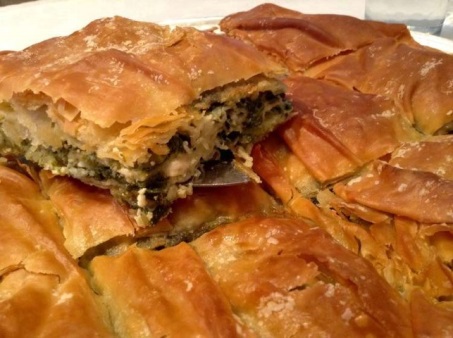
Image 49. Spanakopita. My Greek Dish Web.
4 People
Ingredients
2 Red onions, halved and sliced
1 Spring onion, finely chopped (optional)
2 Cloves of garlic, crushed
5 00g Spinach, washed and roughly chopped (18 ounces)
A pinch of grated nutmeg
200g Feta cheese, crumbled (7 ounces)
2 Eggs, beaten
1–2 tbsps fresh dill, chopped (optional)
Butter
Salt and pepper to taste
Phyllo dough
How to prepare.
-
Heat oven to 200C/fan 180C/gas 6.
-
Clean, remove the dangerous elements and chop the vegetables. In a frying pan add the butter and onion and sauté.
-
When golden brown add the garlic, cook for a couple of minutes and gradually add the spinach.
-
When cooked, cool in a bowl and mix with the nutmeg, feta cheese, eggs, chives and season.
-
In a non-stick mold of about 25 cm. Put the first sheet of filo in the mold and drizzle with olive oil, put the next one on top and do the same process.
-
Insert the spanakopita filling and fold the sheets covering the content.
-
Bake in the preheated oven for about 60 minutes until the filo is crispy and golden brown.
-
Let the spanakopita cool for 10-15 minutes before cutting into pieces.
How to adapt it in texture
This recipe can be consumed by IDDSI levels 6 and 7 if cut into pieces.
For level 5 it would be necessary to chop it into small and homogeneous pieces with the help of scissors or a food processor.
To adapt it to level 4, introduce it in a food processor and grind it by adding water until a homogeneous and thick custard-like texture is obtained. It is important that it is not too thick so that it does not stick in the mouth and not too liquid so that it is difficult to handle in the mouth.
If you want to improve the presentation of these levels, separate and chop separately the dough from the filling and serve them separately.
Cheshmi nigar soup
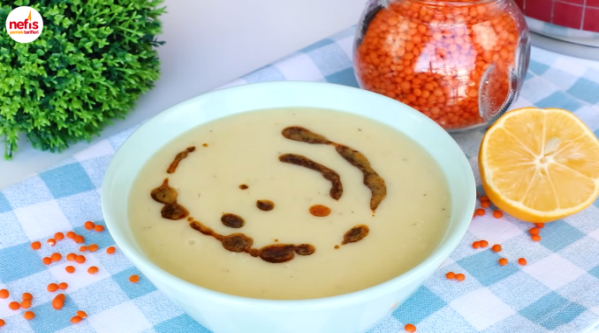
Image 50. Cheshmi nigar soup. Nefis Yemek Tarifleri YouTube
4 People
Ingredients
60ml of olive oil
1 onion
1 tablespoon of flour
1 cup of red lentils
1.5 liters of hot water
1 teaspoon of salt
1 egg yolk
1/2 cup of milk
Juice of half a lemon
For the sauce
1 tablespoon butter
1 teaspoon dried mint
1/2 teaspoon ground red pepper
1 teaspoon red pepper flakes
How
to prepare.
-
In a pot pour the oil and onion. Cook until it begins to brown and, at that moment, add the flour and stir until integrated.
-
Add the lentils and water, stir and bring to boil until cooked.
-
Add the salt and blend everything with a blender until a smooth and homogeneous consistency is obtained.
-
On the other hand, mix the egg yolk with the milk and the lemon. After this, add it to the pot and stir continuously until everything is integrated and let it boil for two minutes.
-
For the sauce, melt the butter in a saucepan and add the mint, bell pepper powder and chili. Stir for a few seconds and set aside.
-
To serve, add the soup first and then a spoonful of the sauce on top.
How to adapt it in texture
This recipe can be consumed by all levels. However, in the case of levels 4, 5 and 6, double the amount of lentils should be added to make the texture less creamy and more fluid custard-like.
Green Beans and Potatoes
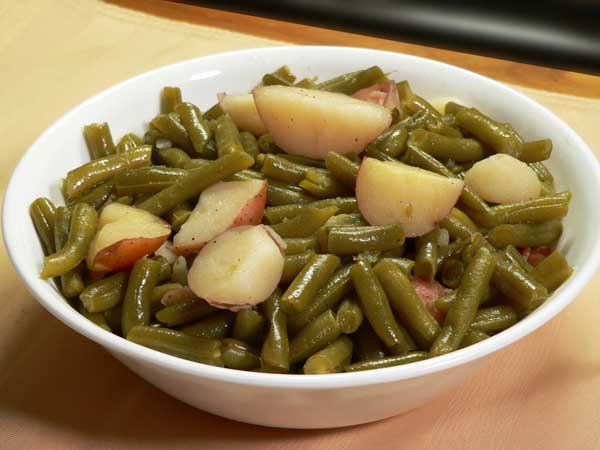
Image 51. Green Beans and Potatoes. Taste of southern Web
2-4 People
Ingredients
500g green beans
200g of potato
50 ml olive oil
3 garlic
Pinch of salt
How
to prepare
-
Wash and remove all the dangerous parts of the beans and potatoes, cut them into pieces.
-
In a pot with water bring salted water to boil and add the beans and potatoes.
-
Cook them until they are tender and drain them with the help of a colander.
-
In a frying pan add the garlic, cleaned and cut into pieces. When they begin to brown add the green beans, stir and serve.
How
to adapt it in texture
This recipe can be consumed by IDDSI levels 6 and 7 if cut into pieces.
For level 5 it would be necessary to chop it into small and homogeneous pieces with the help of scissors or a food processor.
To adapt it to level 4, introduce it in a food processor and grind it by adding water until a homogeneous and thick custard-like texture is obtained. It is important that it is not too thick so that it does not stick in the mouth and not too liquid so that it is difficult to handle in the mouth.
If you want to improve the presentation of these levels, separate and chop separately the green beans from the potatoes and serve them separately.
Tenderloin with pepper sauce
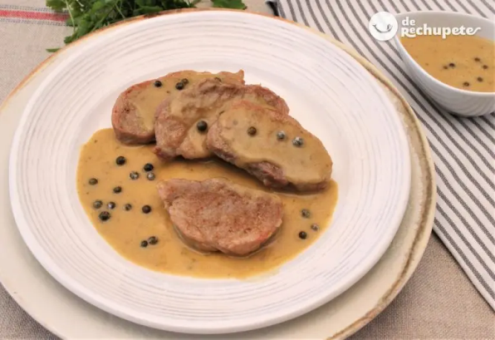
Image 52. Tenderloin with pepper sauce. DeRechupete Web.
2-4 People
Ingredients
500 g pork tenderloin
100 ml meat stock
200 ml of cooking cream
1/2 small onion
50 ml. of brandy or cognac
1 tablespoon green peppercorns
20 g. butter
20 ml. of extra virgin olive oil
Salt and freshly ground black pepper (to taste)
How
to prepare.
-
Wash and cut the loin into pieces.
-
Heat the olive oil in a frying pan and add the tenderloin, cooking it all over. When it begins to brown, remove from the pan, set aside and add salt.
-
In the same frying pan add the butter and the chopped onion, having previously eliminated the dangerous parts.
-
When it begins to brown add the brandy and the meat stock and boil until reduced by half.
-
In another saucepan add the cream together with the pepper and bring to boil, keep a few minutes and set aside.
-
Add the cream to the other pan and pass it through a colander to remove the peppercorns.
-
Blend the contents of the pan with a blender until a sauce texture is obtained.
-
To serve, place the tenderloin on a plate with the sauce.
How to adapt it in texture
This recipe can be consumed by IDDSI levels 6 and 7 if cut into pieces.
For level 5 it would be necessary to chop it into small and homogeneous pieces with the help of scissors or a food processor.
To adapt it to level 4, it should be introduced in a food processor and crushed by adding water until a homogeneous and thick texture similar to that of custard is obtained. It is important that it is not too thick so that it does not stick in the mouth and not too liquid so that it is difficult to handle in the mouth.
Note*: a tablespoon of potato flakes can be added to make the texture of the tenderloin more pleasant.
If you want to improve the presentation of these levels, shred and serve the tenderloin separately from the sauce.
Falafel
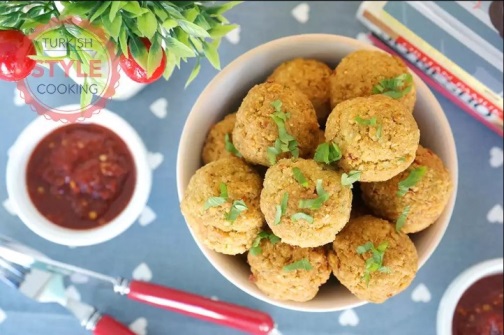
Image 53. Falafel. The Best Turkish Recipes Web.
2-4 People
Ingredients
400 g of chickpeas (half cooked),
1 medium size onion,
4 garlic cloves,
1 handful of chopped parsley,
2 tablespoons of flour,
1/2 teaspoon of baking soda,
1/2 teaspoon of ground cumin,
1/2 teaspoon of crushed red pepper
Salt
Vegetable oil for frying
How
to prepare.
-
Chop chickpeas, onions, garlic and parsley in a food processor until smooth.
-
Add other ingredients and knead well.
-
Form the mixture into small balls, about the size of a ping pong ball.
-
Slightly flatten.
-
Fry until golden brown.
-
It can be served with yogurt sauce or other.
How to adapt it in texture
As it is shredded, this recipe can be consumed by IDDSI levels 5, 6 and 7 without becoming too roasted.
To adapt it in texture to level 4, place it in a food processor and process until a homogeneous, thick pudding-like texture is obtained. Add hot water if necessary.
Note: for levels 4, 5 and 6 if it can be accompanied with a little sauce it will be easier to eat.
Trinta moliūgų sriuba/ Pureed pumpkin soup

Image 54. Pureed pumpkin soup. Be Dietų Youtube
2-4 People
Ingredients
1 kg pumpkin
1 medium onion
400 ml milk
salt
pepper
olive oil
How
to prepare.
-
Halve the onion and pumpkin and remove the seeds.
-
Place on a baking tray lined with baking paper and sprinkle with pepper, salt and add the olive oil on top.
-
Prick the surfaces with a fork for better cooking.
-
Bake for 60-80 minutes in a preheated oven at 180 degrees. Take out when a needle sticks easily because it is cooked.
-
Cut off the hard ends of the pumpkin, keeping the rind soft, and place in an electric mixer with the onion, milk and, if necessary, salt and pepper.
-
Blend everything until you obtain a smooth and uniform pudding-like texture.
How
to adapt it in texture
This recipe can be consumed by all levels. For levels 4 and 5, the texture should be creamy pudding-like.
Duonos, Serbentų ir grietinėlės desertas

Image 55. Duonos. Kumutes virtuve Web.
2-4 People
Ingredients
250g black bread (without additives)
70g butter
1 tablespoon cinnamon
2 tablespoons brown sugar
150-200 g currant puree or currant jam (or cranberries or fresh or frozen cranberries)
6 tablespoons powdered sugar
500 ml whipping cream
How to prepare.
-
Heat a frying pan and melt the butter. Then add the finely chopped bread and the brown sugar and stir for a few minutes until it is melted.
-
Then add cinnamon, mix, cover and let stand.
-
Whip the cream with 3 tablespoons of sugar until it becomes stiff and, on the other hand, mash the berries with 3 tablespoons of powdered sugar.
-
To serve, use glass jars and in layers start by putting a base of the bread mixture, then the cream and finally the berries. Repeat the layers as many times as possible or desired.
-
Refrigerate for a few hours before eating.
How to adapt it in texture
Because it is shredded, this recipe can be consumed by IDDSI levels 6 and 7 without over roasting.
As it has different textures care should be taken for level 5 and it may be necessary to adapt it in texture by shredding all the parts together or the bread on one side and the berries and cream together on the other. In this way it can be safely consumed by levels 4 and 5.
To adapt it in texture to level 4, place it in a food processor and process to a homogeneous, thick pudding-like texture. Add hot water if necessary.
Note: for levels 4, 5 and 6 if it can be accompanied with a little sauce it will be easier to eat.
Muhallebi
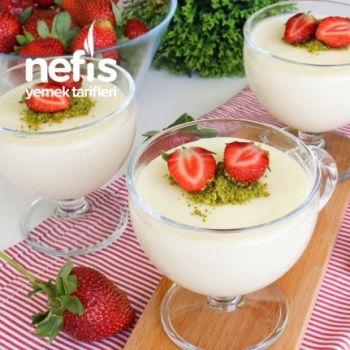
Image 56. Muhallebi. Web nefis.
2-4 People
Ingredients
A little more than half a glass of sugar
1 tablespoon of starch (heaped)
3 tablespoons of flour
4.5 cups of milk
1 teaspoon butter
1 package vanilla
How
to prepare.
-
Mix the sugar, starch, flour and milk in a saucepan. When they are dissolved, bring to a boil stirring constantly until a slightly thick mixture is obtained.
-
Remove from heat and add butter and vanilla stirring until all ingredients are integrated.
-
Pour the contents into individual containers, cover the surface with plastic wrap and let it cool in the refrigerator for several hours.
How to adapt it in texture
This recipe can be consumed by IDDSI levels 4, 5, 6 and 7. However, care should be taken to ensure that the texture is smooth, creamy and not sticky, similar to custard.
Bougatsa / Phyllo Custard Pie
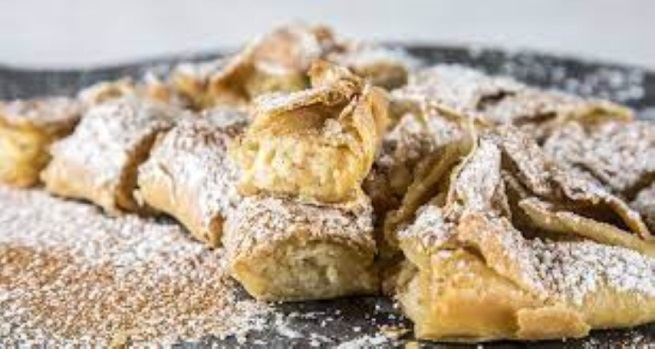
Image 57. Bougatsa. Web akispetretzikis.com
2-4 People
Ingredients
270 g granulated sugar
4 eggs
2 egg yolks
400 g milk
400 g heavy cream 35%
1 pinch salt
1 teaspoon(s) vanilla extract
1 teaspoon(s) baking powder
450 g phyllo dough sheet
150 g butter
1 tablespoon(s) dark brown soft sugar
2 tablespoon(s) icing sugar
1 tablespoon(s) cinnamon
How to prepare.
-
Preheat the oven to 200*C (390*F) with fan.
-
Melt the butter and, with a pastry brush, generously butter a 30x35 cm (11x12") baking pan and, one by one, place the filo sheets into the pan. The first ones covering the base and the rest crumpled in an elongated accordion shape in the pan.
-
Drizzle the remaining butter over the top of the folded filo dough in the pan.
-
Bake in the highest part of the oven for 20 minutes or until the filo is golden brown and crisp.
-
Meanwhile, in a bowl beat the 4 eggs, the 2 egg yolks and the sugar until fully integrated.
-
Add the vanilla, baking powder, milk, heavy cream and salt and continue mixing until smooth and even.
-
When the phyllo dough sheets are ready, remove them from the oven and pour the contents of the bowl, spreading them well throughout the dough. Sprinkle light brown sugar on top.
-
Lower the heat to 180* C and bake for another 20-25 minutes.
-
When done, remove from the oven and let cool slightly.
-
Sprinkle with powdered sugar and cinnamon before serving.
How to adapt it in texture
This recipe can be consumed by IDDSI levels 6 and 7 if cut into pieces.
For level 5 it would be necessary to chop it into small and homogeneous pieces with the help of scissors or a food processor.
To adapt it to level 4, it is necessary to introduce it in a food processor. If necessary, add milk to grind it until a homogeneous and thick texture similar to that of custard is obtained. It is important that it is not too thick so that it does not stick in the mouth and not too liquid so that it is difficult to handle in the mouth.
Resources
Cichero, J. A., Steele, C., Duivestein, J., Clavé, P., Chen, J., Kayashita, J., ... & Murray, J. (2013). The need for international terminology and definitions for texture-modified foods and thickened liquids used in dysphagia management: foundations of a global initiative. Current physical medicine and rehabilitation reports, 1(4), 280-291.
Sungsinchai, S., Niamnuy, C., Wattanapan, P., Charoenchaitrakool, M., & Devahastin, S. (2019). Texture modification technologies and their opportunities for the production of dysphagia foods: A review. Comprehensive reviews in food science and food safety, 18(6), 1898-1912.
Stading, M. (2021). Physical properties of a model set of solid, texture‐modified foods. Journal of texture studies.
https://www.ruh.nhs.uk/patients/services/clinics/speech_and_language/documents/High_risk_foods.pdf
https://www.albertahealthservices.ca/assets/info/nutrition/if-nfs-dysphagia-soft-diet.pdf
https://www.ndr-uk.org/uploads/pdf/701461926596.pdf
https://www.lybrate.com/topic/dysphagia-diet#food-items-you-can-easily-consume
https://iddsi.org/framework/food-testing-methods/