Unit 3 - Nutrition (e-book)
3.3 Nutrition for special requirements
3.3.2 Vegetarian
The vegetarian diet involves abstaining from eating meat, fish and poultry. People often adopt a vegetarian diet for religious, personal reasons or environmental reasons.
Vegetarians may also have dysphagia. These people, as well as those who eat a diet with all food groups, should modify their diet in texture according to guidelines set by a medical professional.
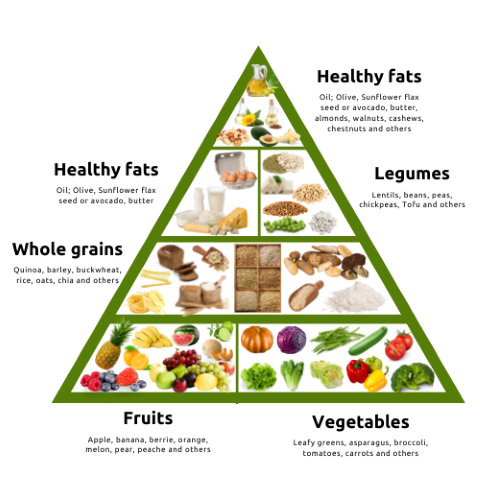
A vegetarian diet should include a diverse mix of fruits, vegetables, grains, healthy fats and proteins.
To replace the protein provided by meat in diet, include a variety of protein-rich plant foods like nuts, seeds, legumes, tempeh, tofu and seitan as well as eggs and dairy products can also boost protein intake.
Figure 22. Vegetarian (Source: obtained from Canva Pro)
 Vegetarians have to avoid the following foods in their diet:
-
Meat: Beef, veal and pork
-
Poultry: Chicken and turkey
-
Fish and shellfish: This restriction does not apply to pescetarians.
-
Meat-based ingredients: Gelatin, lard, carmine, isinglass, oleic acid and suet
-
Other animal products: Vegans may choose to avoid honey, beeswax and pollen.
Figure 23. Vegetarian Pyramid (Source: designed by Canva Pro)