Unit 1 - Dysphagia (e-book)

1.1 Swallowing
1.1.2 Swallowing phases
|
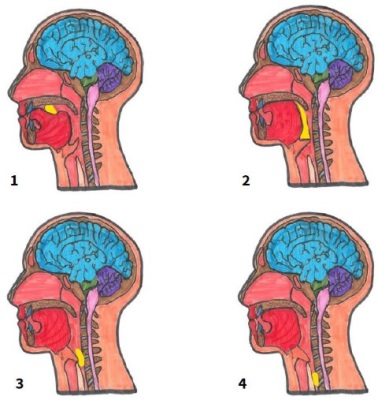
Swallowing is divided into three stages:
|
Figure 1. Swallowing mechanism (Source: CADIS Huesca) |
|---|
Practical exercises to apply the theory.
In this exercise we will be aware of the swallowing process.
Materials: a fruit ready to eat
Steps to follow while being aware of the process:
1- Take the fruit and introduce it in the mouth. Observe how the mouth opens and the teeth help to cut the food into a small part that will remain inside the mouth.
2- Chew the food and form the food bolus. In this phase notice how the food is chewed and with the help of the tongue it is thrown from one side of the mouth to the other and unites with the saliva.
3- Group all the food in the mouth at the base of the tongue. Notice the movements of the mouth and how the tongue helps you to group them.
4. Swallow the food bolus. Observe how there is a rapid movement of the tongue that pushes the food into the throat.
5. Finally, the last two phases of swallowing happen very quickly. Observe how the food passes through the duct that communicates the mouth with the stomach.
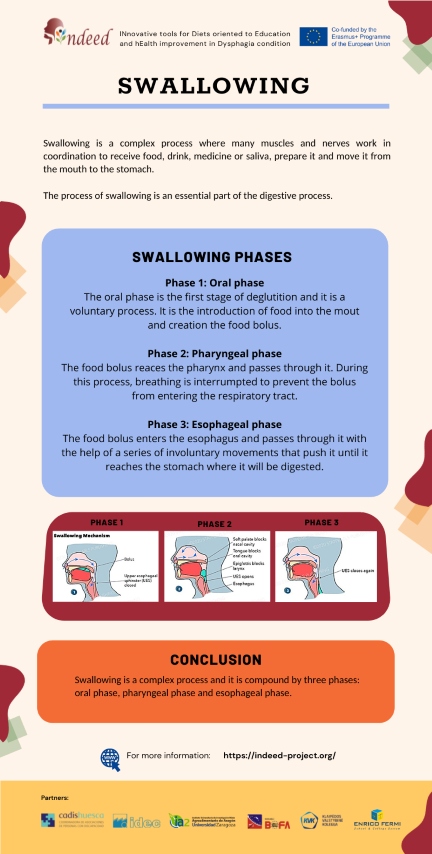
Figure
2. Infographic of swallowing (Source: designed by Canva Pro).
Infographics available for download on the training platform (https://indeed-project.org/)