Ünite 1 - Disfaji
1.2.3 Paydaş Profesyoneller
Disfaji Ekibi
Disfaji durumunda (beslenme ve yutma bozuklukları) olan bireyler, çeşitli ortamlarda (örn. okul, ev, hastane, vasıflı bakım tesisi) değerlendirme ve tedavi gerektiren çeşitli tıbbi sorunlara sahip olabilir.
Disfajinin nedenleri ve sonuçları, geleneksel mesleki sınırları aşar ve birçok tıp veya tedavi uzmanının işbirliğini gerektirebilir. Beslenme ve yutma, ağız, boğaz, üst solunum yolu, gırtlak, soluk borusu, yemek borusu ve mideyi içerir.
Çok disiplinli veya disiplinler arası bir uzman ekibi, karmaşık zorlukları olan insanları yönetmek için en uygun olanıdır. En iyi sonucu elde etmek için, bu uzmanlar birbirleriyle olduğu kadar birey/öğrenci ve ailesiyle de işbirliği yapmaktadır.
Koordinatör
● Tipik olarak Konuşma-Dil Patoloğu olan bir koordinatör, disfaji ekibine liderlik eder.
● Çekirdek ekip üyelerini ve destek hizmetlerini tanımlar; ekip iletişimini kolaylaştırır; ekip odağını, iletişimini ve katılımını sağlar;
● Ekip faaliyetlerini belgeler; diğer ekip üyeleri ve diğer hizmetlerle uygun danışma prosedürlerini kullanır.
Disfaji Ekibi
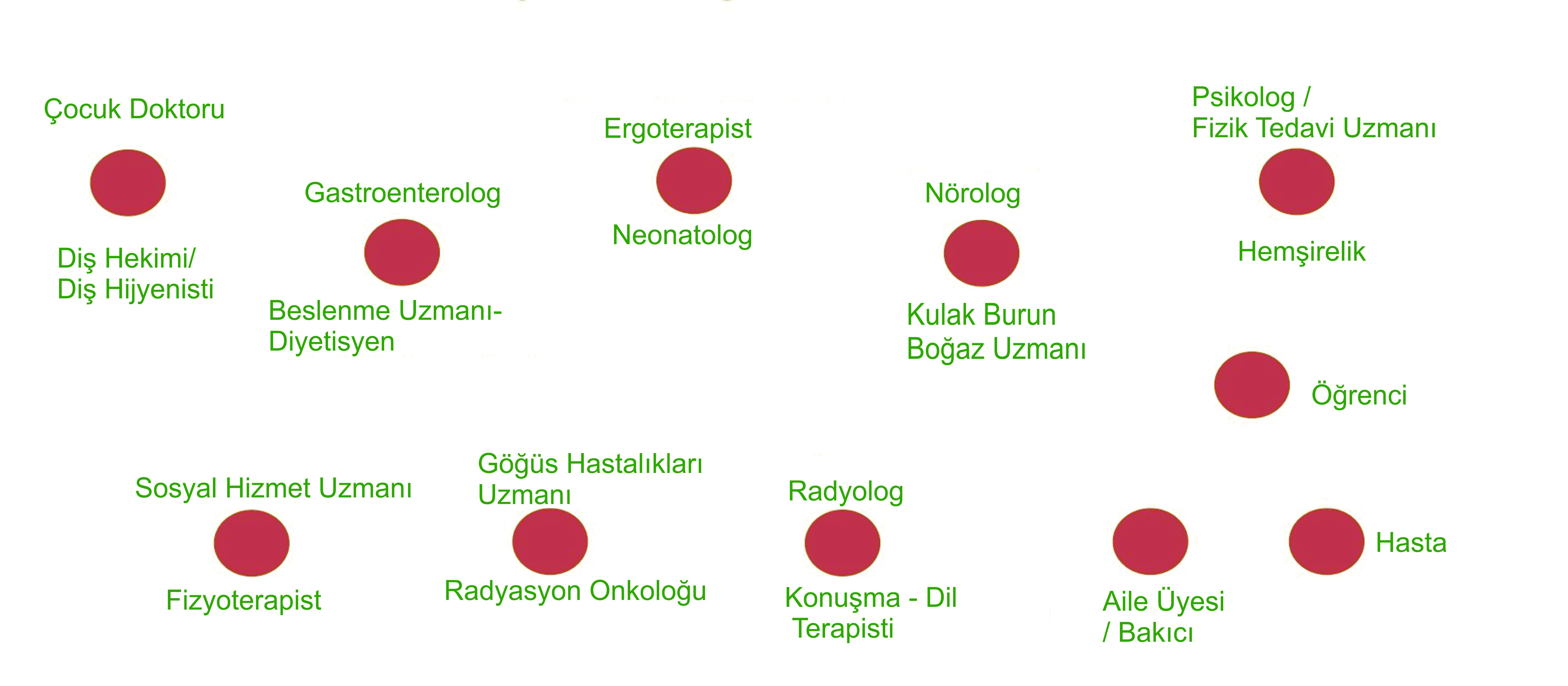
Dentist /Dental Hygienist: Evaluates and treats gingival and dental dysfunction and may specialize in prosthetics to improve swallowing. Advice on oral hygiene.
Neonatologist: Identifies infants with swallowing difficulties, refers them for evaluation, orders appropriate therapies, and monitors their progress.
Gastroenterologist: Determines any difficulties with the GI tract; performs diagnostic tests related to the esophageal segment of swallowing; and places feeding tubes if the patient/student needs an alternative to oral feeding.
Neurologist: Diagnoses and treats neurological causes of swallowing problems.
Nursing: Works with the patient/student and caregivers in implementing and maintaining safe swallowing techniques and compensatory or facilitation strategies during meals and when taking medications.
Nutritionist/Dietician: Evaluates nutritional needs; follows therapy recommendations regarding consistencies of liquids and solid foods, determines needs for special diets; and ensures adequate nutrition when using alternative means of nutrition.
Occupational therapist: Evaluates and treats sensory and motor impairments and assesses prosthetic needs related to self-feeding and swallowing.
Otolaryngologist: Diagnoses and treats oral, pharyngeal, laryngeal and tracheal pathologies that may cause or contribute to swallowing problems; cooperates with speech-language pathologists in performing endoscopic evaluations of swallowing.
Pediatrician: Identifies children with swallowing challenges, provides appropriate referrals, and integrates the dysphagia team's recommendations with the child's general health and well-being.
Psychologist/ Psychiatrist: Evaluates and treats patient/students and their families in adjusting to dysphagia disability, in coping with ramifications of swallowing disorders, and in managing associated stresses.
Physical Therapist: Evaluates and treats body positioning, sensory and motor movements necessary for safe and efficient swallowing, recommends appropriate seating equipment needed during feeding.
Social Worker: Assists and counsels patient/student and families in adjustment to disability, access to the least restrictive residential and treatment environments, and third-party payment issues.
Pulmonologist: Evaluates and resolves respiratory issues in dysphagia patients/students; controls chronic pulmonary diseases and ventilator-dependent patients/students.
Radiation Oncologist: Implements radiation treatment regimens to treat patients/students with dysphagia caused by malignancies of the mouth, throat, and/or esophagus.
Radiologist: Evaluates swallowing problems through radiologic studies, primarily with Speech-Language Pathologists during videofluorographic swallow studies (VFSS.)
Patient / Student: Provides information to other team members about his/her disorder; demonstrates understanding of the causes and treatment of the dysphagia disorder; follows dietary, compensatory and facilitative techniques to restore swallowing function and maintain adequate nutrition and hydration.
Family Member / Caregiver: Provides information to other team members about the patient/student’s signs and symptoms of the disorder; demonstrates understanding and implements the recommended management techniques.
Speech-Language Pathologist: Evaluates and treats patients/students with swallowing problems, including direct modifications of physiologic responses and indirect approaches such as diet modification.