Module 5.5: Reading
5.5 Waste management at school: a learning opportunity
5.5.1. Introduction
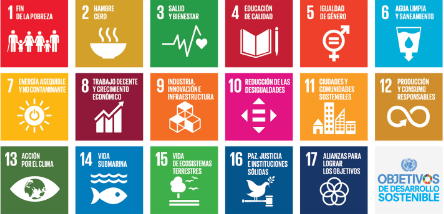
In module 2 of this program we have already worked on the concepts of recycling, reusing and reducing. Let's see now how we can get the students to introduce these habits into their daily routines. We must bear in mind that students spend a large part of their time at school, in which they use books, notebooks, sheets of paper, colored pencils, pens, markers... In addition, there are other aspects of daily routines such as breakfast, lunch, commuting, etc.
The main objective of this subchapter is to bring sustainability closer to their daily life and how small habits can contribute to saving resources.
5.5.2 A place for each waste
If we want to establish a culture of saving resources in our classroom and manage them correctly, we should have different containers to throw the different types of rubbish that can be generated in the different spaces of the school.
The scheme of types of waste that must go in each container and their colors may vary depending on each EU country. In this module we will follow the following classification:
Blue → Paper and Cardboard
Yellow → Light Packaging
Brown → Organic fraction
Gray → Remaining fraction / Refuse (non-recyclable)
Red → Waste / Green dot
Activity: How is waste classified in your country and what color is it identified with?
Colour | Kind of waste |
|
|
|
|
|
|
|
|
5.5.3 Residue: where do you go?
Do you know which container a tetra brik should go in? With plastic or cardboard? And a used paper handkerchief? Sometimes it is not so clear where each waste should go. Let's see in this table where each waste should go:
Residue | Where does it go? |
paper envelope
| In the fraction of paper and cardboard, we only deposit the paper and cardboard neatly folded. Spirals, clips, staples must be avoided... Don't confuse it with handkerchiefs and paper napkins. |
Plastic bottle
| In the fraction of light packaging, we just have to throw away all those containers and wrappers that bear the Green Dot sign. |
CD/DVD
| DUMP / GREEN POINT: Facility that allows selective collection of municipal waste for which there is no home collection system or specific containers on the street. |
Box of cookies
| Attention: Separate the plastic and metal elements from the cardboard box and deposit them in the fraction Light packaging. In the fraction of paper and cardboard, we only deposit the paper and cardboard neatly folded. Spirals, clips, staples must be avoided... Don't confuse it with handkerchiefs and paper napkins. |
Bag of potatoes
| In the fraction of light packaging, we just have to throw away all those containers and wrappers that bear the Green Dot sign. |
Muffin wrapper
| To the organic fraction, we only throw away food scraps, spoiled food and small plant elements. To avoid odors, we must throw away the organic fraction on street bins in the evening. |
pallets
| To the remainder fraction, we only throw away all that waste that cannot be recycled or used in any other way. |

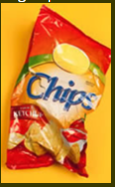
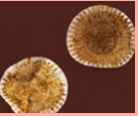
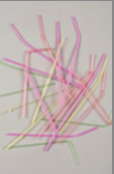
Activity: Based on the examples we have shown you, in which container would you introduce...
RESIDUE | SOLUTION |
A used tissue | ORGANIC FRACTION |
Metal box for cookies or chocolates | LIGHTWEIGHT PACKAGING |
Chewing gum | REMAINING / REJECTED FRACTION |
Pens and markers | GARBAGE / GREEN DOT |
5.5.4 What do we do with the waste we have separated?
And once it is already in its container, do you know what process it follows to be able to be recycled?
Residue | process | What it turns into |
Paper and Cardboard
| In the triage plant the selection is made according to the type of material and it is packed for transport to the recycling plants where a process of defibration and cleaning of inks, pigments and glues is carried out. New fibers are added. The pulp is separated from the water and pressed. | Sheet packages, cardboard packaging, magazines and newspapers, wrapping paper, cardboard boxes. |
Light packaging | To the triage plant, the containers are separated by materials: types of plastics, aluminum, iron, wood and bricks. Each material will be packed and prepared to be transported to the corresponding recycling plant where the plastic is separated according to types and densities. It is washed and melted to make raw material in the form of granules that are introduced into the production cycle. | Containers, buckets, street furniture, traffic signs. |
Junkyard - Green points | A specialized company separates recyclable materials (plastics, glass and metals) from dangerous or non-recoverable elements that are decontaminated. The companies treat the different types of plastics and metals to reintroduce them to the production cycle. | Polycarbonate is used in car parts, public lighting, mobile phone and computer casings, CDs and DVDs. |
Organic Fraction
| To the Anaerobic digestion plant the organic fraction (FORM) undergoes biological decomposition in the absence of oxygen, anaerobically. Also called methanization. It takes place in closed equipment, the digesters. Methane and a digested material is obtained, which is submitted to composting.
In the composting plant, the organic fraction (FORM) receives a biological treatment in the presence of oxygen, just as bacteria do in a natural decomposition process. The organic fraction must not contain inappropriate substances because they prevent or hinder the biological process.
| The composting process yields a very suitable fertilizer, the compost, which is used as fertilizer for the soil in the gardens and parks of our municipalities.
Biogas is obtained from methanization, which is used to generate electricity and fuel. It is used both to run the composting plant and exported to the public network. |
rejection
| Treatment plant. In this plant, once the recyclable elements have been extracted, everything that is not usable has a final disposal treatment either in an incinerator or in a controlled deposit. | In the incinerator, a controlled combustion takes place where all the waste is removed. The gasses are filtered before being released into the atmosphere. The slag is taken to the controlled tank. And the heat of this combustion moves turbines that generate electricity. The bales with the rest are stacked until they cover the surface of the controlled tank and it is covered with soil. It is reclaimed for public use or green space. |
Activity: Design an informational campaign for your class to show them where each piece of waste should go and why.