Module 5.1 Reading
How to do an environmental impact assessment of the school
Introduction
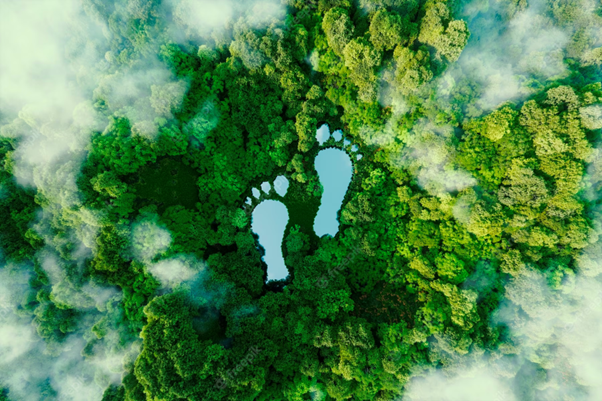
An environmental impact is any alteration of the environment, directly or indirectly caused by a project or human activity in a given area.
School as a human activity that occupies a certain area, generates an infinite number of negative effects on the environment (waste production, water consumption, noise pollution...), which can only be avoided or minimized to the extent that are known, and the ways to deal with them are studied.
The impact that our school has on the environment is measurable and can vary depending on the improvements we are willing to apply, to the materials we use and the uses we make of them; as well as the willingness of teaching, non-teaching staff and students to change some habits that can help reduce these impacts.
It is convenient to work at all levels. From the efficiency of school building closures, through the waste generated in the canteen, or the materials we use to do any activity... Everything counts, from the most insignificant thing to the most complex, they can help to make our school more sustainable. We must get all the agents involved in day-to-day school life: families, teaching staff, neighbors and especially students, to internalize the need to take into account the environmental toll we generate in any of the activities carried out in the day-to-day life of the school. This is how we will manage to take the first step towards sustainability.
Classification of environmental impacts
Environmental impacts can be classified into:
● Negative or positive: depending on whether or not they improve the Environment.
● Direct or indirect: depending on whether the impact is observed immediately or after a while.
● Cumulative or synergistic: if they are due to the accumulation of small disturbances or if small disturbances are carried out at once that end up generating greater damage.
● Reversible or Irreversible: depending on whether or not the damaged areas can recover.
● Current or potential: if they occur immediately or may occur due to current activities.
● Temporary or permanent: depending on its duration.
● Local or scattered: depending on whether they affect a single place or more than one.
Activity: analyze the environmental impact of the following activity based on the previous classification:|
Today we celebrated the end-of-year party at school with a snack with the families where disposable cups and plastics were used. Mark with an x the environmental effects this event has had: |
|||
|
negative |
|
Positive |
|
|
direct |
|
Indirect |
|
|
Cumulative |
|
Synergistic |
|
|
Reversible |
|
Irreversible |
|
|
Actual |
|
Potential |
|
|
Temporal |
|
Permanent |
|
|
Local |
|
Scattered |
|
What does it mean to assess the environmental impact?

Evaluating the environmental impact is nothing more than becoming aware of how the daily activity of the school affects the Environment, of the environmental problems that affect the center and the immediate surroundings. Trying to quantify this impact, proposing possible solutions, acquiring commitments, applying solutions and evaluating their effectiveness are also part of this evaluation.
Who must assess the environmental impact?
All members of the educational community must take part: parents, teachers, educational bodies and managers... but above all the students, who by researching, proposing solutions to the problems detected, carrying out activities and acquiring commitments, must be the engine that allow the change towards a more sustainable school.
How to measure the environmental impact
We can understand the school as an ecosystem, with physical factors (buildings, infrastructure, sports fields, ...) and biological factors (students, teaching staff, gardens, ...) that interact with each other, with entrances and outputs of matter and energy.
Starting from this base, it is possible to carry out a general diagnosis of the functioning of the entire school, up to diagnoses of any of the activities we carry out with our students. Depending on what we want to study and its complexity, we will have several tools at our disposal, but it is always about detecting what we can do to minimize the impact on the environment of our activity.
Activity: Carry out the environmental impact analysis of an activity of your school following the following guideline:
|
Location of the activity |
|
|
Description of the activity |
|
|
Initial state before the activity (taking into account climate, geological, hydrological, sociological and biological resources, the landscape, air quality, noise pollution) |
|
|
Study of the effects of the activity on the environment (According to classification 5.1.2) |
|
|
Preventive and/or corrective measures |
|
|
Estimated budget for preventive and/or corrective measures |
|
What is an environmental audit (eco-audit)?
It is the systematic, documented, periodic and objective evaluation that is carried out to determine if the management system and the environmental behavior of the school satisfy the established provisions. It is about the school looking to achieve the SDGs proposed in the United Nations Sustainable Development Agenda.
Obviously, if it is a matter of making a diagnosis and proposing improvements at the level of the whole school, the economic aspect will be relevant, since surely, many of the solutions involve significant expenditure, which is why it is so important that those in charge of managing financially the school are also involved in making the necessary improvements effective.
If what is being sought is an environmental audit of a more specific aspect of school day-to-day life (waste management, noise pollution,...) projects of different formats can be designed to deal with the relevant issues.

Project: School environmental audit of waste management
We can propose an environmental audit of the school's waste management. The possible objectives of this audit could be:
- Diagnose the environmental impact of waste generated by students in class and at home.
- Reflect on the need to change some attitudes and behaviors that negatively affect the immediate environment.
- Discuss, plan and agree on improvement plans that all involved members assume
- Contribute to the improvement of the environmental quality of the center and its surroundings.
- Carry out an evaluative follow-up of the measures taken
- Encourage teachers to participate in Environmental Education activities
- Increase the involvement of the entire community in the improvement of the nearby environment.