Module 3.3 Reading
Regional High School and High School of Lefkara
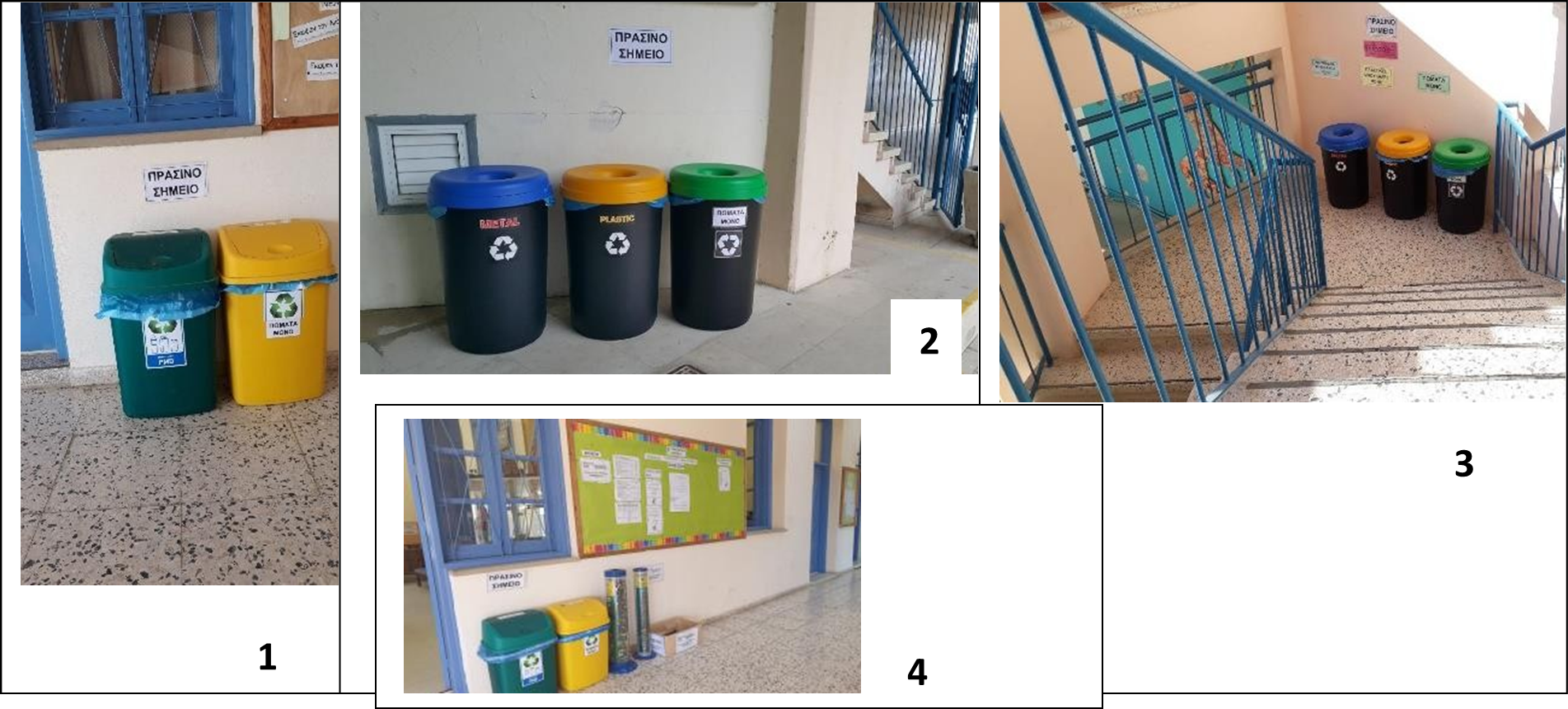
1. Paper, aluminum, plastic and battery Recycling Program. There are paper and plastic recycling bins in every classroom and there are green spots in various parts of the school.
2. Frying Pan Program
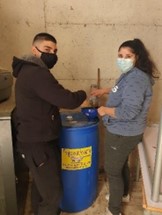
Frying Pan is an educational, environmental program to collect used cooking oils, to convert them from waste frying oil into biodiesel.
The students carried out an information campaign about the program in the community by giving information forms to the residents and to the City Hall. They also approached various restaurants and businesses for cooperation regarding the collection of frying oil.
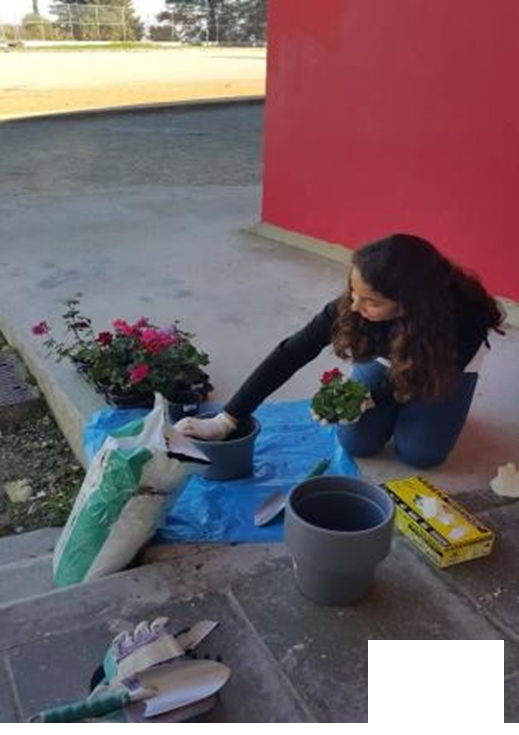
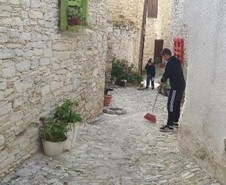
3. Alley landscapingFor this specific action, the children, days before, took care of organizing the landscaping. They took advantage of used pallets and after processing them they turned them into beautiful pot supports. The alley was cleaned and filled with plants.
4. Tree planting
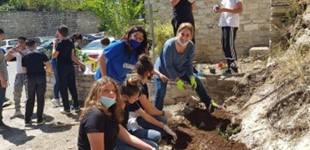
In order to raise the awareness of the students of the school and the wider community regarding climate change, sixty (60) saplings were planted which were granted by the forestry department of the Ministry of Agriculture, Natural Resources and Environment in various areas of the school.
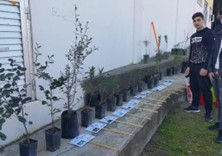
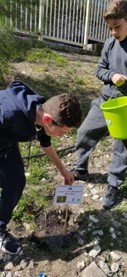
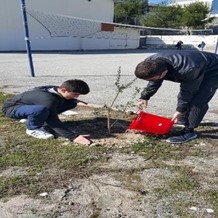
5. Event with the aim of disseminating knowledge and making them aware of the importance of the Tree in Life and the sustainability of our Planet.
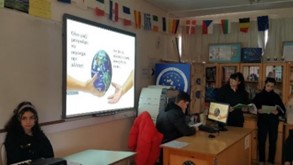
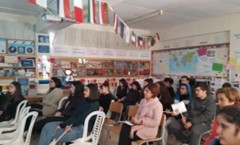
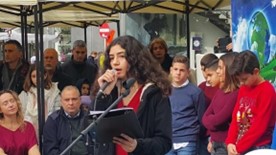
6. Creation of a song for the Pan-Cypriot Poetry-Song Production Competition on the topic of climate change, organized by the Green Shield Environmental Organization, and won First Prize in the High School Circle.

7 . Investigation of the environmental consequences of the exploitation of Petra ton Lefkara. The children together with the Environmental Club toured Pano Lefkara and appreciated the special character that this stone gives to the village. They were informed about the history of the stone and discussed whether its exploitation causes serious environmental problems.
8 students placed signs in the classrooms with ecological themes, made sure that all classrooms had the necessary energy-saving markings under each light switch and that there were paper and plastic recycling bins.
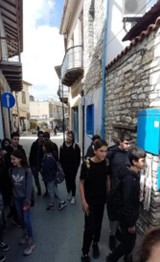
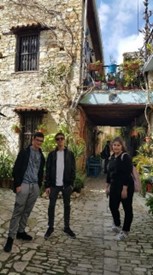

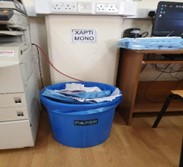
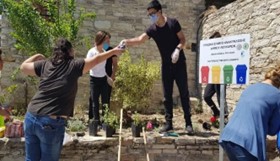
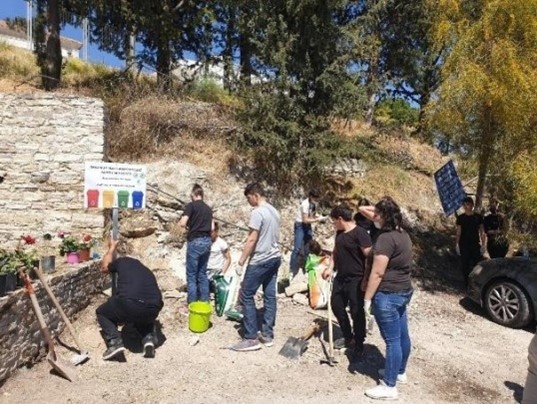
9. They watched an informative documentary on the importance of recycling and visited the location opposite the school which was already planned since the last school year to become the Green Recycling Point in collaboration with the City Hall. The children made drafts and expressed their opinions and ideas on how the space should be designed. Afterwards, the children took a short tour of the area, to understand the importance/need of recycling in this particular community. They started beautifying the area by cleaning, weeding, planting saplings and placing a sign and recycling bins in the specific area.
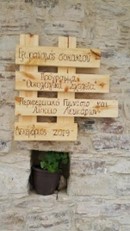
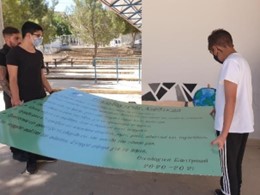
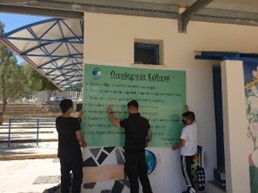
10.Placement of the Environmental Code on a wall in the school's central courtyard. Thus, the children of our school, every time they see it, will remember what they need to do to improve the environment around them and be active citizens.
11. Second hand bazaar where items in excellent condition are collected and sold at very low prices. The aim is to introduce a new culture for our country, that of the reuse of goods, with the aim of cultivating the reduction of over-consumerism, which consequently puts a significant burden on the environment. The proceeds are used for environmental actions and also strengthen the school's welfare fund.
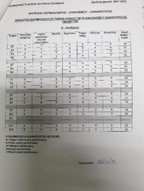
12. The classrooms are inspected by a team of students, teachers and the cleaners of our school and the results are announced. At the end of the year the winning class will be awarded with an educational trip.

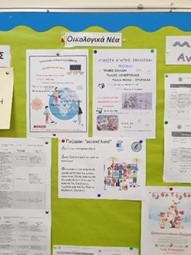
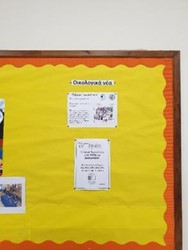
13. In each classroom there is an indication on the board with the "Environmental News" of the school, where announcements are posted regarding the environmental actions and announcements of the "Ecological School".
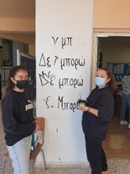
14. As part of the landscaping to improve the yard, classrooms and garden, paintings were created on the walls of the school and a message of strength and optimism for every student.