Module 1.2: Reading
Project initiation
Project initiation is the first stage of a project and involves the initial steps to establish the project's goals, objectives, and scope, as well as identifying the stakeholders and conducting a feasibility study. It also includes developing a project charter, which serves as the foundation for the project's planning and execution.
Project initiation and project planning are two distinct but closely related stages in the project management process.. Project planning, that is the next chapter, is also the next step and includes creating a detailed plan that includes the project's scope, schedule, budget, and resource requirements. It also includes obtaining approval for the project charter and project plan and setting up project management tools.
In summary, project initiation is the initial phase of a project where the project's foundation is laid and project planning is the next step where the project's objectives are defined and detailed plan is made to achieve those objectives. Also initiation step is an opportunity to pre-evaluate the project before it’s too late, as planning most of the times is a difficult process. (Figure 2)

Figure 2: Project initiation is an opportunity to pre-evaluate the project and avoid pointless planning.
Project initiation involves several steps to ensure that the project is set up for success. Here is a general overview of the steps involved:
Define the project: Clearly identify the goals and objectives of the project, as well as any constraints or limitations.
Conduct a feasibility study: Analyze the feasibility of the project in terms of technical, financial, and resource requirements.
Develop a project charter: This document summarizes the project's goals, objectives, stakeholders, and deliverables. It serves as the foundation for the project's planning and execution.
Identify stakeholders: Identify all stakeholders, including the project sponsor, project manager, and project team members, and determine their roles and responsibilities.
Obtain approval: Obtain approval from the project sponsor and other key stakeholders for the project charter
Monitor and control: Establish a way to Monitor the project's progress and make adjustments as necessary to keep the project on track.
These are the general steps to project initiation, the exact process may vary depending on the project's complexity and the organization's project management methodology.
Define the project and monitoring
Defining the project involves identifying the project's purpose, goals, and objectives, outlining the project's scope, identifying the stakeholders, developing a high-level project plan, and identifying any potential risks. This is a step that it is going to happen in both phases at initiation and planning. Better project definition in the beginning means easier planning later. This step is crucial in setting the direction and scope of the project, ensuring that everyone involved in the project understands what is expected of them, and that the project is set up for success. Additionally monitoring should be designed before the project starts as it is a key factor for continuous improvement, a key element of the Plan Do Check Act (PDCA) cycle and eventually the overall performance.
PDCA cycle and its significance
The Plan-Do-Check-Act (PDCA) cycle, also known as the Deming cycle or Shewhart cycle, is a four-step model for continuous improvement. The PDCA cycle is a process that can be used to improve any aspect of an organization, from product development to customer service. The four steps of the PDCA cycle are: Plan, Do, Check, and Act. In the Plan step, a problem or opportunity is identified and a plan is developed to address it. In the Do step, the plan is implemented. In the Check step, the results of the implementation are measured and analyzed. Finally, in the Act step, appropriate changes are made based on the results of the analysis. By following the PDCA cycle, organizations but also individuals like teachers, can continuously improve their processes, methods and operations, leading to better results and increased efficiency (Figure 3).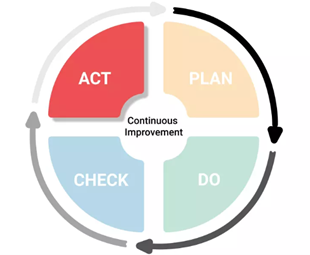
Figure 3: The PDCA cycle refers to continuous improvement
The Check step
The Check step of the PDCA cycle is the phase where the results of the implementation are measured and analyzed. The main objective of this step is to determine whether the plan has achieved its intended results. The following are some key activities that can be done during this step:
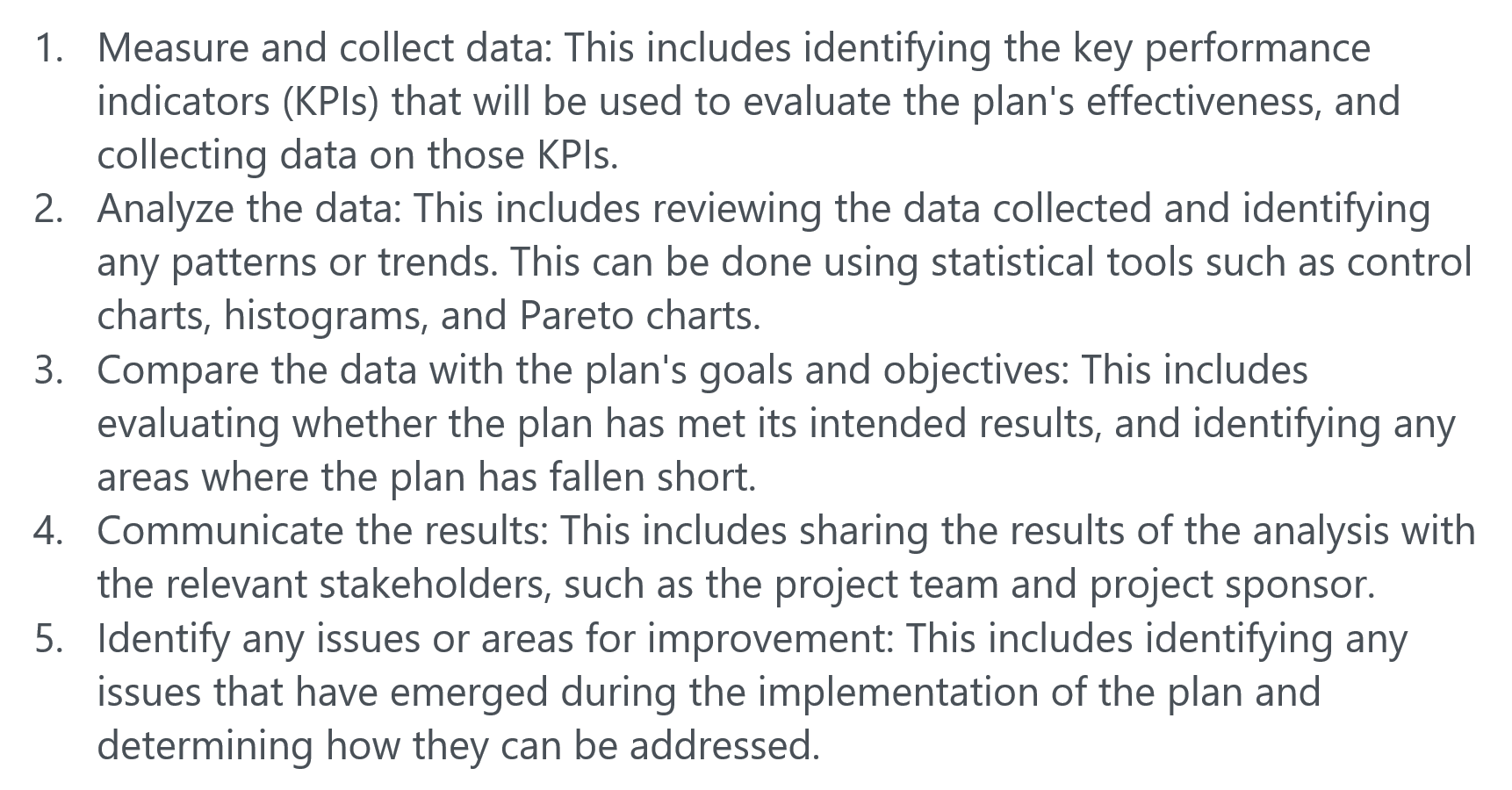
By conducting a thorough analysis in the Check step, organizations , for example ministry of education and individuals like teachers can ensure that they have a clear understanding of the plan's effectiveness, and can make informed decisions on how to improve the plan in the next step of the PDCA cycle, Act.
Share some reasons why project initiation should be different from project planning and why the PDCA cycle should be planed at the phase of initiation?